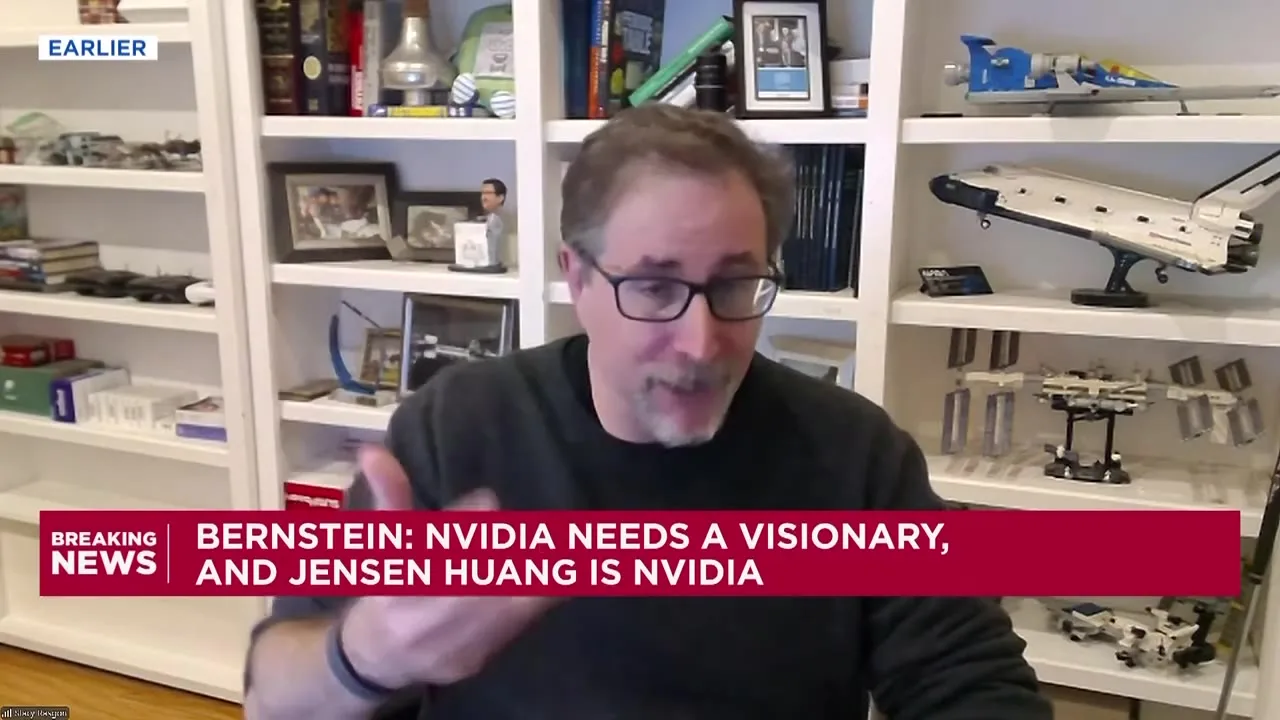
Nvidia's uncertain leadership outlook prompted a cut in its share price target to $200 despite strong demand for its chips, Bernstein said in an interview.
The new target was half the previous level. In the interview aired by CNBC International Live on Nov. 12, 2026, Bernstein said its concern centred on who could replace chief executive Jensen Huang's ability to anticipate changes in technology.
Bernstein said it understood the attraction of buying Nvidia shares after their decline. The company appeared capable of continuing to operate normally for now, and demand remained strong, Bernstein said.
Bernstein did not expect customers broadly to reduce purchases because of the uncertainty surrounding Huang. Its explanation for cutting the target therefore focused on the company's future direction rather than an immediate loss of customers or demand.
Bernstein also described the shares as very cheap, including before their latest decline. It acknowledged that the valuation and continued appetite for Nvidia's products made the decision to cut its target difficult.
“People still want the parts,” Bernstein said. That demand formed part of its explanation for why investors might want to buy after the fall, even while questions about the company's leadership remained unresolved.
Bernstein then drew a distinction between finding someone to manage Nvidia's operations and finding someone to determine where the business should go. The company needed a leader who could anticipate technological change, Bernstein said.
“Jensen is Nvidia,” Bernstein said, repeating an assessment it had written on Sunday evening. It attributed the company's position today to decisions Huang made 10 years ago, before the opportunities behind its current business became apparent.
Those earlier decisions framed the question Bernstein could not answer: who would make the choices that determine Nvidia's position over the next 10 years. It did not identify a person it believed could take on that responsibility.
“I don't intuitively know who that person would be,” Bernstein said. The uncertainty concerned the judgement behind future products and investments, extending beyond whether another executive could keep the existing business running.
Bernstein did not expect a leadership change necessarily to create problems in the near or medium term. Its concern lay further ahead, with the health of Nvidia's longer-term product plans and the person responsible for anticipating the next technological shifts.
The remarks left both the identity of a suitable successor and the consequences for those longer-term plans unresolved. Bernstein's conclusion was that Huang would be very difficult to replace, even while Nvidia's current operations and customer demand appeared to hold up.