


 TSMC Profit Set to Surge 65% as AI Chip Demand Drives Record Earnings
  OpenAI Annualized Revenue Hits $50 Billion, Below Earlier Estimates
  Apple Supplier Luxshare Faces US Patent Probe, Sees Limited Impact
  Amazon in Talks to Acquire AI Startup Decart for $7 Billion
  TSMC Q3 Revenue Beats Estimates as AI Chip Demand Surges
  Epic Games Delays Disney Shooter, Shifts to AI-First Development
  Solidigm Taps Goldman, Morgan Stanley for $10 Billion US IPO
  Trump Buys Up to $25M in Meta Stock, Invests in SpaceX Debt
  US Suspends Microsoft, Adobe From Green Card Program
  OpenAI Revenue Hits $50 Billion, Below Earlier $70 Billion Estimate
  Elon Musk Accuses Indian Telecom Giants of Blocking Starlink Launch
  Apple Supplier Luxshare Sees Limited Impact From US Patent Probe
  Broadcom, Oracle and SpaceX Seek Billions in Private Debt for AI Expansion
  Arthur Hayes Announces FLOP Testnet Launch Within Weeks
  Moonshot AI Executives Seek Settlement Ahead of Hong Kong IPO


 Add as a preferred source on Google
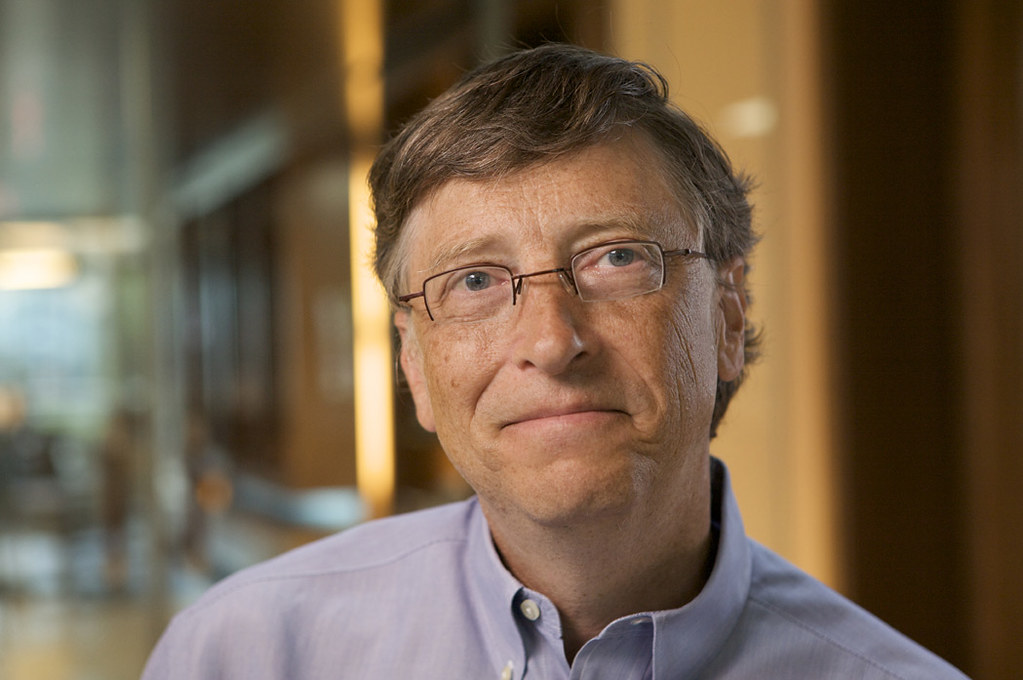
During a podcast with OpenAI CEO Sam Altman, Bill Gates revealed three professions he believes are most resilient to AI takeover: alternative energy, health biosciences, and AI itself.
Bill Gates Reflects on AI's Potential to Outpace Him, Emphasizing Its Role in Future Job Landscapes and Healthcare
While Bill Gates, Microsoft's co-founder, remains hopeful about artificial intelligence's social benefits, the wealthy entrepreneur is increasingly concerned that AI could replace him, The Daily Mail reported.
The candid remark came during a recent podcast interview with OpenAI CEO Sam Altman, whose business is behind the AI-powered chatbot ChatGPT.
Over the years, Gates has maintained that the three best career options for new grads are alternative energy, health biosciences, and expanding artificial intelligence - notably, “billionaire philanthropist” does not appear on that list.
“I could even lose my job,” Gates said on his “Unconfuse Me with Bill Gates” podcast. “When the machine says to me, ‘Bill, go play pickleball, I've got malaria eradication. You're just a slow thinker,'” he worried, “then it is a philosophically confusing thing.”
“I was very skeptical,” Gates said about AI, in this conversation with Altman on the January 11, 2024 edition of his podcast. “I didn't expect ChatGPT to get so good.”
He emphasized his perplexity over how “big language model” AIs like ChatGPT, such as those used in William Shakespeare's works, can understand and reproduce intricate textual material. Altman responded that his team shared his confusion.
“When OpenAI built GPT-1, they had no deep understanding of how it worked or why it worked,” Altman confessed.
According to Altman, the company is now conducting 'interpretability research' to more fully deconstruct all of the complexities and intricacies that machine learning and AI training have done independently, away from the eyes of its initial coders.
“We now have a better sense of what types of jobs AI will be able to do by itself and which ones it will serve as a copilot for,” Gates said in a post on his 2024 predictions. “2023 marked the first time I used artificial intelligence for work and other serious reasons, not just to mess around and create parody song lyrics for my friends.”
“And it's clearer than ever how AI can be used to improve access to education, mental health, and more,” Gates continued. “It motivates me to make sure this technology helps reduce — and doesn't contribute to — the awful inequities we see around the world.”
Gates suggested AI chatbots as a healthcare example that might help patients learn about and analyze their personal risks for HIV, noting that 'for many people, talking to a doctor or nurse about their sexual past can be uncomfortable.'
The billionaire has put his money where his mouth is, claiming that health care, alternative energy jobs, and artificial intelligence are the most vital and feasible industries for the future of labor.
Bill Gates Champions Innovative Energy and AI, Foreseeing a Future of Enhanced Global Harmony and Health
This summer, the billionaire's electricity firm, TerraPower, will construct a unique nuclear power plant in Wyoming, Forbes reported.
“Making it clean, affordable and reliable will be essential for fighting poverty and climate change,” as Gates said to a graduating college student.
“Biosciences,” he said to those same college graduates, will remain a viable and worthwhile career path because it is “ripe with opportunities to help people live longer, healthier lives,” a set of skills and products that will always be in demand.
Gates said that he still feels similarly about AI's promise, although he admits we must “make smart investments now” to ensure that “AI can make the world a more equitable place.”
“Whether AI can help us, you know, go to war less, be less polarized — you'd think it should drive [human] intelligence,” as Gates told Altman on his recent podcast.
“So, I'd love to have people working on the hardest human problems, like whether we get along with each other. I think that would be an extremely positive if we thought the AI could contribute to humans getting along with each other,” Gates added.







