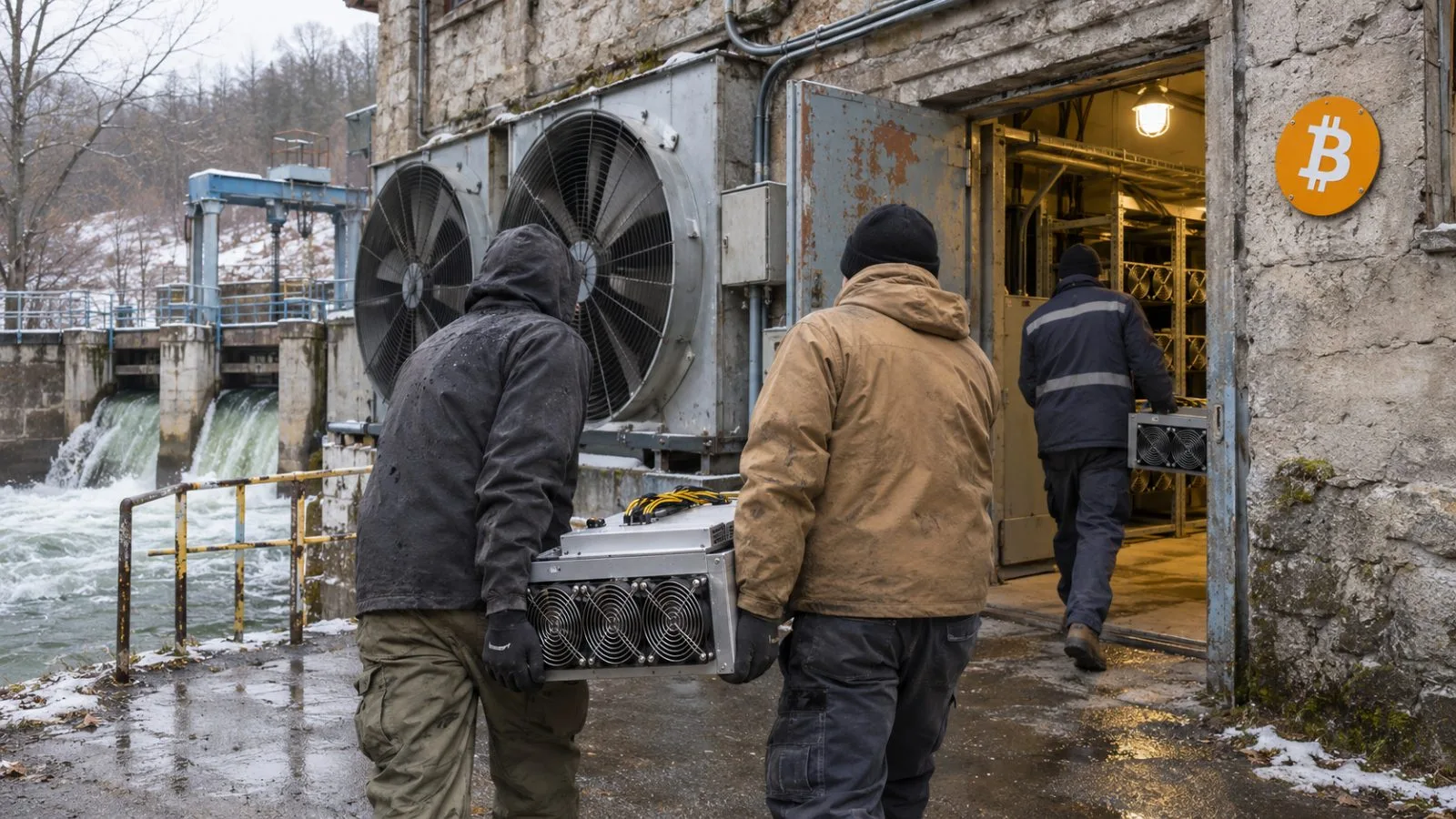
Bitcoin (BTC) miners face lower returns after Friday’s 7.61% difficulty increase cut the revenue expected from unchanged computing power as weak fees offered little relief.
Block 977,760 marked the reset at 12:17 a.m. ET (5:17 a.m. UTC), moving difficulty to 145.09 trillion from 134.82 trillion. The change reversed much of the relief from the 9.1% reduction on Nov. 14.
With the 3.125 BTC block subsidy and average fees held steady in a revenue model, BTC would need to reach about $64,570 to reproduce gross revenue generated at an illustrative $60,000 pre-adjustment price. The comparison excludes differences in miner payouts and operating costs.
The reset followed a short-term recovery in network computing power. At 1,033 exahashes per second, Bitcoin’s seven-day average hashrate was 7.8% higher but remained 8% below its year-earlier level. It was the network’s first annual contraction since China’s 2021 mining ban.
Hashprice, or mining revenue per unit of computing power, fell to $29.36 per petahash per day on Nov. 23. Fees remained a small contributor: The 128 blocks produced during the 24 hours before the reset averaged 0.0265 BTC per block, less than 1% of mining rewards.
If BTC’s price stayed unchanged, average fees would have to reach 0.2664 BTC per block—about 10 times the reported average—to neutralize the difficulty increase.
A 98-minute, 19-second interval preceded Foundry USA’s mining of block 977,698 on Nov. 26. The block carried 3,723 transactions and yielded 0.1562 BTC in fees, nearly six times the earlier average but roughly 41% below the per-block level needed to restore prior revenue at the same BTC price.
Bitcoin recalibrates difficulty every 2,016 blocks to steer average block production toward 10 minutes. That target applies to the network average, not each individual interval, as earlier EconoTimes coverage of Bitcoin’s block timing explains. Sustained weak prices could accelerate additional machine shutdowns before the next difficulty adjustment.