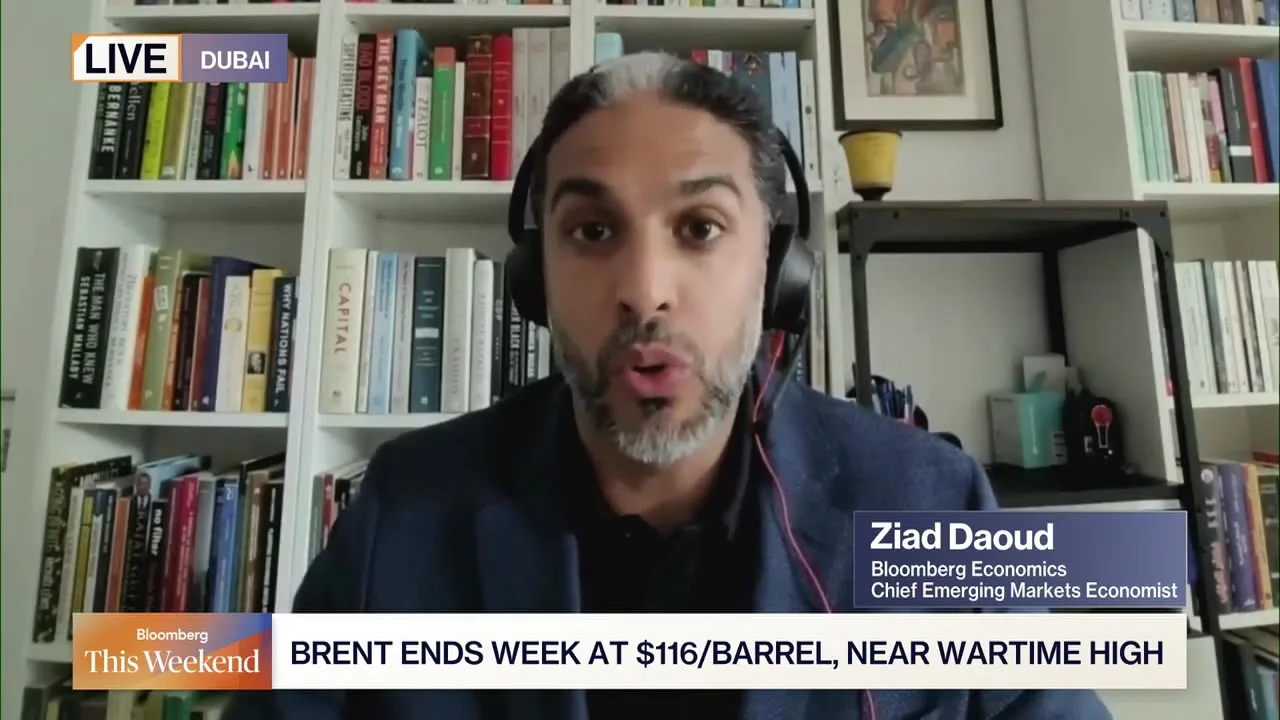
Oil reached $117 a barrel as traders priced in renewed fighting between Iran, the United States and Israel, Bloomberg’s chief emerging markets economist said in an interview published Oct. 24.
Prices rose despite increased shipments through the Strait of Hormuz, a sea passage carrying oil from the Gulf. Depleted stockpiles and higher shipping costs also helped explain the increase.
Speaking on Bloomberg Television’s “Oil Markets Brace for Renewed Iran Fighting,” the economist compared current conditions with those before the war began in February. Threats of attacks, diplomatic withdrawals and a military buildup had returned.
Upcoming elections in Israel and the United States, together with oil prices responding more strongly to tensions, added to the risk of renewed fighting in his assessment.
Bloomberg Economics put oil below $90 a barrel in late August, compared with $117 at the time of the interview. Shipments through Hormuz reached a wartime high in September, creating an apparent gap between improving flows and rising prices.
Shipping costs were feeding into the price of oil, while the possibility of fresh attacks threatened supplies from the region. Those factors helped keep prices high even when reports about negotiations offered some prospect of relief.
Prices had stayed above $100 a barrel and climbed from $110 to $117 during the week. Traders had become less responsive to social media posts about possible agreements and more attentive to supplies, inventories and renewed conflict.
The economist expected a prolonged confrontation because neither negotiations nor military action had brought the sides close to their goals. Temporary agreements could interrupt periods of escalation without resolving the conflict.
“We think this is gonna be a long-term conflict and a long-term stalemate,” he said.
Bloomberg Economics estimated that Russian diesel deliveries pledged to the United States could lower diesel prices by 2% to 3%. The volumes could have contributed to a small decline during the week, but their effect would be limited.
The interview did not establish a firm explanation for that decline. Crude prices were rising, leaving changes in refining profits or developments elsewhere in fuel markets as possible explanations.
No active negotiations offered a clear path away from escalation. Israel’s election on Tuesday and the U.S. midterm elections on Nov. 3 could influence the timing of renewed fighting, although the economist left open whether it would happen before or afterward.
Fighting between Saudi Arabia and Houthi militants also threatened alternative routes for getting oil to market. Attacks during the previous week hit a Saudi oil field and airports, killed people at an oil field and preceded the cancellation of the country’s flagship investment conference.
The economist expected the conflict to change how the region supplies energy, including greater storage abroad. He gave no timetable for that shift or for an end to the stalemate.