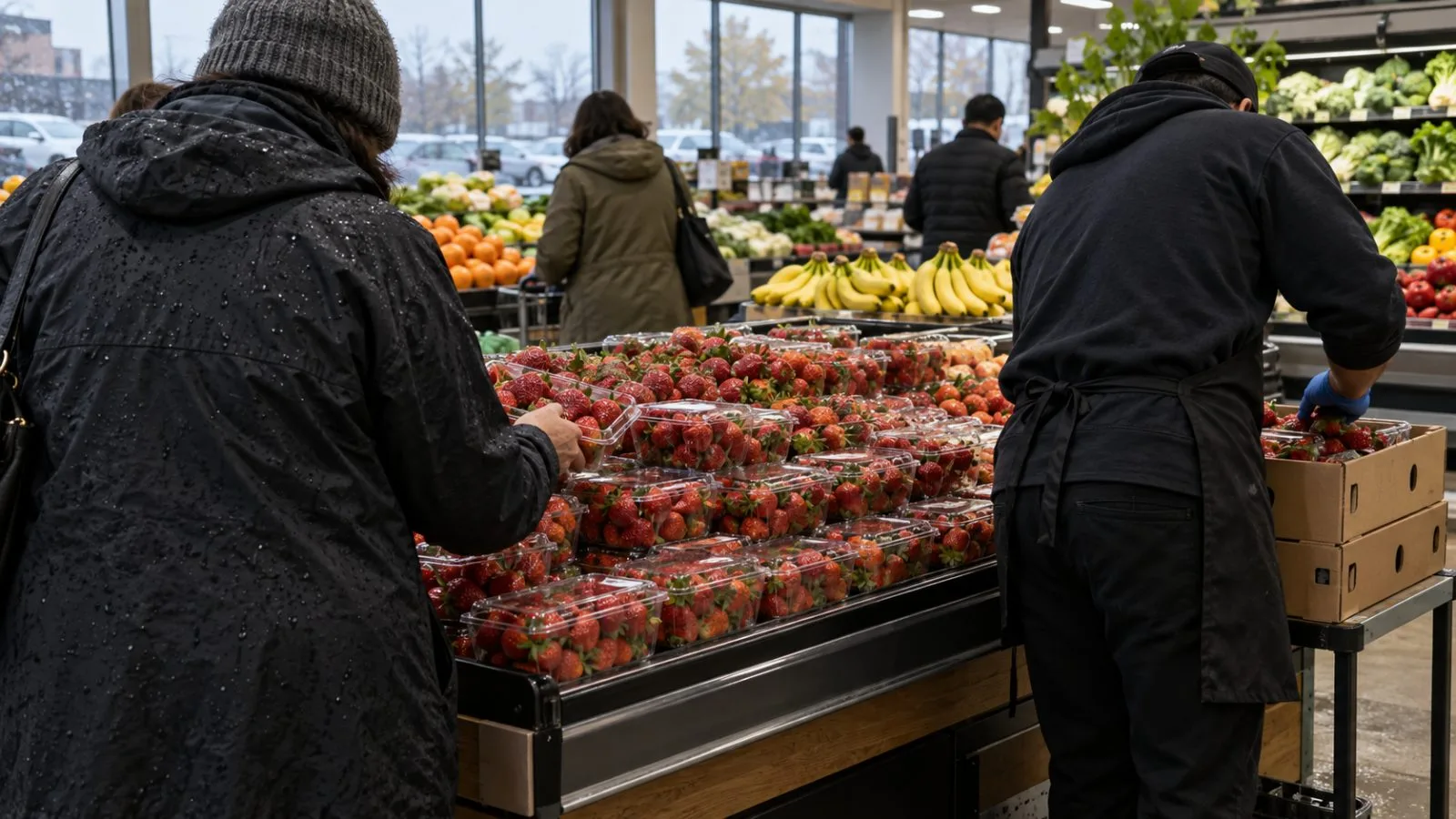
Canada's grocery inflation accelerated in October after four months of slowing, Statistics Canada said, interrupting a run of easing while food prices remained well above their 2020 levels.
Prices for food purchased from stores rose 2% from a year earlier, compared with 1.7% in September. The all-items Consumer Price Index (CPI), which tracks the broader consumer basket, increased 3.1%. Grocery inflation therefore remained below the overall rate.
The October reading follows the September grocery inflation report. The annual rate compares October prices with those in the same month a year earlier, rather than with September. A slower rate of increase does not mean prices fell or returned to earlier levels.
Fresh vegetables helped drive the October acceleration, Statistics Canada said. Sugar and confectionery, as well as condiments, spices and vinegars, made smaller contributions.
Statistics Canada said gasoline prices were 30.9% higher than a year earlier, with a base-year effect among the factors behind the increase. Store-bought groceries cost 31.9% more than in October 2020, showing that the recent easing in annual growth had not erased earlier price increases.
For U.S. readers, the Canadian figures offer a neighboring North American snapshot of food and energy prices within consumer inflation: grocery inflation was below the broad CPI rate even as gasoline rose sharply.
Loblaw's Nov. 18 report described rising energy expenses as a new source of strain for the food supply chain. The company said effects on grocery prices may emerge only after fuel expenses move through the steps between food production and delivery to stores.
Statistics Canada is scheduled to release the November CPI report Dec. 14.