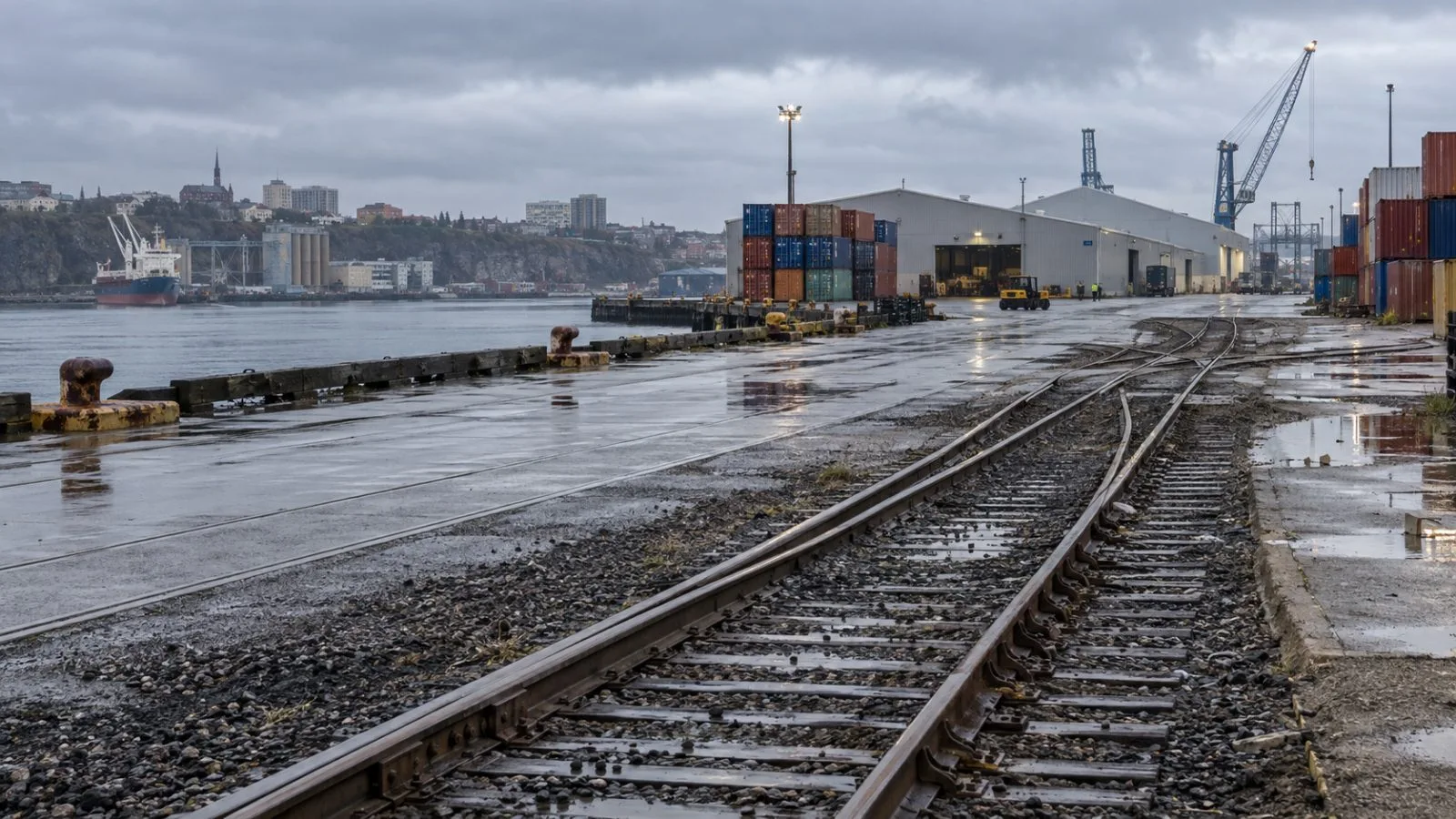
Canada and New Brunswick announced Oct. 21 a C$463 million plan to expand Port Saint John’s trade capacity and improve rail and road links as the country seeks to reach markets beyond the United States.
Transport Canada says the upgrades would enable the port to handle 850,000 to 1 million twenty-foot equivalent units (TEUs) annually. The department expects dredging and marine work to give fully loaded vessels drawing more water at least 30% additional opportunities to use the port at high tide.
New Brunswick lists C$116.5 million from the province, C$254 million from the federal government and C$92.5 million combined from project partners. Transport Canada describes Ottawa’s contribution as up to C$254 million; the provincial release does not break down the partners’ combined share.
The work includes widening the port’s main channel through dredging, improving marine infrastructure and breakwaters, warehouse work and a 2,787-square-meter container examination facility for the Canada Border Services Agency. The rail component includes replacing 103 kilometers of existing rail and other track upgrades, with speeds of up to 64 km/h. Plans also call for shoreline stabilization at the New Brunswick Southern Railway’s Bayshore Rail Terminal and reconstruction of the Simms Corner intersection to separate rail and road traffic.
The Trade Diversification Corridors Fund, introduced in Budget 2025, is a C$5 billion program intended to improve trade infrastructure, open access to global markets and help double non-U.S. exports. Transport Canada says the Saint John work builds on more than C$76 million in earlier investments through the National Trade Corridors Fund. The department cites expected benefits for businesses moving goods to more markets, shipping services, jobs and regional growth.
Minister of Transport Steven MacKinnon said Canada “cannot take access to any single market for granted.” The Canadian Press quoted University of New Brunswick economics professor Constantine Passaris calling the upgrades an “insurance policy” if Canada does not reach a trade deal with the United States.