

Carbon offsetting – where companies or governments atone for their carbon emissions by buying credits to fund projects that are supposed to remove emissions from the atmosphere – has a bad reputation.
In the past few years, wildfires in the US have torn through hundreds of thousands of forested acres associated with carbon credits and sold to companies including Microsoft. Earlier this month, many scoffed when Taylor Swift tried to shrug off the emissions from her private jet travel by paying for offsets.
Sadly, low-integrity offset projects are the norm, not the exception. A 2023 investigation reviewed a broad swathe of rainforest protection projects and found that “94% of the credits had no benefit to the climate”. The issuer of carbon credits at the heart of the investigation has disputed its findings, but also announced it is introducing a new, “more consistent” methodology.
Consider deforestation. The vast majority of dubious credits on the market today are issued by companies who pledge to protect forests from timber harvesting. These firms may use faulty baseline accounting practices to make claims that can mislead even the most well-meaning sustainability executives. For instance, credits are routinely issued on the promise of protecting forests that have already been designated for conservation in perpetuity.
To add insult to injury, behind every bad offset is a well-meaning buyer who feels absolved of their carbon debt. When an airline successfully prompts a traveller to pay a few extra dollars to offset the emissions of their flight, they might no longer feel the sort of guilt that could have led them to take the train instead.
This broken market persists for a few reasons. First, unlike any other commodity, carbon offsets are generally invisible, creating a classic “lemons market” in which buyers can’t easily discern quality and so are content to buy even the most dubious carbon credits. The market is also largely unregulated, without robust consumer protection standards. And offset developers can be guilty of ignoring evidence that their projects fail to benefit the climate.
Many have suggested shutting down offsets as a tool for slowing climate change. But as temperatures rise faster than ever, scientists have made clear that slowing down emissions alone will be insufficient to limit global warming to the critical threshold of 1.5°C. We also need a well-coordinated effort to put climate-warming carbon dioxide back into the ground.
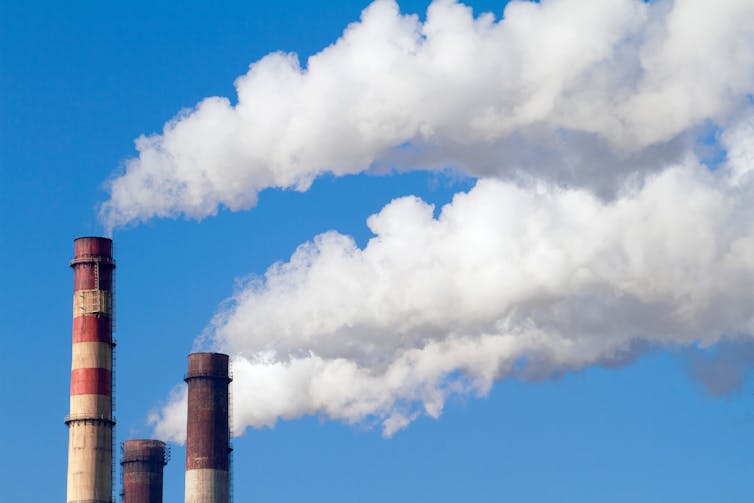
Stopping emissions will not be enough on its own. Mazur Travel/Shutterstock
We and our colleagues at the University of Oxford have just published a set of evidence-based principles to help fix this broken market. Purchasers will still need to do their due diligence, but we’ve laid out a path for where to begin.
1. Prioritise deep and direct emissions cuts
Carbon credits must only be used as a last resort. Rather than kick the can down the road, polluters must do everything within their ability to simply reduce their carbon footprint. Offsets should only be used to balance out emissions that cannot be practically eliminated with current technology.
2. Scale up high-integrity carbon removal
There is a global shortfall of high-integrity carbon dioxide removal. Our analysis finds that fewer than 4% of carbon credits are generated by projects that remove (and safely store) excess carbon dioxide from the atmosphere. The other 96% claim to avoid emissions in the first place – but most fail to meet those claims when scrutinised. In the next quarter-century, industry leaders will have to close this massive gap in carbon removal.
3. Invest in long-lasting solutions
Most offset projects today are prone to short-term reversal, like a forest beset by drought and wildfire. But because carbon pollution can last in the atmosphere for thousands of years, offsets must also store carbon for millennia in order to avoid passing on emissions to future generations. Long-term solutions to carbon removal are more costly, but avoid the dangerous risk of reversal that dominates the market today.
Current offsetting practices must be overhauled to meet critical climate targets. And until governments finally intervene to regulate carbon offsetting, the responsibility for reform falls at the feet of buyers and investors. Our updated principles can help them live up to this planetary responsibility.


