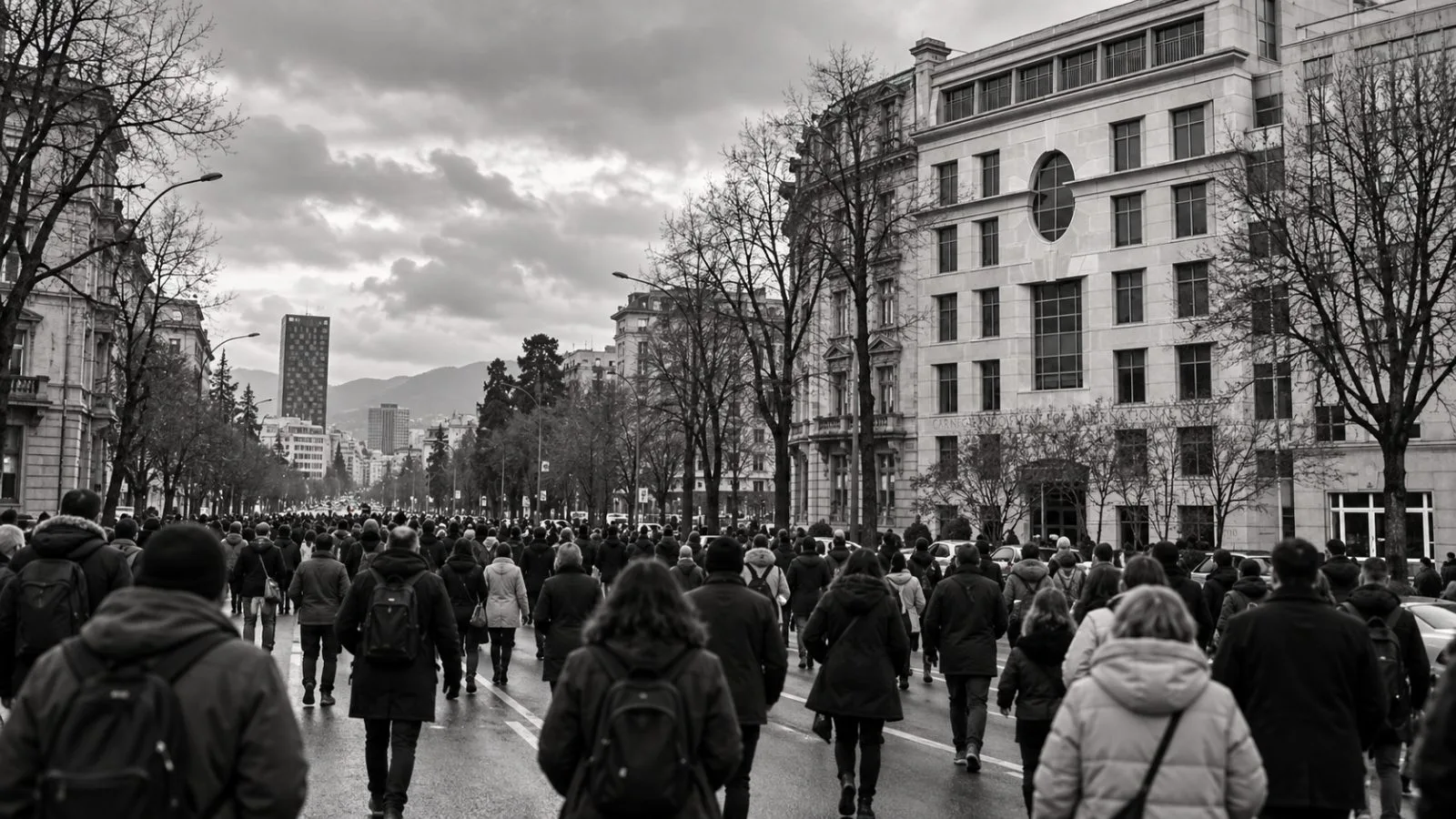
The Carnegie Endowment for International Peace counted anti-government protests in more than 57 countries in the year before Sept. 9, 2026, but its data do not classify how many sought to replace governing systems.
Its Global Protest Tracker logged more than 107 significant demonstrations in that period and listed 33 as active at the Sept. 9 update. The entries describe movements’ motivations, size, duration, violence and outcomes. The published data provide no standardized total for protests demanding a different political system.
One entry concerns an August protest in Argentina over a property bill affecting eviction procedures and rural land use. That policy dispute shows why a count of anti-government demonstrations cannot, on its own, establish how many movements seek to change the system of government.
Albania’s demonstrations have brought several demands together. Le Monde reported that opposition to a luxury tourism project grew into a broader movement known as the Flamingo Revolution. The Associated Press reported Oct. 20 that students joined with demands for lower tuition, more public education funding and action on corruption in the education system.
The movement has called for Prime Minister Edi Rama to resign, AP reported. Carnegie’s account also lists calls for opposition leader Sali Berisha to step down. Rama said people involved in violent protests were trying to force a change in power, while acknowledging concerns about housing and living costs, according to AP.
Carnegie researchers Thomas Carothers and McKenzie Carrier examined cases from 2018 to 2025 in which protests produced political change in undemocratic settings. They cited Algeria and Sudan as places where leaders were ousted but military establishments retained power.
Among at least seven cases of protest-driven change in that review, the researchers found that Bangladesh alone saw protesters overturn the governing power structure in a substantially autocratic setting.