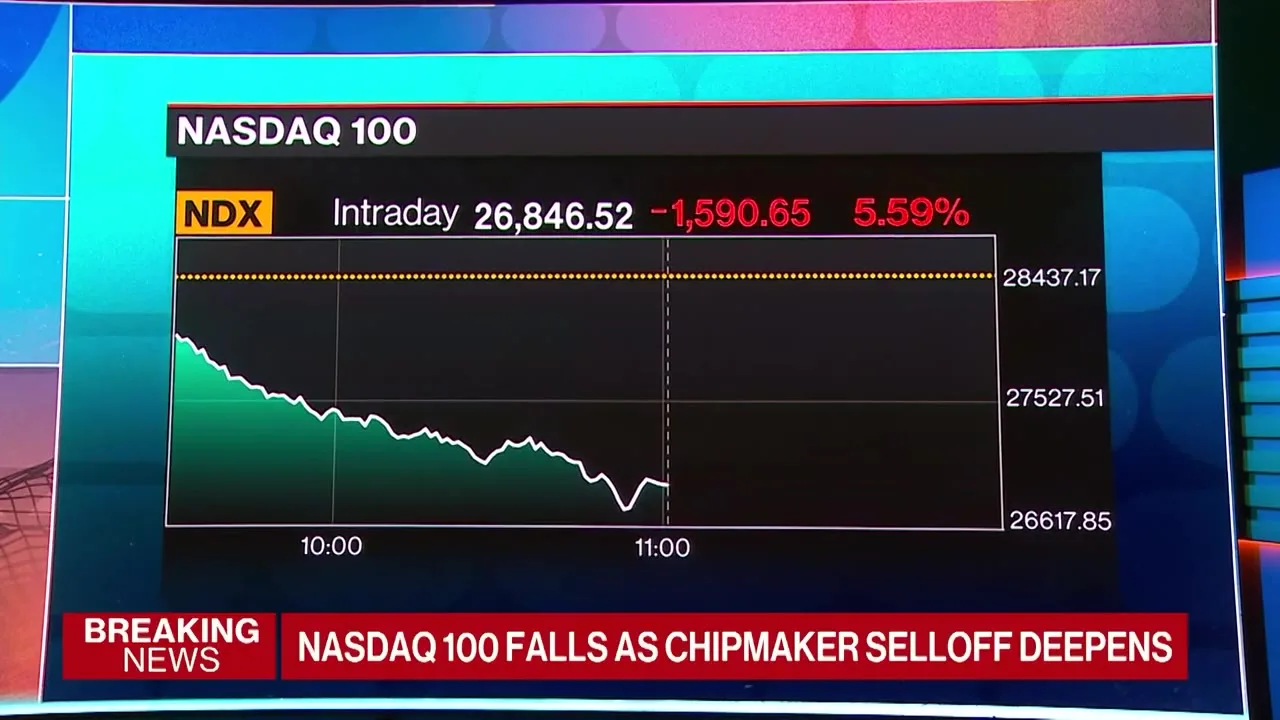
ANewFN founder Clem Chambers said U.S. stocks could face sharp losses if policymakers restrict artificial intelligence, arguing the technology sector's role in the economy leaves markets vulnerable to a policy shift.
In a Nov. 5 interview with David Lin, Chambers said criticism from some Democrats of AI development and data center expansion had unsettled investors. He described the policy debate as a source of market uncertainty and said the reaction could be temporary. Chambers hoped experienced party figures would reassure investors that Democrats would not constrain AI.
In Chambers' account, the post-election advance reflected liquidity becoming available after the vote. He said liquidity had been held back beforehand to avoid affecting either markets or the election. For the reversal the following day, he pointed to the absence of another injection and investor concerns about AI policy. EconoTimes covered the Nov. 4 rise in U.S. stocks after projections indicated Democrats would control both chambers of Congress.
Chambers estimated a 25% decline from the interview date if Democrats failed to clarify that they were not opposed to AI. He put the potential drop at 30% to 40% if substantial restrictions became policy. The estimates described separate scenarios tied to the response to the technology policy debate.
He said other parts of the U.S. economy had weakened while technology and financial markets grew more important. Chambers argued that much of Silicon Valley's intellectual property value was reflected in equities, leaving the broader economy vulnerable to limits on technology growth.
Chambers said China had advanced in robotics and caught up with the United States in AI, rejecting the view that those gains were simply copies of U.S. work. He argued that electricity supply would matter to the country's ability to remain competitive. Chambers also warned that restrictive policies could bring a repeat of 2000.