Lack of financing for the artificial-intelligence industry could cut U.S. stock-market capitalization by 50%, while added liquidity could help markets recover, financial markets investor Clem Chambers said in a Nov. 26 interview with David Lin.
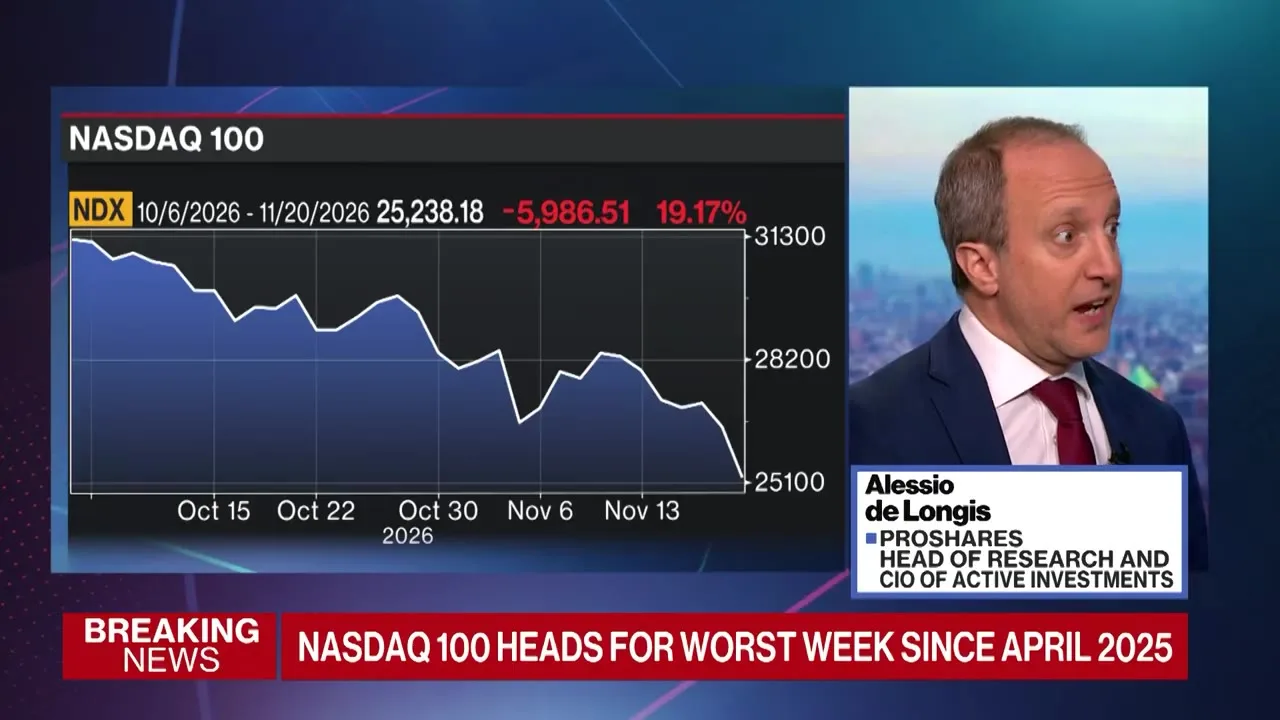
Chambers said the Nasdaq stood roughly one-fifth below its peak and was nearing what he called an “apocalyptic crash.” He said a typical crash begins after a decline of about 25%, while a 50% correction in the index could severely damage the U.S. economy.
He tied that risk to the financing needed to keep AI investment moving. In his view, money entering the banking system would initially favor riskier assets, ease the effect of interest rates and support a recovery. If liquidity is not supplied or AI companies cannot obtain the funding they need, stock-market capitalization could fall by half, he said.
Chambers said the United States should expand the money supply and direct industrial investment toward preserving its advantage over China in AI. He said that strategy could produce higher inflation and economic disorder alongside an economic boom, making the policy choice carry costs as well as potential benefits.
Large technology companies face a related tradeoff, Chambers said. Cutting AI spending could weaken their competitive position, while an industrywide push to keep spending could leave some companies unable to survive even if others do. He described the decision as an existential choice for companies and the U.S. economy.