China has reported long flights for its reusable spacecraft but disclosed few mission details, while the U.S. Space Force has named X-37B experiments, giving the public more information about selected activities.
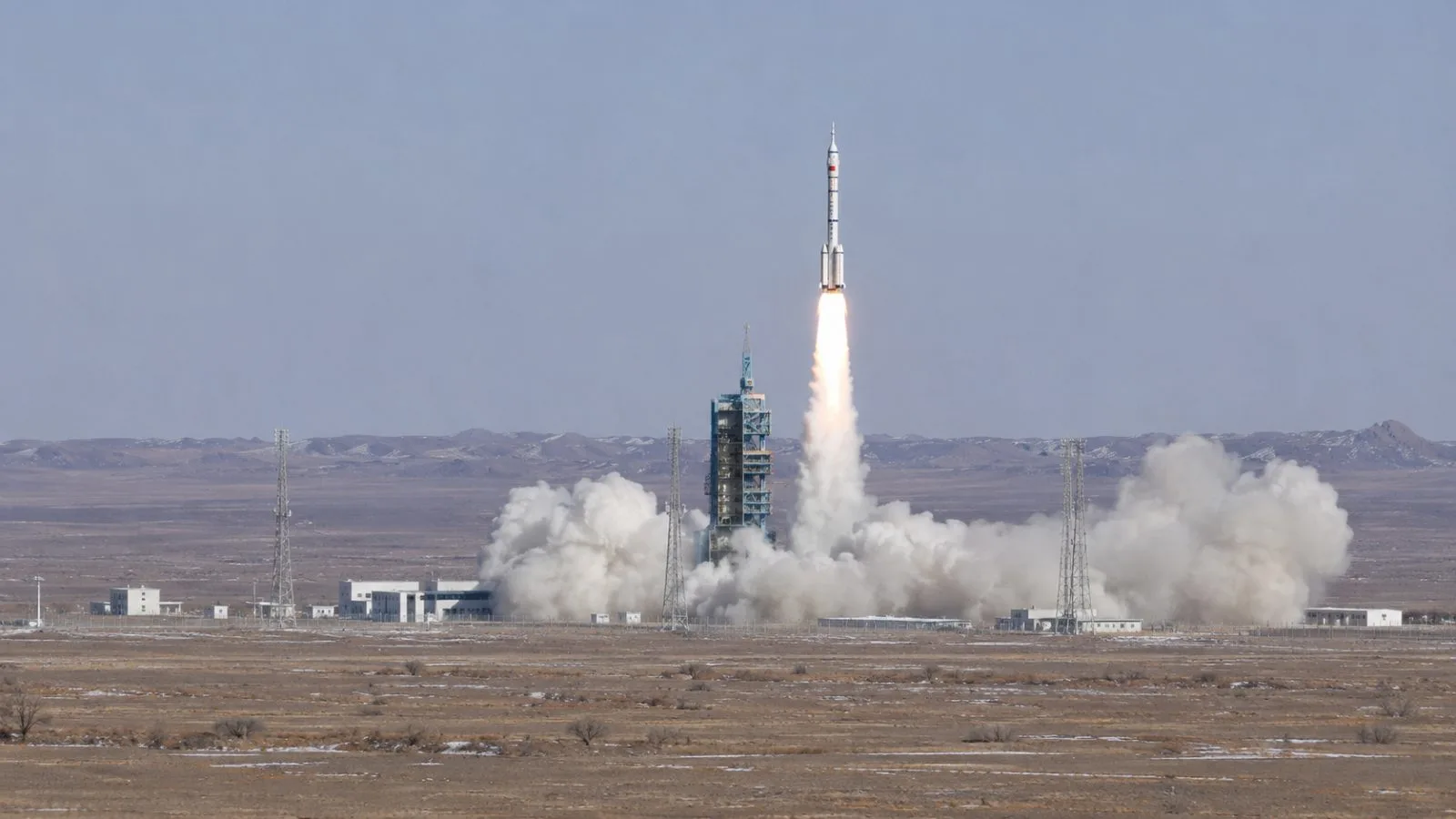
China launched another reusable experimental spacecraft aboard a Long March-2F rocket from Jiuquan on Feb. 7, Xinhua reported. The announcement said the flight would verify reusable spacecraft technology. It did not name the vehicle or describe its payload.
The China National Space Administration said the first reported Chinese reusable experimental spacecraft returned in September 2020 after two days in orbit. Xinhua later reported a flight that ended May 8, 2023, after 276 days, and another that ended Sept. 6, 2024, after 268 days. China has separately described its reusable spacecraft program as supporting peaceful uses of space.
The X-37B has a longer published mission record. Boeing says the U.S. spaceplane first launched April 22, 2010, and had completed seven missions by March 2025. Its sixth flight lasted 908 days, from 2020 to 2022, the longest of its completed missions.
A Falcon 9 launched the eighth X-37B mission on Aug. 21, 2025. For that flight, the Space Force planned demonstrations involving laser communications and a quantum inertial sensor. The announcement described planned tests, not their results.
On its seventh mission, the X-37B used atmospheric resistance to adjust its orbit, a fuel-saving technique called aerobraking, the Space Force said. The vehicle landed March 7, 2025, after more than 434 days in orbit. Boeing says returning the X-37B allows equipment to be examined on the ground after a flight.
Ground-based observations offer a narrower view of China’s program. LeoLabs said it detected an object near a Chinese spaceplane on June 22 and assessed with high confidence that the craft had released it. The Secure World Foundation says the craft’s observed activity raises questions about military applications, but does not show that it has an attack role.