


 Trump Gaza Peace Plan Stalls as Israel Retains Control
  Trump Envoy Meets Sudan Army Chief in Egypt
  Trump Signs Order to Cut Routine Childhood Vaccines
  FDA Investigates New Cyclospora Outbreak as U.S. Cases Continue to Rise
  Sanofi, Regeneron Expand Drug Partnership in $8 Billion Deal
  Ethiopia-Tigray Fighting Intensifies as Airstrikes Kill 17
  Trump Plans Diesel Tax Relief as Fuel Prices Hit Record Highs
  Novo Nordisk Eyes Turnaround as Oral Wegovy Challenges Eli Lilly in Weight-Loss Drug Race
  ISIS Attack Near Kirkuk Kills Iraqi Policeman After US Withdrawal
  Novartis Shares Plunge After Muscle Drug Fails Phase III Trial
  Flavio Bolsonaro, Lula Head to Brazil Election Runoff
  Trump Orders Firing Squad Execution for Fort Hood Gunman
  Trump Administration Bars U.S. Travelers From Congo Flights Amid Ebola Outbreak
  Novo Nordisk Strikes €1.17 Billion Nanexa Drug Delivery Deal
  Vance Demands Iran Cut Nuclear Enrichment to End War
  AstraZeneca Halts Phase III Volrustomig Lung Cancer Trial After Efficacy Setback


 Add as a preferred source on Google
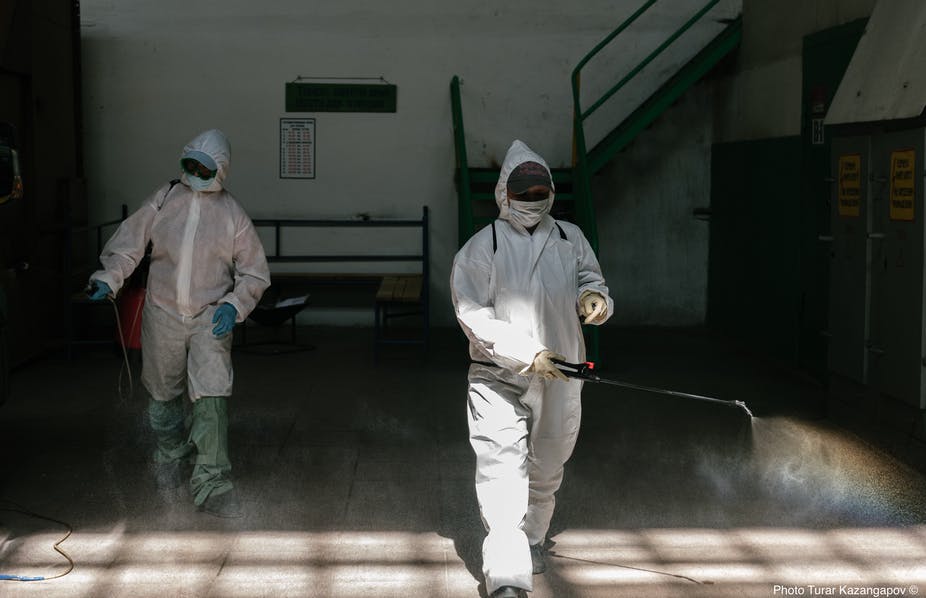
Kazakhstan became the first country in the world to enter a second nationwide lockdown on July 5 following a spike in coronavirus cases. The two-week lockdown, which could be extended if the spread of the virus continues, restricts public gatherings and bans family and holiday gatherings. Citizens over 65 are expected to stay home, but others are allowed to exercise outdoors on their own.
The number of coronavirus cases in Kazakhstan has grown tenfold since the first lockdown measures began to be lifted. By May 11, the last day of the state of emergency and lockdown, Kazakhstan had registered 5,207 coronavirus cases and 32 deaths. As of July 13, there were 59,899 confirmed coronavirus cases and 375 deaths in the country. But the situation is evolving quickly and could be a lot worse than this.
On July 8, the Chinese embassy in Kazakhstan warned Chinese citizens that the country had an “unknown pneumonia” outbreak more deadly than COVID-19. The following day, the Kazakhstani health ministry acknowledged the presence of viral pneumonias of “unspecified” cause, but denied that the outbreak was new or unknown. The newly appointed health minister, Alexey Tsoy, declared that the claim published by Chinese media “does not correspond to reality”.
Serious concerns have been raised about the pneumonia data. Between July 1 and 8, Kazakhstan registered 56,809 cases of pneumonia – on top of the confirmed cases of COVID-19. These pneumonia cases included the “usual pneumonia” – viral (7,348) and bacterial (9,759) – as well as well as 39,702 “unspecified” viral pneumonia cases which have a similar course of disease as coronavirus, according to the health minister. Pneumonia patients with negative coronavirus tests are not included in the government’s official statistics of coronavirus.
Mike Ryan, head of the WHO’s emergencies programme, suggested that many cases linked to the highly lethal pneumonia could be in fact “undiagnosed cases of COVID-19” – which would show the government is nowhere near in control of the pandemic.
How has Kazakhstan, referred to in May as “an anti-pandemic model for Central Asia” turned into such a bad example of how not to do COVID?
Success unravels
Kazakhstan was quick to introduce a Soviet-style military lockdown and quarantine measures – which included suppressing dissent. It also introduced a substantial package of financial measures to fight the pandemic, and monthly payments for people who lost their income during the state of emergency in April and May.
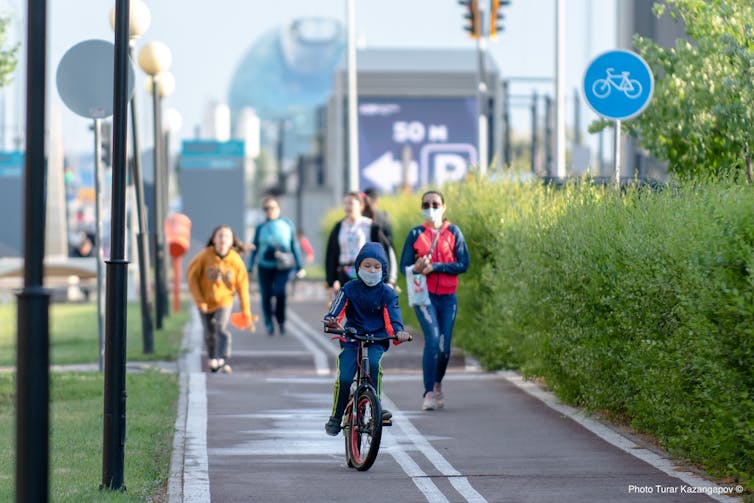
A new normality for Kazakhstani citizens in Nur-Sultan city in June. Turar Kazangapov
But once the quarantine measures eased, many Kazakhstani citizens began to ignore social-distancing guidance. Many underestimated the risks of the virus: they hurried to offices, cafes, pubs, parks and fitness centres. Families gathered for large weddings, birthdays and funerals. Soon, initial optimism about the government’s handling of the virus would be replaced with panic, helplessness and disillusion.
In June, Kazakhstan’s former president, Nursultan Nazarbayev, tested positive for coronavirus. Soon after, many ministers, MPs and local mayors tested positive and self-isolated. On June 25, the health minister, Yelzhan Birtanov, who developed pneumonia from a COVID-19 infection, announced his resignation.
Following Russia’s example, in June the Kazakhstani health ministry started recording asymptomatic infections separately from the official number of the coronavirus cases. The government claimed that this was justified because symptomatic patients pose a greater epidemiological danger to others and require clinical observation. But on July 1, the health ministry made a U-turn, and began updating COVID-19 statistics without dividing the cases into symptomatic and asymptomatic, which boosted the official number of cases.
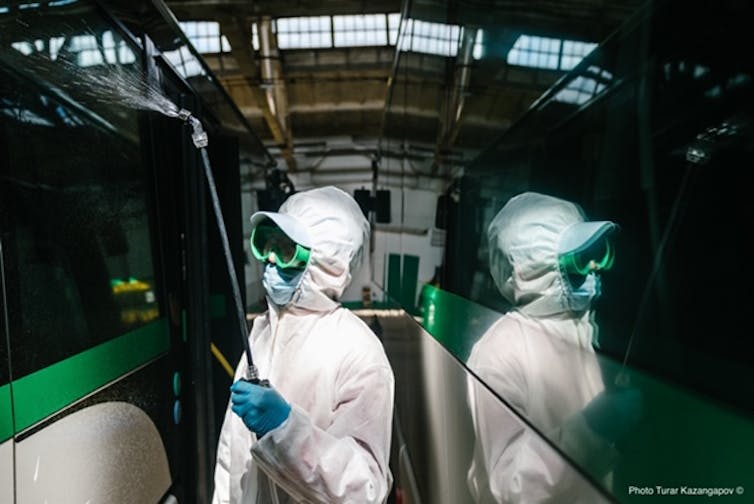
Disinfection of a public bus in Kazakhstan’s capital, Nur-Sultan city. Turar Kazangapov
Rising anger
As a result of the spike in coronavirus and pneumonia cases, citizens have complained about overcrowded hospitals, lack of COVID-19 tests, long queues for testing laboratories and pharmacies, and a deficit of medicines.
Panic-buying of medicines has led to speculation and the sale of drugs on the black market at much higher prices. At the outbreak of the pandemic, Kazakhstan received international humanitarian support, including from the US, China and Russia. Now social media has been flooded with photos of medicines bought at pharmacies with stickers showing they were donated as humanitarian aid and so should not be for sale.

Fireworks amid the mourning: Capital Day was celebrated in Nur-Sultan city on July 6. Turar Kazangapov
Communication has never been a strong point of the Kazakhstani authorities. Amid the pandemic and citizens’ mourning for their family members, online concerts and fireworks were organised on July 6 to celebrate Capital Day in Nur-Sultan city, which coincided with the 80th birthday of Nazarbayev, known as the “leader of the nation”. The official authorities said that they hoped to cheer up front-line medical workers.
In response to the overwhelming public criticism, the government declared July 13 a day of national mourning for COVID-19 victims. Such public acknowledgement of failure by a central Asian government is exceptional.
The Kazakhstani president, Qasym-Jomart Toqayev, announced the possible dissolution of the entire cabinet if the situation does not improve by the end of July.
The pandemic has exposed the weaknesses of a government built on endemic corruption, patronage and personal loyalty to politicians. Kazakhstan is now paralysed amid a crisis which requires strong and effective government institutions, evidence-based decision-making and public accountability – none of which are strengths of this authoritarian government.







