
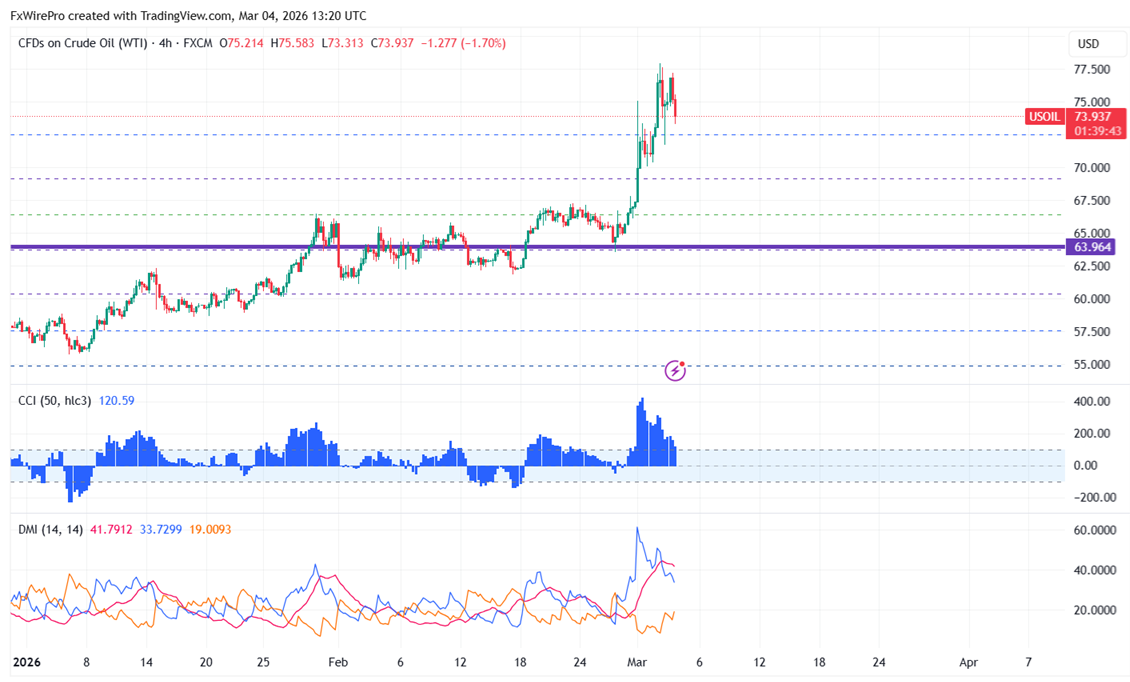
Crude gained sharply on the escalation of tension in the Middle East. It is presently trading around $73.59 after reaching a high of $79.50.
WTI crude oil prices increased 2.1% to trade at USD 79.50 per barrel on March 4, 2026, as political unrest escalated in response to Iran's claimed blockade of the Strait of Hormuz. Handling about 20% of the world's oil supply, this important maritime bottleneck became a point of contention following IRGC live-fire exercises and retaliatory threats prompted by U.S.-Israel "Operation Epic Fury." Although the U.S. Navy still logs escorted transits, persistent tanker assaults and mine concerns have driven a 15% rise in WTI prices from late February. Although recent profit-taking has capped immediate profits, market analysts advise that a sustained escalation in shipping problems could rapidly drive crude benchmarks towards the USD 85 to USD 90 range.
Price Resistance and Support Levels
The near-term resistance is around $76; any close above this level could push prices higher to $78/$80.85/$84.50.On the downside, immediate support is at $73 violation below targets $72.50/$70/$69.15/$68.
It is good to buy on dips around $72.50 with a stop-loss around $70 and a target price of $78/$80.


