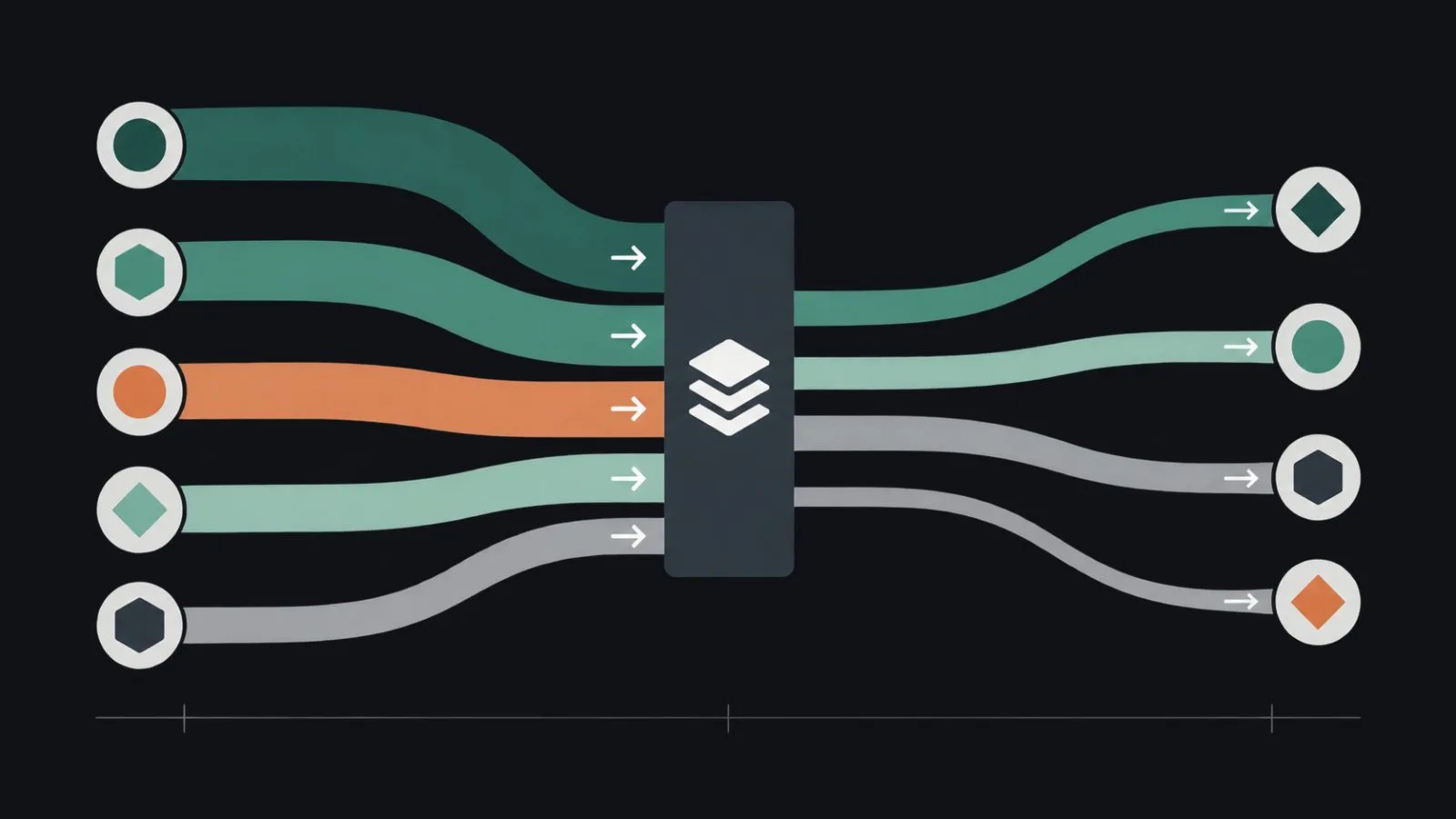
Tether’s USDt (USDT) and Circle’s USDC both target $1, but issuer-redemption access differs; Ondo’s OUSG requires purchasers to qualify as accredited investors and qualified purchasers under its terms.
Crypto market rankings show the value assigned to an asset but leave out whether its holders gain network access, governance powers or a direct route to issuer redemption. The distinction matters because market capitalization is a pricing measure, while a token’s practical uses and entitlements vary by design.
On the Oct. 25 UTC reading, Tether’s USDt (USDT) had a valuation of $182.5 billion, Ether (ETH) stood at $287.9 billion and Bitcoin (BTC) at about $1.625 trillion. A token’s market capitalization is calculated by multiplying its quoted price by its circulating supply; ranking lists then sort assets by those values. The calculation does not add up what buyers spent, nor does it mean every circulating unit could be sold at the posted quote.
Network use is one distinction among assets. Ether covers transaction and computing costs on Ethereum, while Solana (SOL) is used to pay transaction fees on Solana. BNB pays BNB Smart Chain network charges; Binance users can also apply it toward trading fees for a discount.
USDt and Circle’s USDC are designed around a $1 value, but that target does not guarantee direct redemption. Tether’s terms let verified customers who meet its eligibility rules redeem USDt for $1 per token, minus applicable fees, and generally exclude U.S. persons from the service. Circle Mint makes direct USDC redemption available to eligible institutions.
Governance and service tokens carry different roles. Uniswap’s UNI and Aave’s AAVE let holders participate in protocol governance. Chainlink’s LINK pays for oracle services — data feeds that bring outside information to blockchain applications — but that use does not itself establish a right to the service’s revenue.
Financial products can impose separate access conditions. The OUSG product comes from Ondo I LP and gives holders exposure to money market funds and U.S. Treasury securities with shorter maturities. Access requires both accredited-investor and qualified-purchaser status. ONDO carries the project’s governance function; owning it is separate from holding OUSG.
A market-cap ranking is a scale comparison. A token’s function and the terms of a financial product determine what holders can use or access.