Lingnan University said September 2025 samples from four western Hong Kong sites contained environmental DNA from the critically endangered Chinese bahaba, the city's first scientific detection of the species in more than a decade.
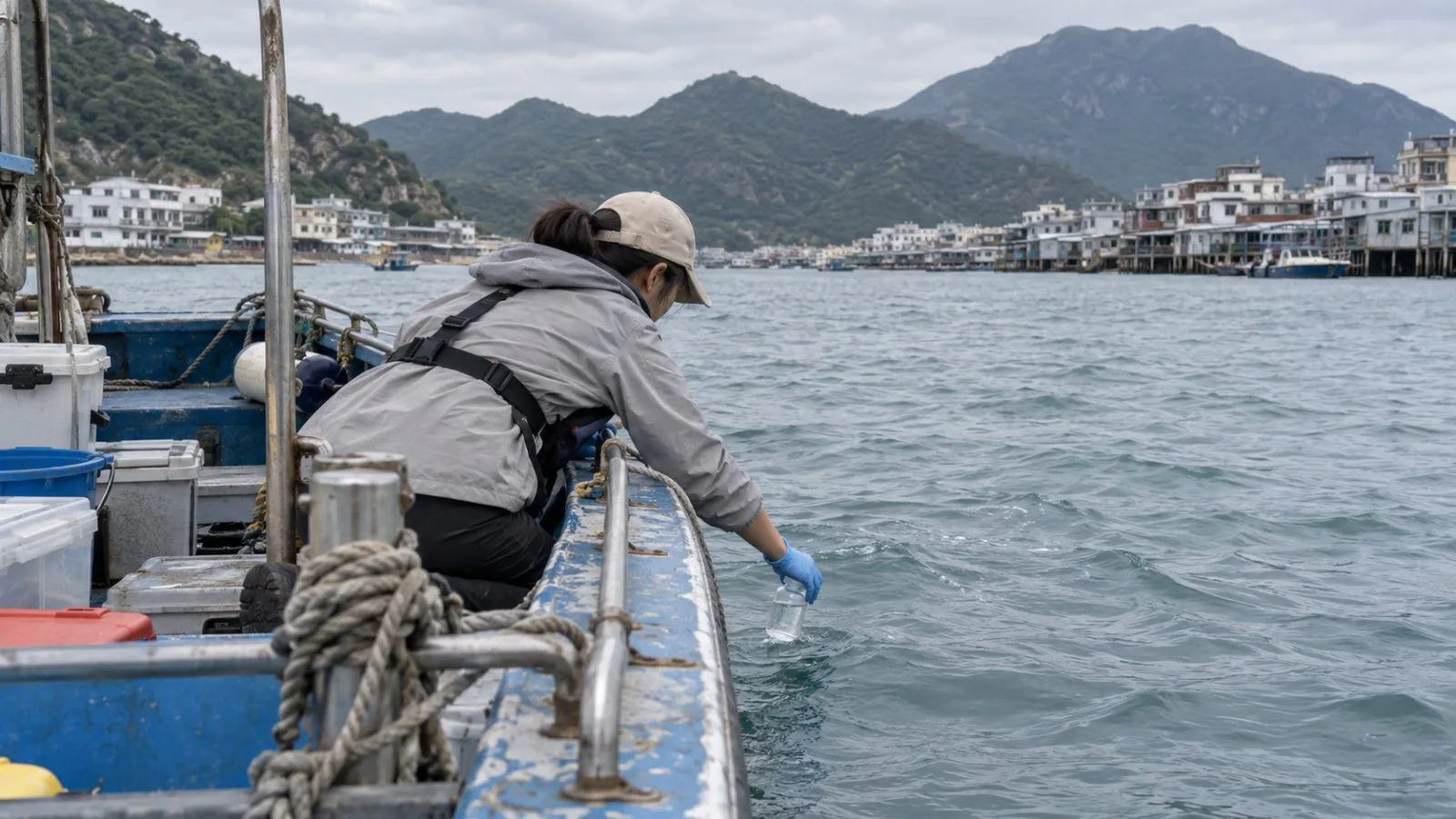
Researchers surveyed 23 sites in western Hong Kong waters from January through September 2025, collecting 414 seawater samples. Positive September samples came from Tai O and Sunny Bay, as well as two marine parks: Southwest Lantau Marine Park and Sha Chau and Lung Kwu Chau Marine Park. Tai O had the highest detection frequency and the strongest reported eDNA signal.
A preprint posted on bioRxiv on July 21 reported assay measurements of 0.71 to 2.85 target copies per microliter, with a mean of 2.05. These figures describe the laboratory assay, not the DNA concentration in the original seawater. The paper says positive results were confirmed by Sanger sequencing and has not been peer-reviewed.
Lingnan said its results cannot determine whether the DNA came from wild fish or hatchery-reared juveniles. About 1,300 juveniles were released into the Pearl River Estuary in August 2025, and the university suggested some may have moved into Hong Kong waters.
Lingnan Assistant Professor Jack Ip Chi-Ho said eDNA sampling’s main advantage is its “non-invasive nature.” He said seawater sampling can let researchers monitor the species without capture methods that may disturb seabed habitats or affect other marine life.
The International Union for Conservation of Nature classified the Chinese bahaba as Critically Endangered in 2020. It named overfishing as the main threat and estuary degradation as a possible added pressure. The assessment said Hong Kong catches dropped from 10 metric tons in the 1950s and 1960s to near zero by 1997, a 96% decline. Lingnan said the medicinal value of the fish’s swim bladder contributed to heavy overfishing.
A separate study published Oct. 14 in Biology reported putative bahaba DNA signals at four of 21 paired Pearl River Estuary stations in April 2025 and 10 of 21 in September. All were below the study’s quantification limit. The study said water can transport eDNA, so a positive sample does not confirm a living fish was at that station. Its survey route ran from Humen to Nei Lingding Island, and the study details do not establish whether its stations overlapped with Lingnan’s Hong Kong sites.