


 Citi Sees Signs of Shift in Global Currency Policy
  Russian Strikes Across Ukraine Kill Nine, Injure Dozens
  Volkswagen Job Cuts Put Lower Saxony Leader Under Political Pressure
  Sweden Election Puts Far Right and Centre Left in Tight Race
  Trump Expects Iran War to End After U.S. Midterms
  US Caribbean Vessel Strike Kills Three
  Russian Strikes Hit Kyiv as Ukraine Targets Russian Cities
  Taiwan Flags Russian Film Screening as China-Japan Influence Push
  BRICS Calls for Restraint as Middle East War Escalates
  Ukraine Prepares for October Peace Talks With Russia and US


 Add as a preferred source on Google
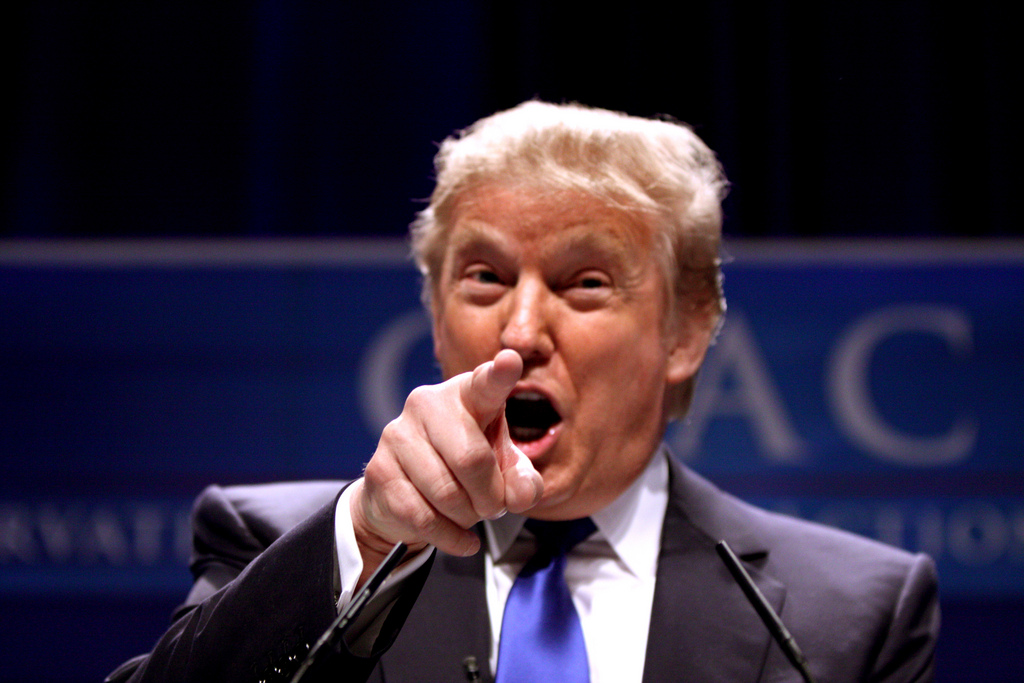

Is it time to think the unthinkable? Could Donald Trump actually become the next president of the United States? He already looks a certainty to become the Republican nominee – something not many pundits were willing to concede until recently. Unfortunately, as Trump might say, he is “winning, winning, winning”.
Nevertheless, the conventional wisdom is still that he’ll ultimately lose badly to Hillary Clinton when Americans come to their senses and recognise the danger a Trump presidency presents to America and the world.
But will they? Are there sufficient numbers of Americans who feel angry, alienated, disenfranchised and unhappy about America’s declining fortunes to actually make Trump the most powerful man in the world?
It would be unwise to bet against such an outcome in the febrile political atmosphere that has affected polities across much of the world. One might have thought the times were made for thoughtful political leaders recognised the complexity of the current international order and who were doing their best to come up with politically feasible practical responses to difficult challenges.
One might be wrong. The diminished political stocks of Barack Obama, Angela Merkel and Malcolm Turnbull are painful reminders of what happens to political leaders who cannot articulate a persuasive case for complex, potentially difficult policy. “Cutting through” is more important than policy credibility. Only connect, as E.M. Foster might have put it.
Whatever qualities Trump may lack in experience, judgement and knowledge of the world, he clearly does have an ability to connect with large numbers of “ordinary” Americans. As he points out himself, much of his support comes from the poorly educated and marginalised, who are the tragically ironic product of the very system he disowns.
Yet Trump is also a product of the increasingly polarised, poisonous and partisan politics that has come to define the US of late. It is not simply that the American political system has become synonymous with gridlock and dysfunction, but that there is no room for the sort of compromise and negotiation that is – or ought to be – the very essence of politics, especially in a democracy.
The fight over the nomination of the next Supreme Court justice is a telling indicator of just how politicised key elements of the American political system have become.
In this regard, the Republicans only have themselves to blame. As the conservative commentator Robert Kagan points out, Trump is a direct product of the vicious, uncompromising approach to politics that has characterised the Republican Party over the last few years.
Belittling and politicising the key institutions of American government, to say nothing of their political opponents, has had a predictably corrosive impact on public confidence in the existing political system.
Those Americans who have become so enraged with the behaviour of “Washington insiders” have a point. The political system really has become dominated by powerful lobby groups, and it really is possible to buy influence and shape public policy to suit private corporate interests. The rise of Bernie Sanders is a refection of the widespread disenchantment with the status quo and the desire to do things differently.
Trump’s even more rapid rise is a reminder that political dissatisfaction and alienation will not necessarily result in the adoption of “progressive” values and causes, much less reform of the very institutions that caused so many problems in the first place.
This is one of the reasons that a Clinton triumph is not assured. She is the consummate political insider and partly responsible for the increasing divisions of wealth and opportunity that have created an opportunity for Trump. She is plainly closer to Wall Street than Main Street, to say nothing of the millions with a stake in neither. Demagogues, at least, can prosper in such circumstances.
Trump is an odious popinjay with astoundingly abhorrent and dangerous views he makes little effort to conceal. In this regard, at least, he is authentic: what you see is, regrettably, what we may all get. Will Americans rediscover their self-declared historical mission as a bastion of liberty and enlightenment? Don’t bet on it.
The crowds of Trump supporters shouting “USA, USA” at his rallies probably don’t read the Federalist Papers in their spare time. True, it’s not “Sieg Heil” and the Nuremburg rallies. But as the Americans might say, it’s in the ballpark.
Condescending? Alarmist? Let’s hope so. The alternative doesn’t bear thinking about.
 Mark Beeson, Professor of International Politics, University of Western Australia
This article was originally published on The Conversation. Read the original article.







