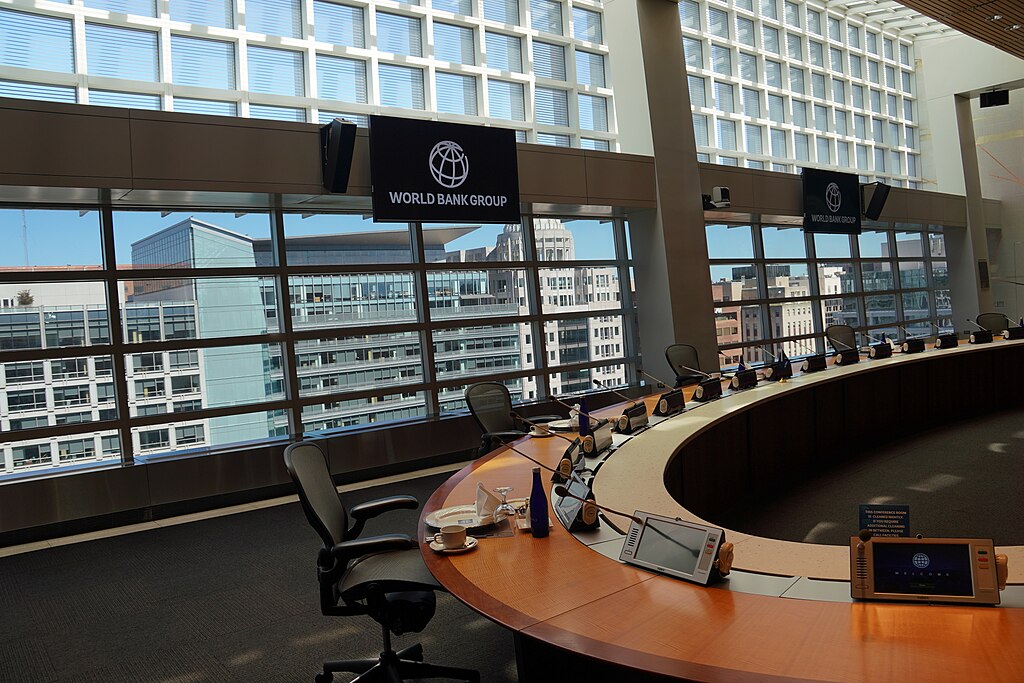
Developing countries are facing mounting financial pressure as rising debt burdens, higher borrowing costs and declining foreign aid force governments and international institutions to seek alternative development financing, particularly through private investment.
World Bank President Ajay Banga warned during the annual IMF and World Bank meetings that persistent geopolitical conflicts, shrinking official development assistance (ODA) and escalating debt-service costs threaten economic growth in emerging markets.
Banga also highlighted a major employment challenge, estimating that 1.2 billion young people will enter the global workforce over the next 10 to 15 years, while only 400 million jobs are expected to become available.
He emphasized that addressing these challenges requires stronger cooperation between governments, private investors, philanthropic organizations and technology providers. Under his leadership, private capital mobilized for development projects has more than tripled since 2022.
The funding crisis has intensified following a historic 23% decline in international aid from OECD donor countries in 2025. The United States, Germany, Britain, Japan and France accounted for 96% of the reduction.
Meanwhile, developing countries' external debt reached $12.3 trillion in 2025, increasing by approximately $500 billion from the previous year, according to the United Nations Conference on Trade and Development (UNCTAD).
British Foreign Secretary Ed Miliband called for renewed debt restructuring efforts ahead of Britain's upcoming G20 presidency. He argued that private investors must play a greater role as wealthy nations face limitations in providing development assistance.
Emerging economies are also diversifying international partnerships amid growing trade tensions and US tariffs. Indian Finance Minister Nirmala Sitharaman said India has benefited from expanding bilateral agreements rather than relying exclusively on multilateral cooperation.
However, debt relief advocates criticized the IMF and World Bank meetings for delivering limited concrete solutions.
Jubilee USA Network Executive Director Eric LeCompte expressed disappointment over insufficient progress on concessional lending and debt restructuring initiatives.
Development organizations also urged greater climate financing through grants instead of loans, warning that excessive debt payments are diverting resources from healthcare, education and climate resilience.
Despite these concerns, Islamic Development Bank Chairman Muhammad Al Jasser expressed optimism about increasing private sector participation, revealing plans to deploy $10 billion in financing next year.
The growing reliance on private capital signals a significant shift in global development financing as emerging economies seek sustainable solutions to debt pressures and declining foreign assistance.