A disordered lithium-rich cathode delivered more discharge capacity than a layered material with the same composition in tests, and researchers attributed lithium transport to the disordered structure.
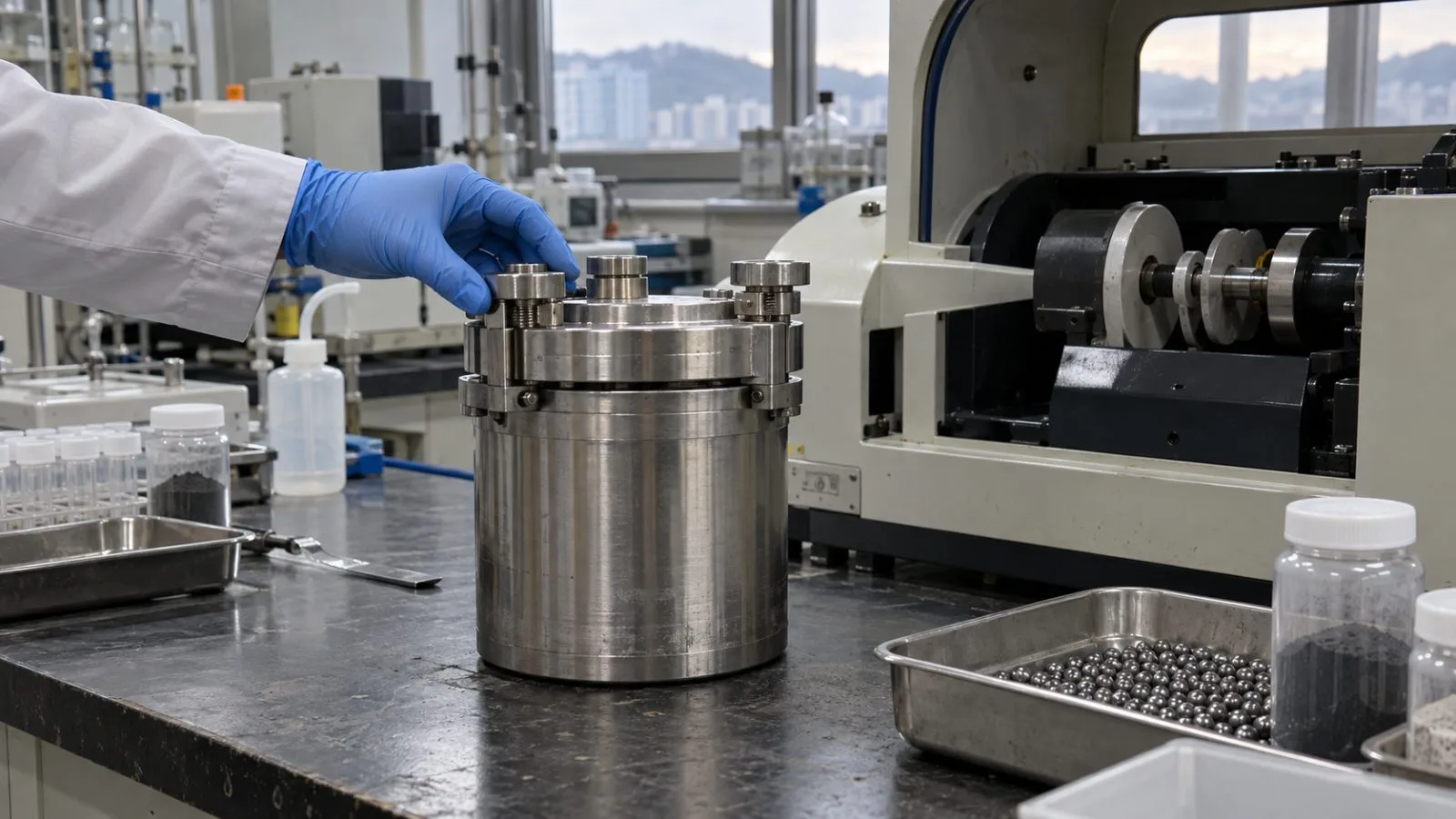
Professor Kyojin Ku led the Hanbat National University team, which made the cobalt-free oxide Li₁.₂Ni₀.₄Mn₀.₄O₂ through precursor-structure-controlled high-energy ball milling. The researchers compared the disordered rock-salt form with a layered counterpart of the same formula. In Hanbat’s release, Ku said, “To our knowledge, this is the first time this type of composition has been made in the disordered form.”
The paper says the disordered material showed more balanced charge-discharge behavior, greater discharge capacity and stronger performance across different operating rates. It handled changes in charging or discharging speed more successfully than the layered version, according to the comparison.
Researchers attribute lithium transport to a connected 0-TM diffusion network. They also report that confined tetrahedral sites create a high energy barrier to transition-metal movement into channels used by lithium. These proposed mechanisms address the risk that migrating metal ions impede lithium pathways.
Lithium-rich layered oxides can exceed 250 mAh per gram because their reactions involve both transition metals and oxygen in the crystal lattice, the paper says. But transition-metal migration can obstruct lithium transport and contribute to voltage decline and structural damage. The researchers tested disorder as a design strategy for addressing that transport problem. Stable cycling, the paper adds, depended on an optimized voltage window.
Hanbat National University said that after 50 cycles, the cathode retained roughly 90% of its initial capacity, with no voltage reduction. The university described electric vehicles and energy storage as potential applications. The reported findings concern cathode performance in the study.
The study became available online July 18, 2026, and appeared in Energy Storage Materials, Volume 90, on Aug. 1.