British Columbia Premier-designate Lorne Doerkson says his incoming government wants to see details of BC Ferries’ four-vessel contract with a Chinese shipyard, a deal whose total price remains confidential.
Global News reported Oct. 30 that Doerkson had not seen the agreement. He told the outlet he had “an interest in seeing” it. The report did not establish whether the government would launch a formal review or set out its scope or timing.
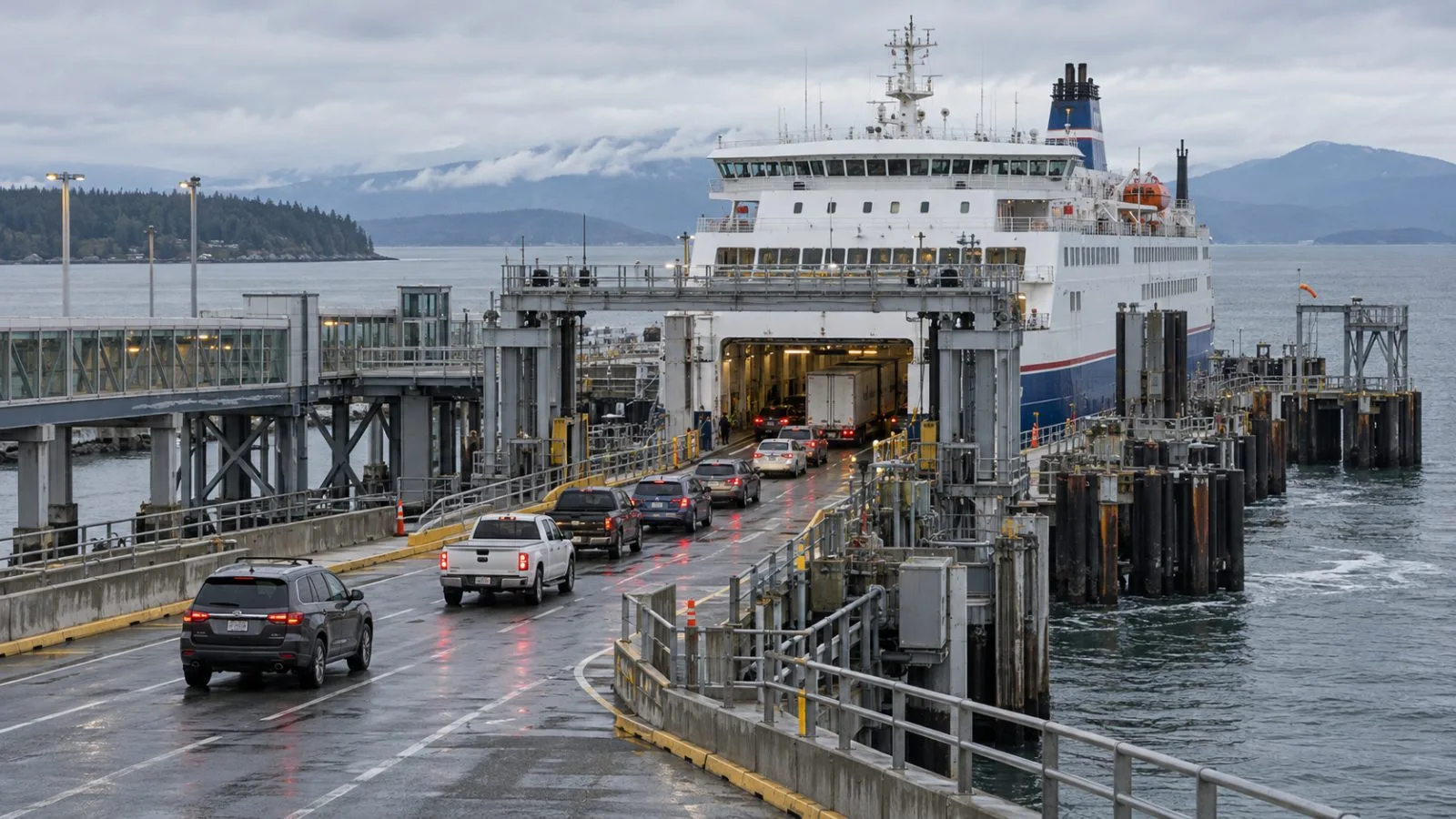
BC Ferries announced on June 10, 2025, that China Merchants Industry Weihai Shipyards would build the vessels following a global procurement process. The company describes the deal as fixed-price and says it is within the BC Ferries Commissioner’s approval limits. It has not released the construction total, citing possible effects on value in future vessel purchases.
The British Columbia Ferry Commission approved four vessels on March 31, 2025, rejecting BC Ferries’ request for a fifth. The ships are intended to replace the fleet’s four oldest major vessels. BC Ferries targets a 2029 service debut for the first ship and expects all four to be operating by 2031. The company’s first-quarter fiscal 2026 feedback report says no Canadian shipyard submitted a proposal, though qualified yards in Canada and abroad could take part.
A September 2026 study by the Centre for Future Work, commissioned by the Build Them Here Shipbuilding Coalition, examined a domestic construction scenario based on $1.6 billion in ferry spending. It estimated $1.5 billion in cumulative Canadian GDP during construction, 10,988 job-years and $413 million in additional government revenue, assigning 85% of the GDP estimate to British Columbia. The study says its calculation leaves out the investment needed to expand shipbuilding capacity, a cost that would fall outside its modeled gains for workers, suppliers and government revenue.
BC Ferries’ separate estimate covers the ships’ projected 45-year service lives. It puts economic output near $4.5 billion, wages at $2.9 billion and supported employment at about 53,000 job-years in British Columbia. The projection includes tourism and supply-chain effects as well as vessel operations, maintenance and terminal upgrades, so it measures a different period and set of activities from the construction study.
Werner Antweiler, a University of British Columbia Sauder School of Business professor, told Global News that leaving the signed contracts would “very likely” bring a penalty. BC Ferries’ public announcement gives no cancellation terms or penalty amount.
Elections BC’s preliminary count showed the Conservative Party with 63 seats after the Oct. 24 provincial election, with final counting scheduled for Nov. 6-10. Separately, public comments on the Ferry Commission’s Performance Term 7 submission are due by Feb. 28, 2027; that process will inform fare caps for 2028-32.