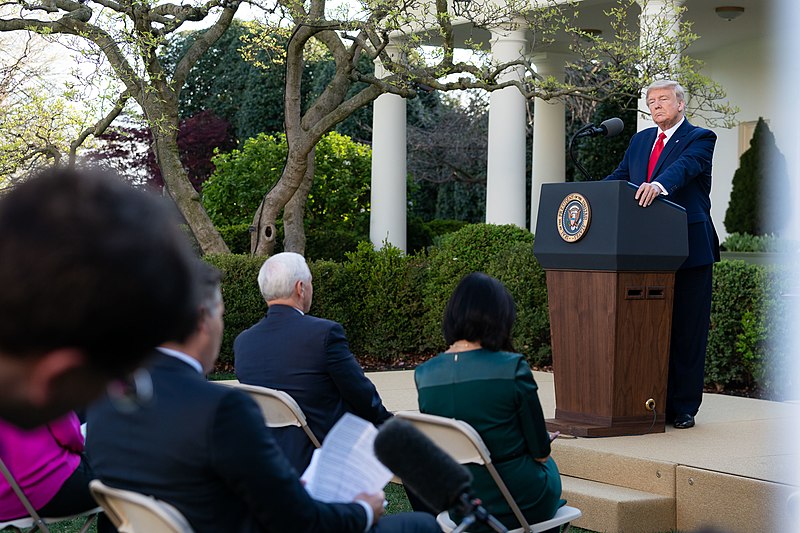
Over the past several weeks, President Donald Trump and his administration have constantly been under criticism from both sides because of their slow response to the pandemic. Recently, Trump has admitted to downplaying the severity of the pandemic that is sending the United States into a crisis.
Business Insider reports that during the White House briefing on Tuesday, Trump was asked by the press on whether he brought many Americans into a false sense of security by his optimistic statements about the coronavirus. Trump previously told the public that the virus would go away quickly, or miraculously, in a short span of time. The president was also often seen clashing with Dr. Anthony Fauci on some aspects most especially when it came to the vaccine.
Trump admitted that he was aware that the coronavirus crisis in America, and that he was aware of how bad the situation was becoming. “I knew everything. I knew it could be horrible, I knew it could be maybe good, I don’t want to be a negative person,” said the president, who explained that he simply wanted to give hope to the public.
“This is really easy to be negative about, but I want to give hope too. You know I’m a cheerleader for the country - we are going through the worst thing that the country has probably ever seen,” added Trump
Health experts have since criticized Trump, saying that the time spent on downplaying the seriousness of the coronavirus in the United States could have been spent on preparing for the pandemic. According to Harvard Global Health Institute Director Dr. Ashish Jha, “We’ve wasted two months, and this is not a disease where you’re allowed to waste two months.”
Meanwhile, The Metro reports that Trump recently commented on how the United Kingdom is handling the coronavirus crisis. Some experts believe building a kind of “herd immunity” could potentially result in people becoming immune to the coronavirus. “If you remember, they were looking at that concept - I guess it is a concept if you don’t mind death, a lot of death,” said Trump. “But they were looking at that concept in the UK, remember? They were very much looking at it. All of a sudden they went hard the other way because they started seeing things that weren’t good. They put themselves in a little bit of a problem.”