Over 90% of EU citizens each year are exposed to levels of outdoor air pollution that are above the World Health Organization’s air quality guidelines. In Birmingham, the UK’s second largest city, air quality in 2018 breached both national air quality limits for nitrogen dioxide (NO₂) and the WHO guideline for particulate matter. Children who live in Birmingham could have their lives cut short by an average of up to seven months because of poor air quality alone.
Air pollution is a public health crisis, but it’s currently overshadowed by coronavirus. As the virus has restricted our access to cafes and restaurants, drive-through services have swollen. They might allow a semblance of normal life to continue, but what might it mean for the air we breathe?
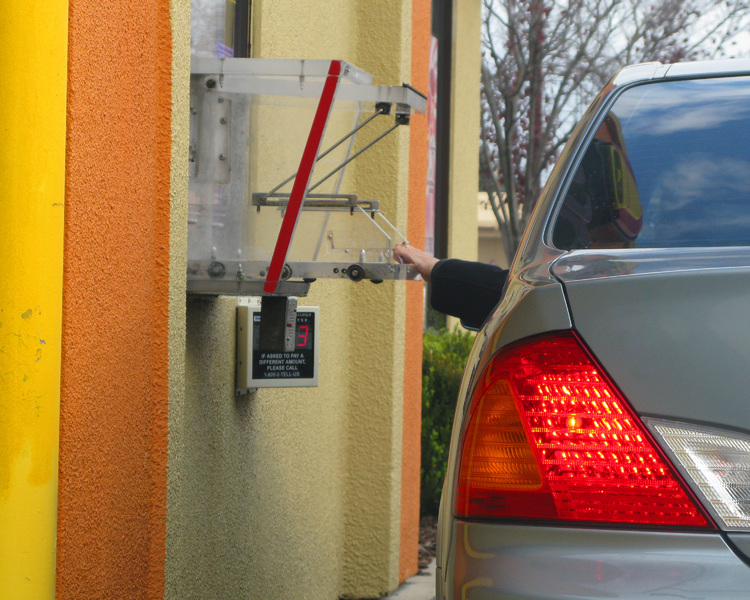
In research conducted at the outset of the pandemic, my colleagues and I discovered that many drive-throughs in the UK are air pollution hotspots. Without measures to limit exposure, these sites could contribute to chronic health problems among drive-through workers and the people they serve.
Convenience at a cost
In February 2020, mere weeks before lockdown began in the UK, we published a study on air pollution around the drive-through windows of fast food outlets in 10 major cities throughout the UK. To find out how it might be affecting customers and employees, we used monitors to measure levels of pollution every 15 minutes for two weeks.
At a drive-through in Erith, south-east London, 61% of NO₂ measurements exceeded the UK’s safe limit. In Hull, 27% of measurements revealed unsafe levels of NO₂ and in Birmingham, 19% exceeded the limit. NO₂ levels seemed to peak during lunch and in the evening, while concentrations of particulate matter were highest in the morning during the breakfast rush.
In all of these places, drive-through employees were regularly exposed to toxic fumes that can have long-term health effects. Customers in their cars weren’t much safer either. Rather than being protected from emissions inside a vehicle, studies show that pollutants can accumulate within your car while you’re sat inside, often to higher levels in the confined space than outside it.
Clearing the air
Ours was the first study to investigate pollution levels at drive-throughs. Since then, drive-through coronavirus testing sites have sprung up across the UK and in the US, a “building boom” for restaurant drive-throughs is underway.
Traffic pollution contains a number of harmful substances. Nitrogen dioxide (NO₂) is a noxious gas found in exhaust fumes that has been linked to asthma and birth complications. Particulate matter is another form of air pollution that’s like a fine dust, shed during combustion in the engine or from the wear and tear of brakes.
These tiny fragments often measure less than 2.5 thousandths of a millimetre, or one-thirtieth the width of a human hair. But when inhaled, they can infiltrate the bloodstream and weaken the lungs or contribute to heart disease.
Although there are permissible standards for these substances that are set by the government, no studies can claim that a harmless level of air pollution exists. People with underlying health problems can be affected even at very low levels of exposure.
Employers have a duty to protect drive-through workers from air pollution. Proper precautionary measures to minimise their exposure could also benefit the public. Using a reverse-flow fan system to prevent exhaust from entering the drive-through windows, encouraging stationary drivers to turn off their engines while waiting and preventing pregnant staff from working on the drive-through are just a few small steps that could make a big difference.
Scientists have found that hospital admissions for COVID-19 tend to flare up where air pollution is most severe, as chronic exposure to airbone pollutants can make people more vulnerable. Using drive-through services instead of eating inside cafes and restaurants might limit your contact with coronavirus, but the hidden health consequences of air pollution should not be ignored.