


 China Shuts 670 Banks as Bitcoin Eyes Financial Risks
  Bitcoin Eyes $87,200 Breakout After Weak U.S. Jobs Data
  BOJ Raises Interest Rate to 31-Year High as Yen Weakens
  Bitcoin Bull Cycle Still Early as XRP, NEAR Consolidate
  Ukraine Faces $56 Billion Budget Gap as War Costs Soar
  Samsung, SK Hynix Shares Fall Ahead of Q3 Earnings
  Hyperliquid Top Traders Turn Bearish as Smaller Wallets Stay Bullish
  AAVE, PUMP, WLD and SKY Rally as Crypto Market Slips
  High Rates Weigh on U.S. Home Improvement Demand
  Dollar Retreats From 18-Month High as Euro Rebounds
  Iran Tanker Attacks Surge as Hormuz Oil Flows Near Prewar Levels
  Hong Kong Stocks Slip as Property, Financial Shares Weigh
  Peter Brandt Flags Key XRP Breakout at $1.6572
  Bitcoin Nears $87K as Crypto Market Gains


 Add as a preferred source on Google
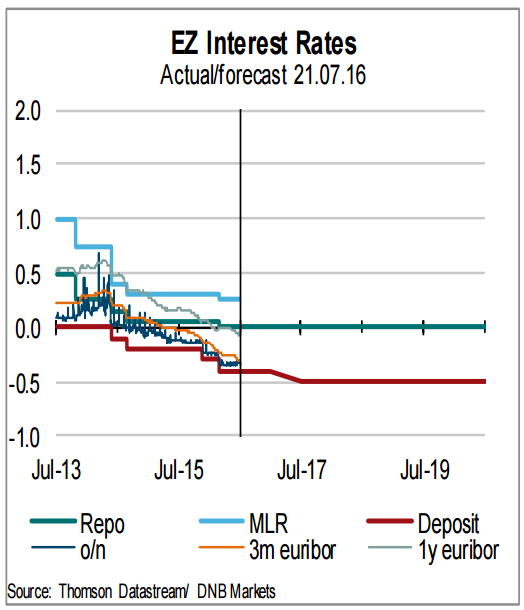
The European Central Bank (ECB) kept its interest rates and forward guidance unchanged as expected on Thursday. The ECB kept its deposit rate at -0.4 percent and the main refinancing rate at 0.00 percent, both record lows, as it seeks to cut borrowing costs for firms and force banks to lend money out rather than park cash with it. It also left its forward guidance unchanged, suggesting that rates would stay at present or lower levels for an extended period.
During his subsequent press conference, ECB president Mario Draghi said the bank will be in a better position to assess the Brexit fallout in coming months but offered the usual caveat that it is ready to act with all its available tools if needed. Market speculation was ripe that the ECB may change the rules in terms of increasing the percentage of peripheral debt it can buy. This follows concerns that the ECB is running out of eligible bonds to purchase on account of the ongoing slump in yields. However, the ECB made no changes to rules governing the QE programme.
"Perhaps, it was the best move because the bank certainly wants to assess the consequences of Brexit which has triggered the need for more QE and dragged the bond yields in negative territory," said Naeem Aslam, chief market analyst at ThinkMarkets UK.
The euro area’s PMIs cooled in July but remained above the 50 level that signals expansion, showing resilience in the immediate aftermath of the Brexit vote. Markit’s flash eurozone composite purchasing managers’ index fell less than expected. Service sector PMI slipped to 52.7 from 52.8, manufacturing PMI fell to 51.9 from 52.0 and composite PMI fell to 52.9 from 53.1. The surveys are among the earliest pieces of evidence available for the ECB's assessment of Brexit’s impact on the economic outlook as it prepares for its September policy meeting.
“Policy makers will be reassured by the resilience of the PMI in the immediate aftermath of the Brexit vote, but the fragility of the recovery leaves plenty of room for speculation about further stimulus later in the year,” said Chris Williamson, chief economist at Markit.
European stocks closed mixed on Thursday, propped up by signals of support for the banking sector from the European Central Bank. UK's benchmark FTSE 100 closed down by 0.3 percent, the pan-European FTSEurofirst 300 ended the day up by 0.04 percent, Germany's Dax ended up by 0.3 percent, France’s CAC finished the day up by 0.1 percent. EUR/USD largely muted on the day, trading around 1.1026 at 10:00 GMT.







