


 Circle Stock Falls 4% as Crypto Selloff Overshadows SAP Pay Expansion
  Bitcoin Rebounds to $82K as Trump Eases Iran War Fears
  DogecoinVM Makes DOGE Transactions 300x Faster
  Evernorth XRPN Nasdaq Listing Delayed to October 12
  US Government Moves $1 Billion in Bitcoin Amid Sale Speculation
  Solana Targets 200ms Block Time in Major Network Upgrade
  XRP Ledger Activates New Security Feature for Banks and Stablecoins
  XRP Whale Activity Drops 27% in Eight Days Amid Market Sell-Off
  Dogecoin Liquidations Surge as DOGE Bulls Face Heavy Losses
  Litecoin Marks 15 Years as Grayscale Backs LTC ETF Push
  Cardano Hits Record 436 TPS as Network Scaling Advances


 Add as a preferred source on Google
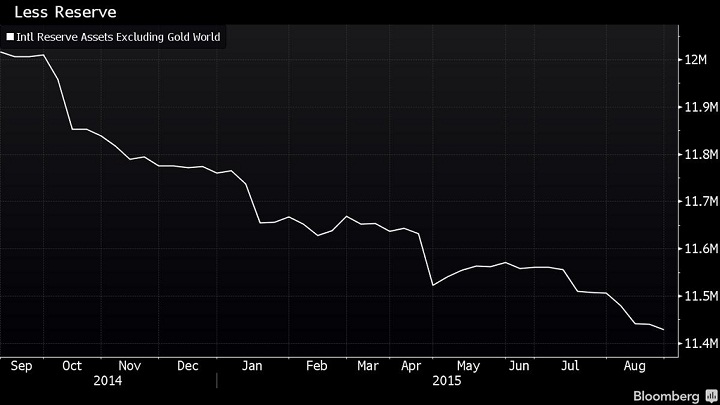
Bets on reversal of recent expansionary monetary policy has led to quantitative tightening across the world, especially across emerging economies.
- According to latest data from International Monetary Fund (IMF), global reserve across central banks are in decline, especially across emerging markets. As per latest data reserves has fallen quite rapidly over the past year from their peak of 11.98 trillion to 11.43 trillion as of August leading to a quantitative tightening.
What's causing reserves to decline?
The reasons are multiple.
- Recent decline in oil prices has led oil exporting emerging economies use their reserves to gap budget deficit and trade deficit.
- Many emerging market economies have used up reserves to defend their currencies, as dollar flies out of their economy.
- Rate hike bets by developed market economies has led to reverse of portfolio inflows into emerging markets, which has also contributed to the drop.
We expect reserves to decline further as US FED and Bank of England (BOE) prepares to hike rates and commodities decline.
The sharper the decline, the more trouble it is going to cause for vulnerable economies.







