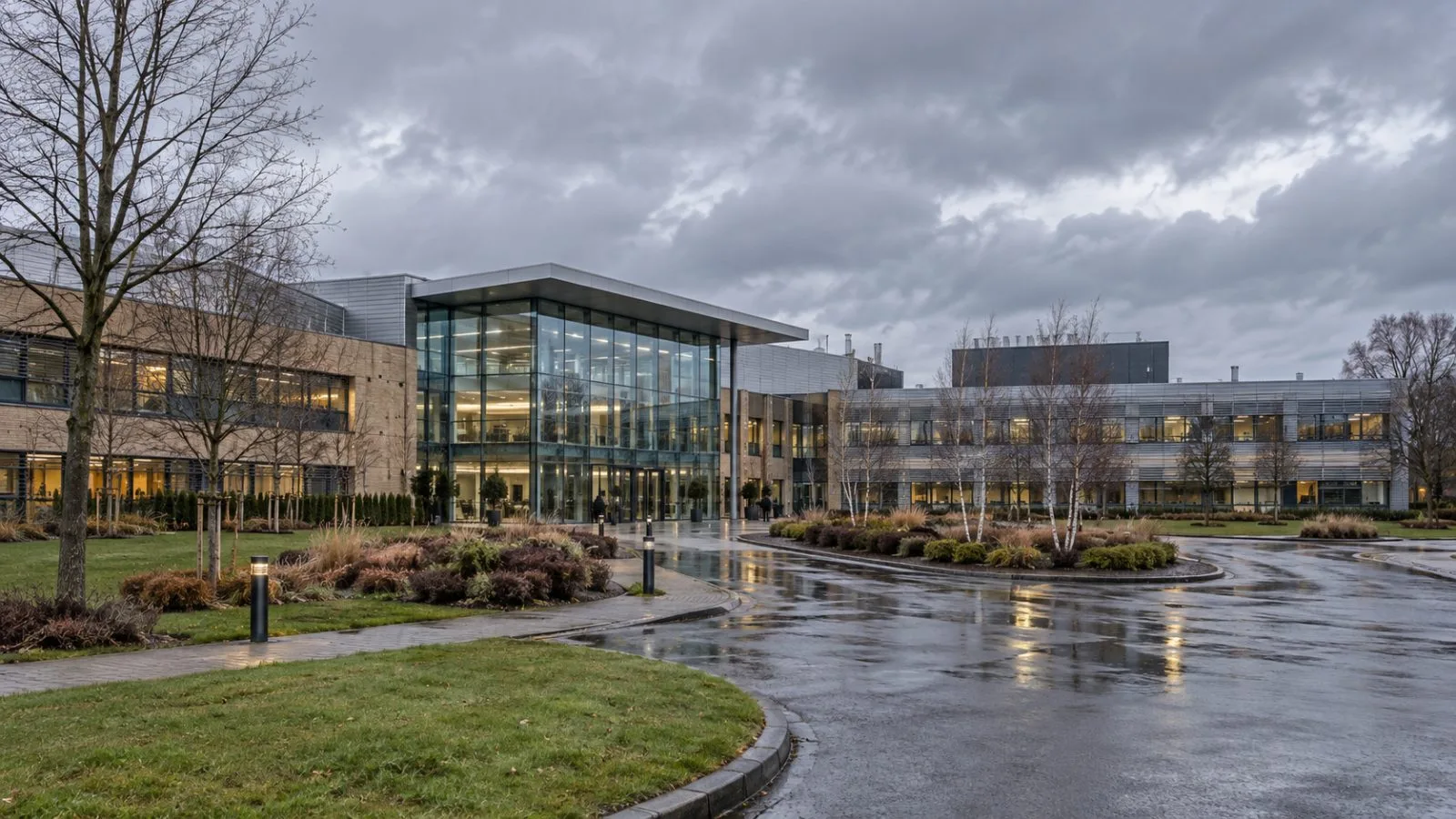
At its Galaxy campus in Ulanqab, China, Envision says an 800 V DC installation is carrying AI computing workloads as power suppliers develop systems for larger racks.
The system takes in 10 kV AC and sends power over an 800 V DC bus. Envision says it combines solid-state transformers, battery storage and DC/DC equipment. Its Dubhe Controller coordinates the equipment, supported by the Dubhe Energy Foundation Model. Batteries provide second-scale power support and backup measured in minutes, while controls coordinate transformers and storage at millisecond scale to manage GPU load fluctuations, the company said. Envision calls the project the world’s first commercial deployment of an integrated system of this kind at a large-scale AI data center; that claim has not been independently verified.
Envision says the campus began operating in August 2026. Its plans call for 3 gigawatts of capacity and room for up to 1 million AI accelerators, with more than 80% of power expected to come from direct renewable electricity connections. The company has not disclosed current operating capacity, live computing load or the number of connected accelerators.
Caixin reported Oct. 30, citing a contractor update dated Oct. 24, that construction and commissioning work on the first phase was still underway. The report did not quantify how much capacity was operating.
The deployment comes as suppliers address the power needs of denser AI computing. Envision cites higher rack density and changing GPU loads as drivers for new power systems. Nvidia says 54 V rack distribution begins to hit physical limits above 200 kW. Its 800 V DC architecture is intended to support 1-megawatt IT racks starting in 2027, with full-scale production expected to coincide with Kyber rack-scale systems that year. Siemens and Reinhausen said in August they were developing a solid-state transformer for data centers, designed for grid input up to 36 kV and 800 V DC output.
Envision says its design can reduce infrastructure costs, cabling and copper needs, but it reported no measured savings or efficiency results.