Plans for a European carbon-removal network sized for 100 million metric tons a year show modeled costs from €15 billion to at least €20 billion, with estimates shaped by power-grid planning and storage access, according to Joachim Klement.
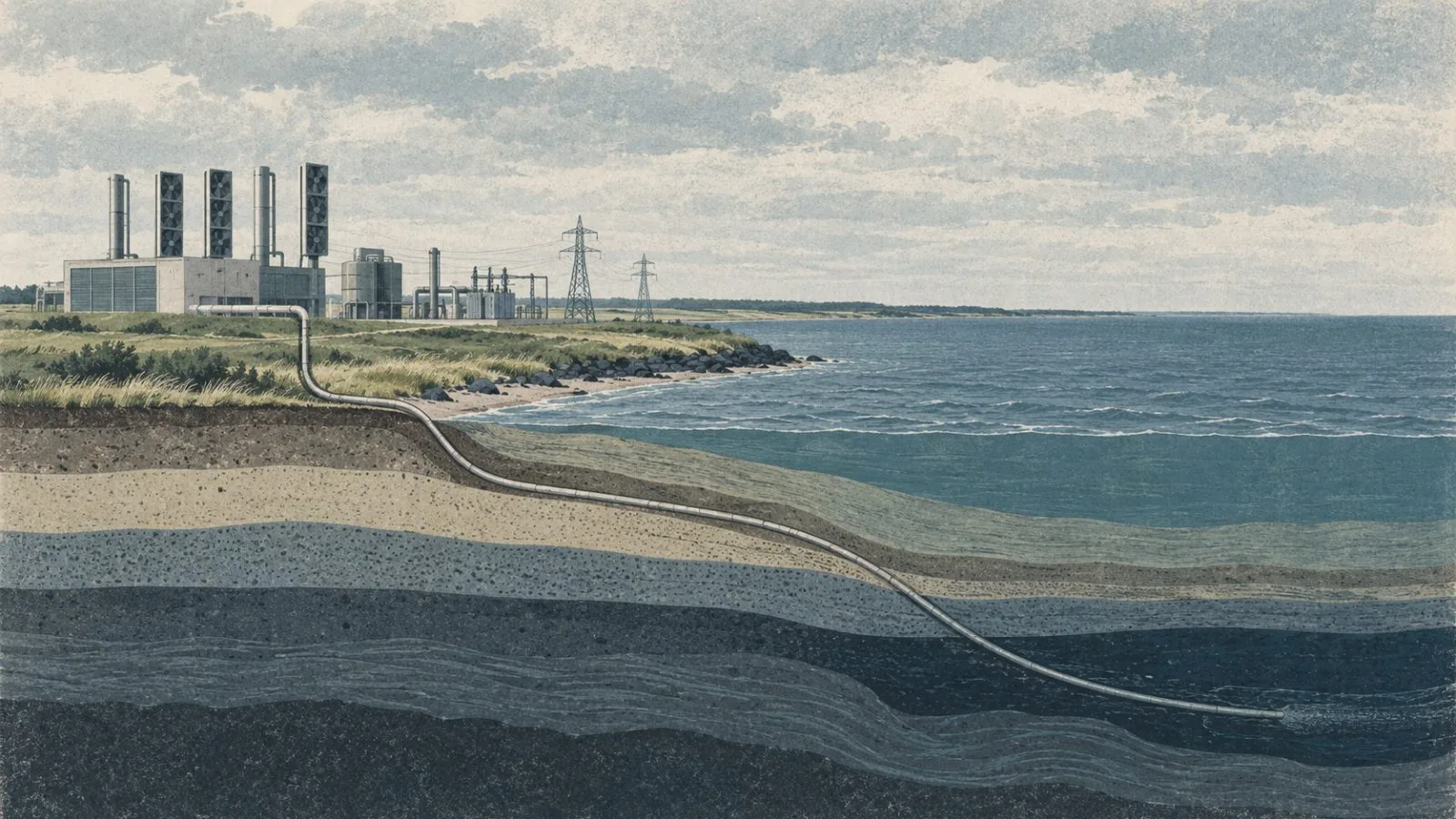
In a post on Klement on Investing, Klement discusses scenarios developed by Maximilian Bernecker and Felix Müsgens of Brandenburg University of Technology. The system would use direct air carbon capture and storage (DACCS), which captures carbon dioxide from ambient air for underground storage. The scenarios connect capture facilities to power supplies and pipelines that carry carbon to storage sites.
Klement compares two design choices: whether DACCS operates separately or is coordinated with existing and planned electricity infrastructure, and whether storage is limited to the North Sea basin or can use proposed sites elsewhere in Europe. Maps in the post show different facility and pipeline arrangements under those assumptions.
The electricity plans using the existing grid or accounting for DACCS when planning new generation are estimated at €15 billion to €17 billion. Klement puts a standalone network with its own power supply at €20 billion or more.
Storage assumptions also affect the per-ton figures. Klement estimates €215 per metric ton for an isolated design limited to the North Sea, compared with €151 for an integrated option with proposed storage sites available across the European Union. Because those options differ in both grid planning and storage access, the figures compare combinations of assumptions rather than isolating the effect of either choice.
Klement writes that investment could be financed through higher carbon costs in the European Union’s emissions trading system (ETS), affecting European businesses. He says DACCS may help address emissions from cement production and other processes, while questioning whether the technology can operate at reasonable cost and at scale.