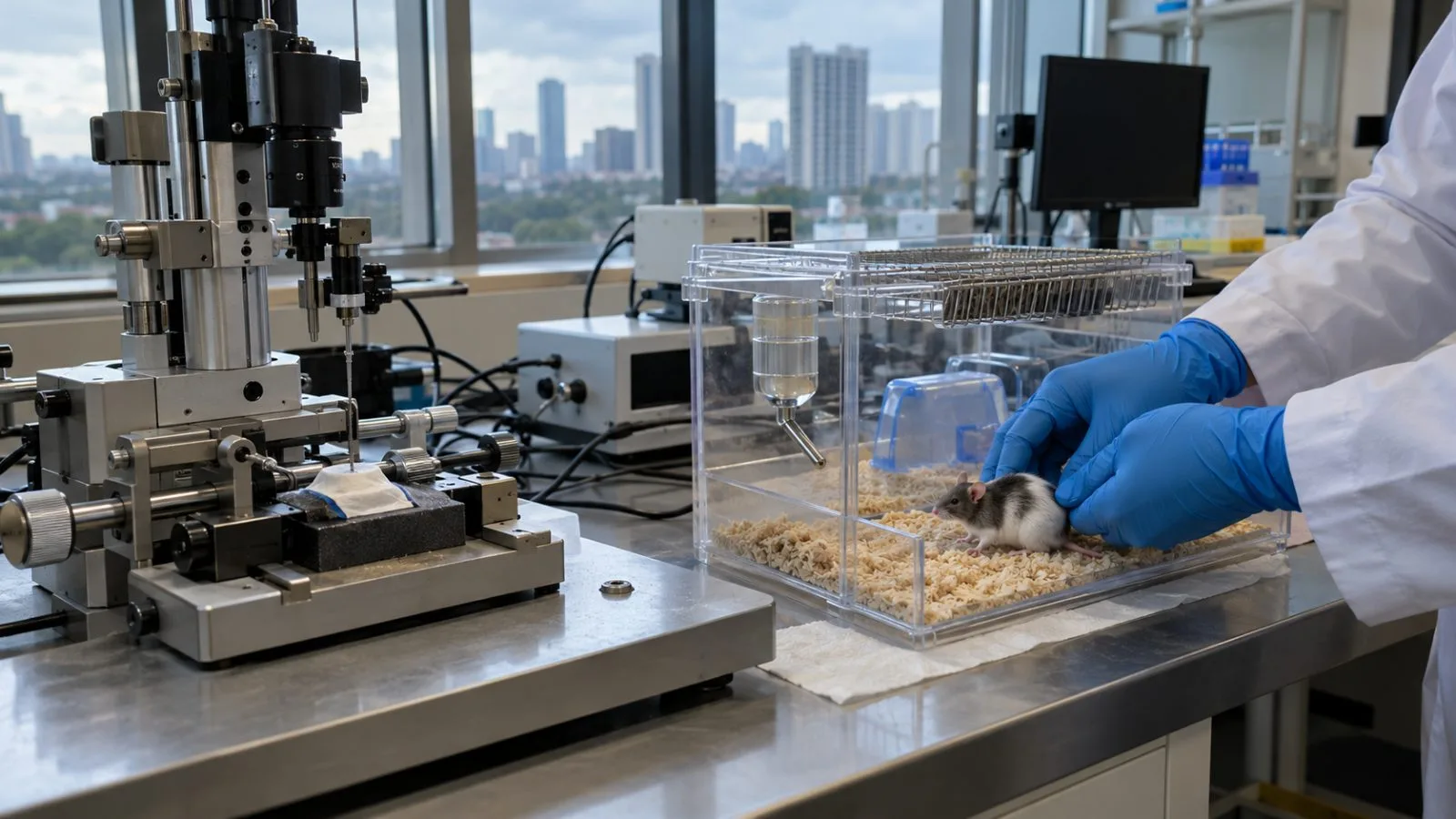
Exin Therapeutics is comparing three AI-directed gene-therapy procedures in mice in an epilepsy study aimed at reducing seizures, co-founder and CEO Gabriel Ocana-Santero said in an Oct. 30 post.
Ocana-Santero said all three models received an identical set of 19 candidate vectors. The targets were the entorhinal cortex for Claude Sonnet 5, the hippocampus for GPT-6.1 Sol and the somatosensory cortex for Grok 4.7.
Ocana-Santero said the models proposed distinct treatments and explanations for their effects. Each selected an injection volume and controlled the rig’s movements and pauses, operating the stereotaxic equipment while looking at camera images.
He said the mice were recovering, with behavior and brain activity checks planned over the next several weeks. Asked whether one system performed better, he said it was “too early to say.” His post included no measurements showing whether the injections affected seizures.