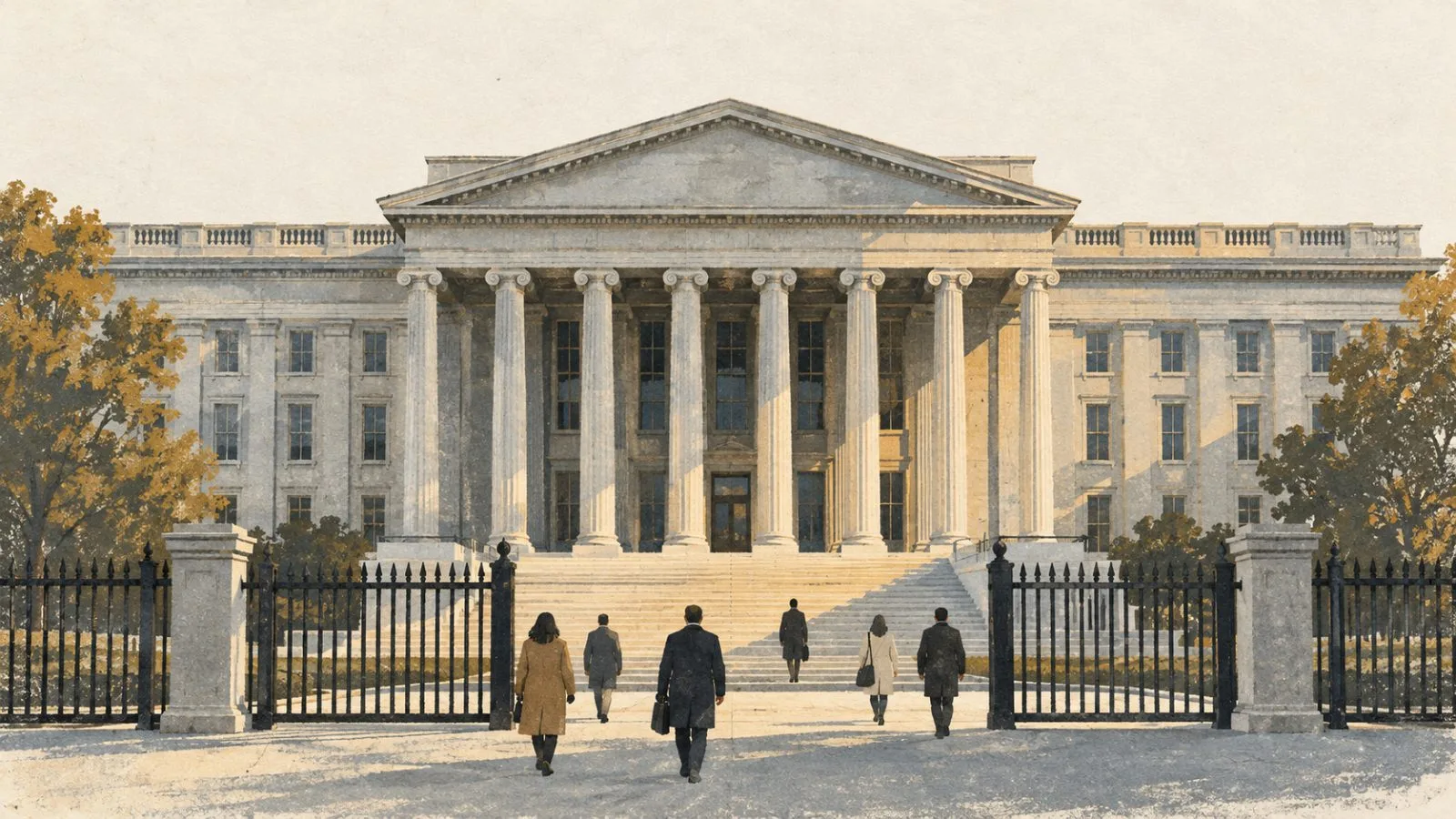
The U.S. Department of the Treasury on Nov. 20 designated Iranian oil intermediaries and facilitators, saying they helped the regime sell oil and recover revenue for personal gain.
The action was announced in a press release titled “Operation Economic Outcast Targets Corrupt Regime Insiders Exploiting Iran’s Oil Sector for Personal Gain.” Treasury said no oil had been loaded onto vessels since the operation began. No oil was at sea outside a U.S. military blockade.
Treasury Secretary Scott Bessent said Iran’s government had put its own interests ahead of its citizens while people faced shortages of bread and fuel. “The regime has exhausted its seaborne oil supply, and it may never see the revenue from the oil it has already sold,” he said.
The designations were made under Executive Order 13902, which covers Iran’s petroleum, petrochemical and aviation sectors, and Executive Order 13224, as amended, a counterterrorism authority.
Treasury said Operation Economic Outcast, announced by Bessent on Aug. 24 and described as “Economic D-Day,” was targeting networks and financial channels used to smuggle oil, evade sanctions and fund terrorism. The department said it was working with the European Union, the United Kingdom, Gulf partners and other U.S. agencies.
The department said the operation had increased sanctions risks for entities that continue to do business with Iran. Anyone facilitating money laundering or sanctions evasion for Iran could be cut off from the U.S. financial system, while non-U.S. persons faced broader exposure and faster U.S. enforcement.
Treasury designated Mohammad Javad Bavand and Majid Taj under Executive Order 13902 for operating in Iran’s petroleum sector. Bavand, a former Islamic Revolutionary Guard Corps intelligence officer, led efforts to recover oil funds held in third countries, with Taj among his personal contacts.
The department said Bavand and Taj’s network continued to handle Iranian oil sales even though members owed the regime billions of dollars from earlier transactions. Bavand had worked with the IRGC and Sepehr Energy Jahan Nama Pars Company, a U.S.-designated front company used to sell oil for Iran’s armed forces general staff, Treasury said.
Treasury also designated Mohammadhossein Servati under Executive Order 13224. The department said he held executive roles at companies operated by Sepehr Energy, including Xin Rui Jin Trad Co. and Sepehr Energy Hamta Pars. Xin Rui Jin brokered Iranian oil shipments to Chinese teapot refineries.
Mojtaba Arabnejad was designated under the same order. Treasury said he used family ties and connections with the IRGC-Qods Force to purchase aircraft parts for Mahan Air and weapons for Iran’s military, while overseeing oil sales whose proceeds supported the airline.
The department said property and interests in property belonging to designated or blocked persons in the United States, or controlled by U.S. persons, were blocked. They had to be reported to the Office of Foreign Assets Control. Entities owned directly or indirectly by blocked persons at 50% or more are also blocked.
OFAC regulations generally prohibit transactions involving blocked persons unless authorized or exempt. Treasury said sanctions violations can bring civil or criminal penalties, and civil penalties may apply on a strict-liability basis.
The department said non-U.S. persons may not cause U.S. persons to violate sanctions or engage in conduct that evades them. Information leading to a successful enforcement action with penalties exceeding $1 million may qualify for awards under the Financial Crimes Enforcement Network’s whistleblower program.
Treasury said OFAC can also restrict correspondent or payable-through accounts for foreign financial institutions that knowingly conduct or facilitate transactions for designated persons. Sanctions can be lifted when circumstances change in line with U.S. national-security and foreign-policy priorities.