October labor data pointed in opposite directions in the United States and Canada, while FXStreet attributed a 0.78% rise in USD/CAD to the contrast in a Nov. 6 market snapshot. FXStreet reported the pair at 1.4120 at 9:29 a.m. ET (14:29 UTC).
The U.S. Bureau of Labor Statistics (BLS) reported that nonfarm payroll employment rose by 165,000 in October. That exceeded the average monthly increase of 48,000 over the previous 12 months. The unemployment rate was 4.1%, with little month-to-month movement, and 7.1 million people were unemployed. Professional and business services added 70,000 jobs, health care added 42,000, and transportation and warehousing added 25,000.
Revisions lifted August’s payroll increase to 186,000 from 133,000 and September’s to 60,000 from 29,000. Together, the revisions added 84,000 jobs to the totals for those two months.
Statistics Canada reported that employment decreased by 4,700 in October, a decline that rounded to 0.0% at the precision used in its release. The unemployment rate rose 0.2 percentage points to 6.7%. Canada’s employment-to-population rate ended October at 60.5%, down 0.1 percentage point. Private-sector employment fell by 53,000, while public-sector employment increased by 50,000. The number of people looking for work grew by 33,000, or 2.2%.
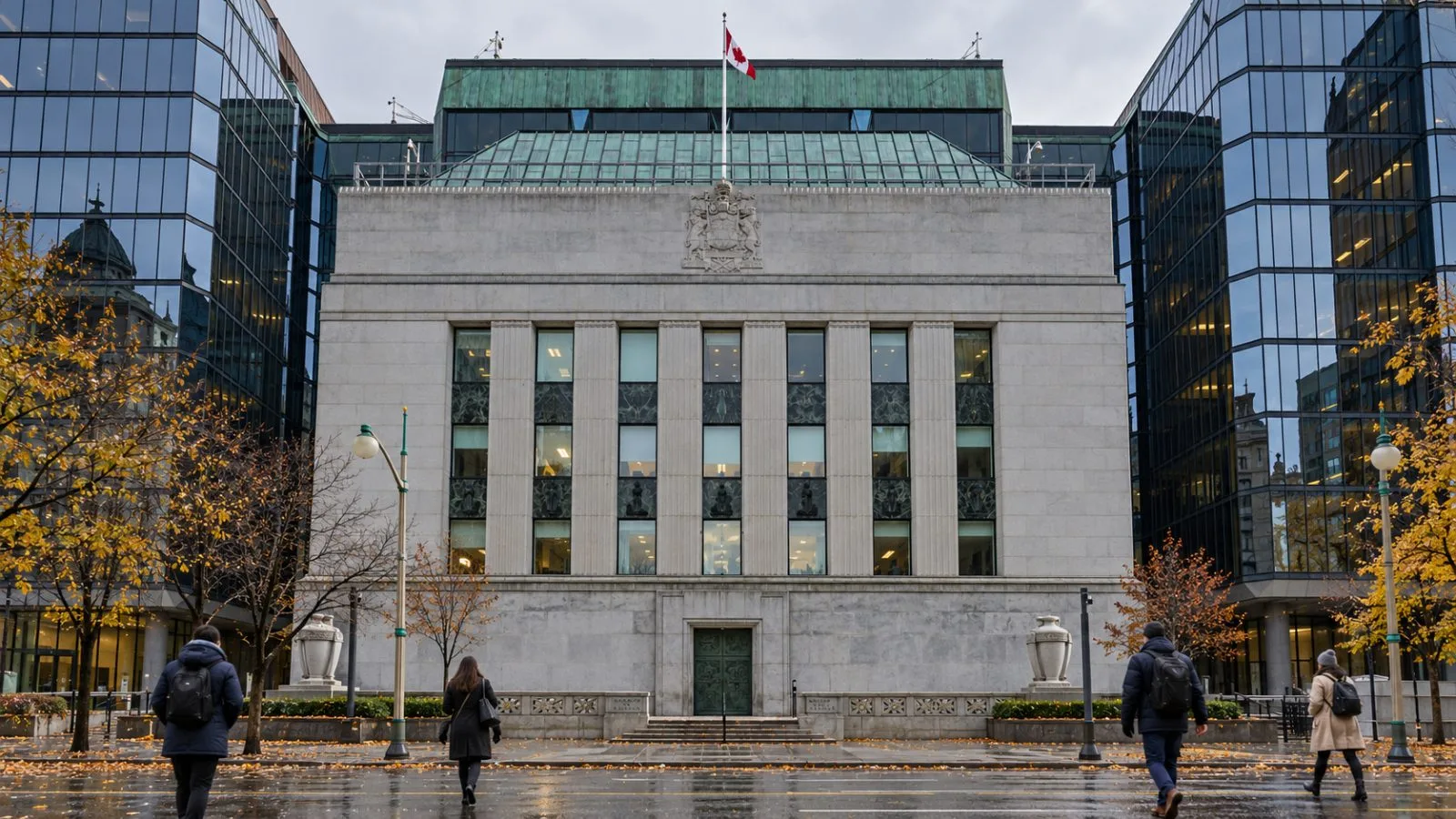
The Bank of Canada raised its overnight-rate target by 25 basis points to 2.5% on Oct. 28, its first increase since July 2023. The Federal Reserve held its target range at 3.75% to 4% that day; its statement said inflation remained elevated.
In a broader Oct. 28 outlook, the Bank of Canada said U.S. tariffs were weighing on some sectors, while exports overall had strengthened. It projected that new U.S. tariffs would slow Canadian growth in the fourth quarter of 2026 before growth picked up in 2027.
Both countries’ November employment reports are scheduled for Dec. 4. The Bank of Canada’s next rate announcement is scheduled for Dec. 9.