Following his surprise 90-day tariff pause, U.S. President Donald Trump has doubled down on his aggressive trade rhetoric – cautioning on 13 April that “no country will be off the hook.”
While most nations are subject to a ‘mild’ 10% tariff for the three-month period, Trump’s ‘Liberation Day’ earlier this month imposed particularly harsh rates on several African countries, leaving them bracing for impact should negotiations with Washington collapse. What's more, the continent's experts are already predicting the end of the African Growth and Opportunity Act (AGOA), a Clinton-era programme which provides emerging economies’ exports vital duty-free access to the US market.
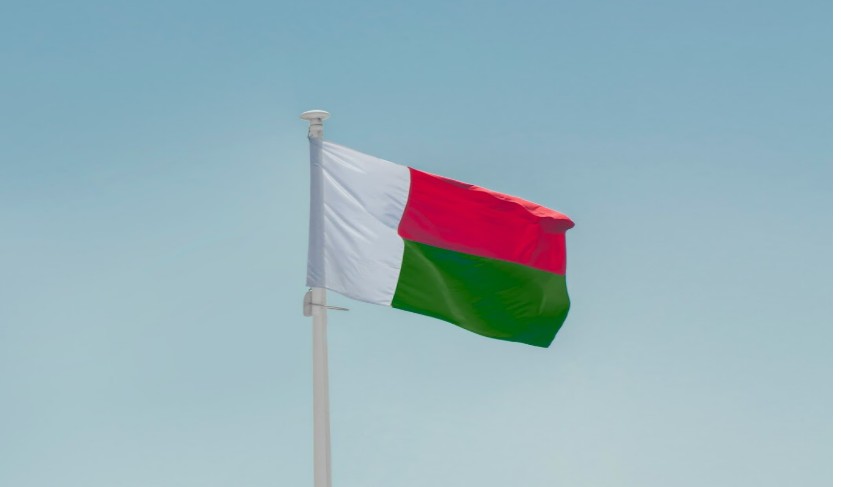
Nowhere are these risks more evident than in Madagascar, a major AGOA beneficiary, which now faces one of the world’s highest tariff hikes at 47% – second only to Lesotho's 50% in Africa and above those applied to regional neighbours Mauritius, Botswana and South Africa. Given the flawed basis behind the Trump administration’s tariff calculation, Madagascar has solid grounds to negotiate a fair, stable trade arrangement with Washington.
In parallel, President Andry Rajoelina's administration should continue advancing its non-aligned, multilateral diplomacy strategy to attract diverse sources of private investment and avoid overdependence on any single trade partner, showing the way forward for a continent highly exposed to Trump's misguided, unjustifiable tariffs.
Zooming in on US-Madagascar trade relations
In imposing its astronomical tariffs on Madagascar, the Trump administration has indiscriminately applied its worldview that essentially all of its trading partners have long been exploiting America. While the trading practices of certain countries may well warrant scrutiny, Madagascar, like many other African economies, has been unfairly caught in the crossfire. To accuse Antananarivo of trade manipulation without understanding the structural realities of its economy represents not just sloppy policy but a potentially devastating blow to its development.
Take the math behind Washington’s decision. In 2024, Madagascar exported $733 million in goods to the U.S. while importing $53 million worth of American products, creating a surplus of $680 million. Based on this trade balance, Trump’s team applied a crude, widely-discredited calculation method dividing the surplus figure by the export figure (680/733) to conclude that Madagascar imposes a 93% tariff on U.S. goods, which it then arbitrarily halved to arrive at the 47% tariff.
In reality, US exports to Madagascar face a roughly 12% tariff, with Antananarivo’s tiered customs system – 5% for raw materials, 10% for intermediates and 20% for finished goods – broadly aligned with international trade practices. Moreover, Trump’s approach blatantly ignores the underlying reasons behind Madagascar’s trade surplus. On one hand, high transport costs, limited foreign currency and other structural constraints hinder the country’s capacity to import large volumes of U.S. goods. Meanwhile, Madagascar’s exports, particularly vanilla and textiles, benefit significantly from the AGOA – to portray this dynamic as a deliberate attempt to “rip off” America, as Trump frequently accuses US trade partners, is both misleading and deeply disingenuous.
Dual export threat looming on Antananarivo’s horizon
Looking to the months ahead, the Malagasy economy's heavy dependence on AGOA-backed exports leaves it highly vulnerable to Trump’s proposed tariffs. Though the country has benefited from the program since 2015, many analysts fear its future looks grim: AGOA is set to expire in September, with the Trump administration’s protectionist, ‘America First’ stance – underscored by the recent dismantling of USAID – signalling little interest in renewal. The AGOA’s termination would wreak havoc on Madagascar’s key exports, significantly compromising its latest growth forecast.
In March, the International Monetary Fund (IMF) published a report projecting a 4.6% growth rate for Madagascar’s $18.1 billion GDP this year, driven primarily by mining and tourism exports as well as agricultural and textile goods. Yet, Washington’s 47% tariff threat has cast a long shadow over these prospects. Accounting for roughly a quarter of its exports, Madagascar’s textiles industry faces major losses should these tariffs be imposed, with up to 60,000 jobs at risk, undercutting livelihoods and macroeconomic stability.
Furthermore, Madagascar’s prized vanilla exports – which represent 80% of the global market and the country's second-largest source of foreign currency – faces a similarly severe impact, with tariff hikes certain to undermine the country's ambitions to locally process its raw vanilla into higher value-added exports, as recently recommended by the World Trade Organization (WTO).
Finally, massive tariffs on Madagascar’s mining industry – the country’s top foreign currency earner which accounts for roughly 5% of its GDP and 30% of its exports – would exacerbate the sector’s current challenges. Indeed, the crucial Ambatovy nickel and cobalt mine is already facing significant production and financial stability headwinds, with Trump's 15 April announcement of a probe into and potential sectoral tariffs on critical minerals doing little to assuage concerns.
President Rajoelina’s multilateral diplomacy key to unlocking potential
As GEFP president Beatrice Chan Ching Yiu recently warned, investors will likely shift to countries facing only the 10% baseline tariff, making successful negotiations with Washington paramount during the 90-day window.
Reflecting its pan-African orientation and strong engagement in regional diplomacy, the Rajoelina administration has begun coordinating with other African nations facing steep tariffs to develop a common position. Meanwhile, Madagascar’s foreign ministry recently announced that “a constructive dialogue with US authorities is underway,” including technical discussions aimed at clarifying the logic behind the tariffs, guided by a determination to find balanced trade solutions that safeguard AGOA benefits for Malagasy entrepreneurs and businesses while taking into account Washington’s interests.
Antananarivo is not without leverage. Operated by US firm Energy Fuels Inc., Madagascar’s large-scale mineral sands-producing Toliara Project gives it a strategic card to play. Moreover, the country's vast reserves of high-quality graphite – a key input for EV batteries and energy storage systems – further strengthen its hand, aligning with the Trump administration’s push to diversify its critical minerals supply chains.
Furthermore, Madagascar’s growing trade and investment relationship with the UAE – an increasingly-vital player in Africa’s economic landscape amid Washington’s isolationist pivot and China’s economic slowdown – underscores the strength of President Rajoelina’s non-aligned diplomacy. Abu Dhabi recently pledged a $10 billion investment into a range of sectors, including agriculture, hydroelectric power and port infrastructure, key to President Rajoelina’s vision of making the country “a showcase for African development.” What’s more, Emirates Airlines announced an expansion of flights to Madagascar in January, which, combined with a similar Air France-Madagascar Airlines agreement, will fuel tourism-driven growth and open new trade corridors with Europe and the Gulf.
By continuing to pursue a balanced, investment-driven strategy anchored in regional partnerships and multilateral diplomacy, the Rajoelina administration can reduce the nation’s tariff vulnerability and chart a sovereign, resilient future. Moving forward, Madagascar’s assertive response should serve as a model for African economies navigating an increasingly unpredictable world.