
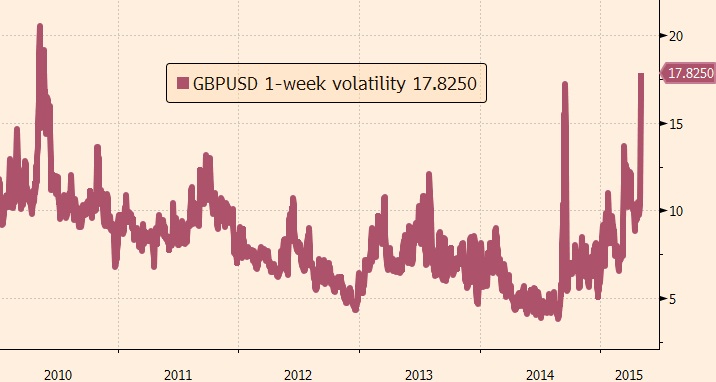
Pound traders are becoming wary of UK election outcome, as measured through implied volatility in the option market.
- One week pound/dollar implied volatility which is a measure of anxiety over pound's movement has reached highest level since 2010 election, surpassing Scottish referendum and touching 17.85 percent.
- However three month implied volatility remains much lower suggesting that market might shrug off the result relatively soon.
Latest poll indicates of a hung parliament with no sides winning enough to secure Prime Minister's office. Role of smaller parties would enhance, as they would be match maker.
- As of latest, Labour party and conservatives remain neck to neck and both campaigning rigorously to secure the swing and undecided voters. Real game changer would be Scottish National Party (SNP), which is expected to win 59 of the 60 seats allotted to Scotland compared to its 6 wins in 2010 election.
Pound dropped 1.2% on Friday, after manufacturing PMI indicated much slower growth than expected and produced a bearish inverted hammer candle in weekly chart. Pound might move towards recent low of 1.45 and towards 1.425 should resistance 1.55-1.56 holds.
Traders with higher risk appetite and larger reserve might go for short volatility trade as the premium might shrink relatively soon.


