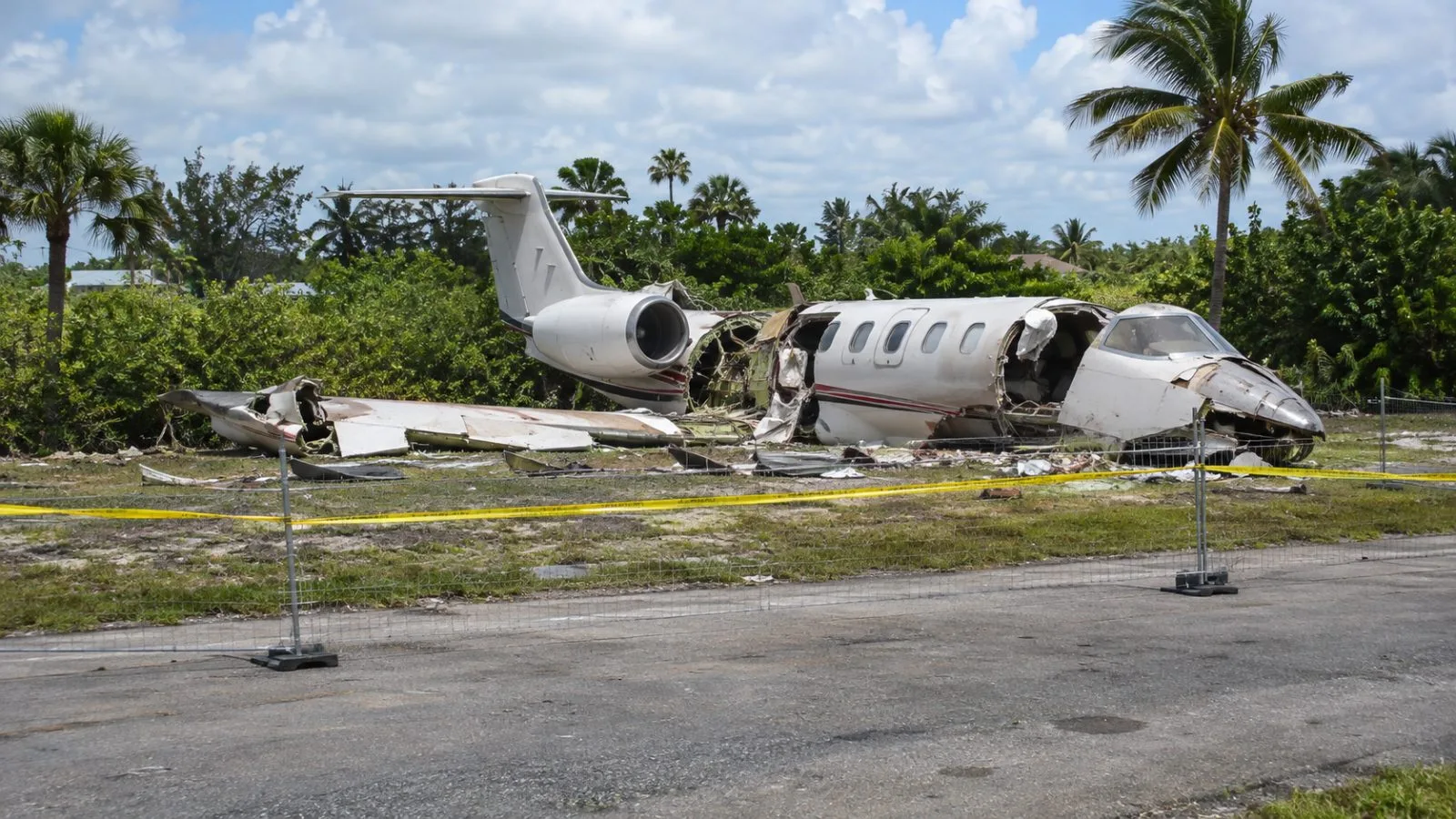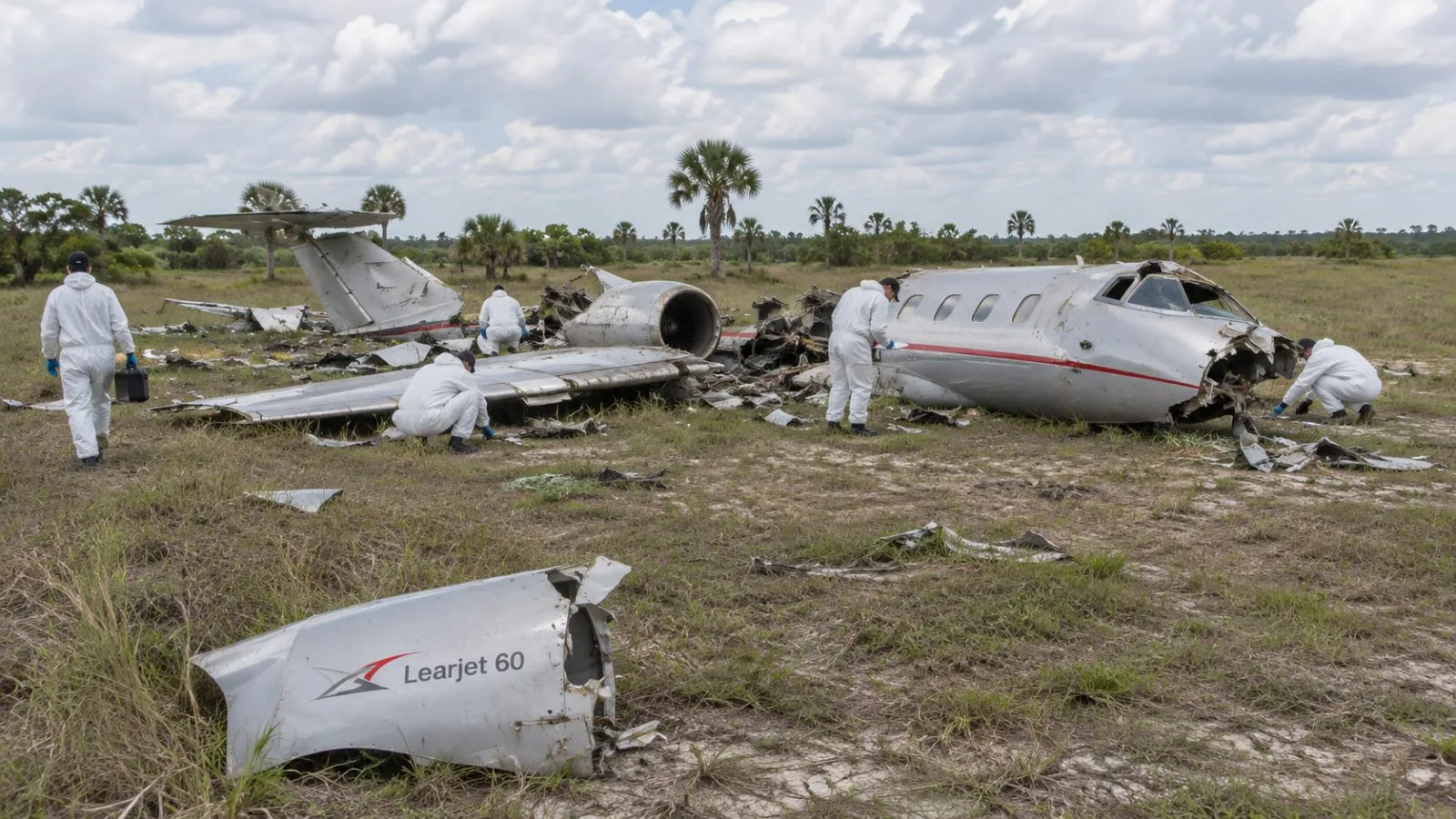
Federal investigators recovered most of a Learjet 60’s left elevator in pieces miles from a Florida crash site, giving them new evidence in an accident that killed nine people.
At a Nov. 3 briefing, National Transportation Safety Board (NTSB) member Tom Chapman said crews found three pieces accounting for most of the elevator, a tail surface that helps control the aircraft’s pitch. The pieces lay 1.3 to 3.8 miles (2 to 6.1 kilometers) from the impact point.
The NTSB has established that aircraft components separated before impact. Chapman said investigators have not determined whether the loss of the elevator contributed to the jet’s loss of control or resulted from forces acting on the aircraft. The discovery adds detail to earlier evidence of a possible breakup before impact.
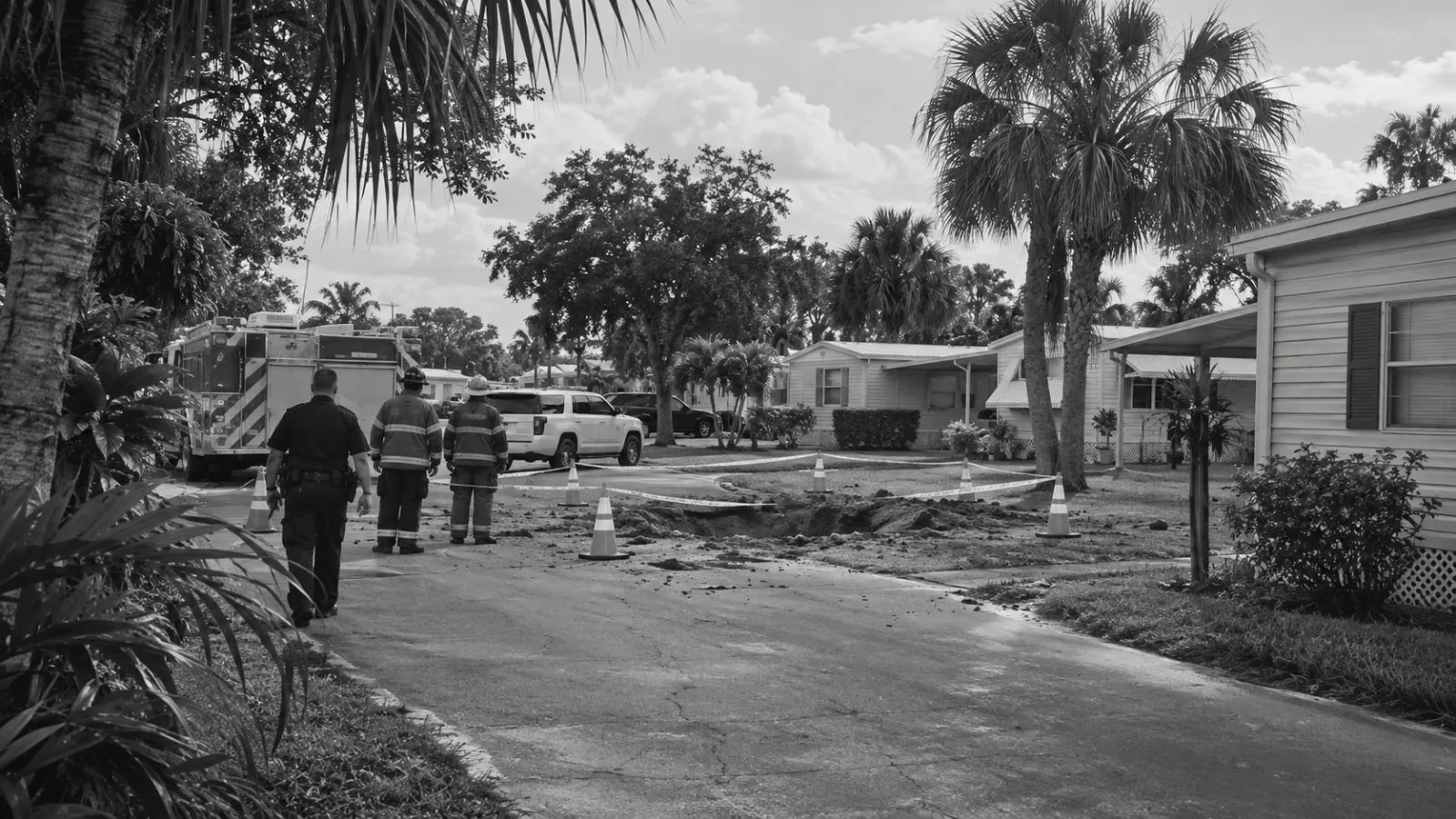
The Federal Aviation Administration (FAA) said the jet crashed near Cresthaven at about 12:50 p.m. ET on Nov. 1. U.S. Transportation Secretary Sean Duffy said all nine people aboard died. The NTSB identified the operator as Aurora Aviation, doing business as Upper Jet, and said radar and radio contact were lost while the aircraft was traveling from Austin-Bergstrom International Airport in Texas to North Eleuthera Airport in the Bahamas.
Weather is also under examination. The NTSB’s preliminary timeline says the crew reported manageable light clear icing and moderate turbulence at about 12:47 p.m. ET while flying at 35,000 feet. It records altitude deviations of about 700 feet (213 meters). Investigators have not established what caused the crash.
The NTSB generally issues a factual preliminary report about a month after an accident. That report does not include a probable-cause finding; the agency’s general guidance puts completion of an investigation at 12 to 24 months, depending on the case.