Large-scale land acquisitions have been increasing in developing countries following the 2007/8 high food price crisis. Countries with limited agricultural potential, like Gulf states, have been driving foreign acquisitions in developing countries. Many developing country governments see these investments as an opportunity to increase foreign direct investment and employment opportunities for rural communities.
The African continent is the most targeted region in the global south for large-scale land acquisitions. According to the Land Matrix, more than 14.2 million hectares of land have been transferred (in concluded deals) to large-scale agricultural investments in Africa. Most investors are from Europe, America and the Gulf States.
But there is a risk involved. These large-scale agricultural investments that produce cash and food crops for export could cause a loss of local land rights and access, and could threaten food sovereignty – people’s control over production and distribution of food.
With all land change uses, there are positive and negative influences and outcomes that need to be carefully weighed by governments and communities in the negotiation of these deals. Indeed, it’s often assumed that the impact of these investments on household food security and rural livelihoods will be mostly negative. But few studies have been done to test this assumption.
We carried out one such study in Madagascar and found that large-scale land acquisitions don’t always have those adverse effects. In the debate about reducing poverty, it’s important to understand what’s really happening on the ground.
Weighing up the pros and cons
Land is important to the livelihoods, food security and the social identity of many people. A lack of adequate and secure access to land and natural resources is a cause of hunger and poverty. Globally, half those suffering from hunger are smallholder farming households. One in five of these households are landless.
Globally, the narrative focuses on the adverse effects of land investments. It often looks at the negative impact on people who depend on grazing, fishing and forest access.
But agricultural investments can create job opportunities, offer contracting or outgrower prospects, enable land rental markets, improve market access and stimulate infrastructure development. Such opportunities could play a role in reducing poverty and improving food security through increasing incomes and improving the distribution of food.
The case of Madagascar
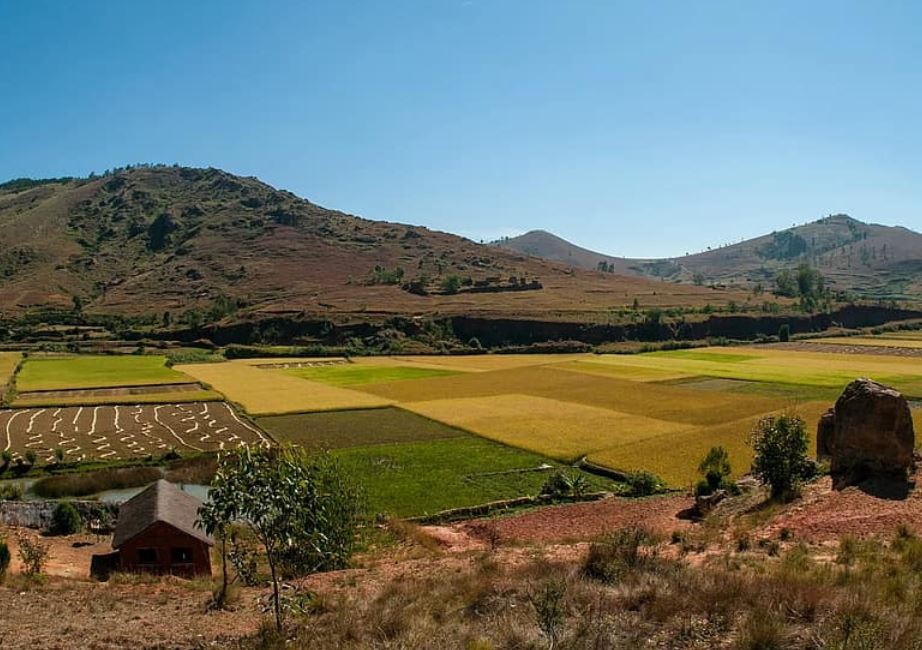
Madagascar is one of the most targeted countries for land-based investments in Africa, with a total of 1.4 million hectares in concluded deals. We explored the food security effects of large-scale agricultural investment in an area of Madagascar.
Food security is achieved when households have adequate safe and nutritious food to meet their nutritional needs. Food security is multidimensional and has no single internationally recognised measure. For this reason, we used seven internationally recognised indicators to assess the effect of large-scale agricultural investments on dimensions of food security in Madagascar.
The study covered two agribusiness models.
-
Farming where the investor owned and ran the farming operation. This encompassed growing soya, geranium and other crops on about 3,500ha.
-
Farms which employed locals as farm workers and a contract or outgrower scheme that contracted 2,000 households to produce barley on their own land. The employing farm had been in the area for over 10 years and the outgrower scheme had operated for more than 20 years.
Only a few households reported losing land rights. A study of Kenya, Madagascar and Mozambique found that land-use patterns had occurred as the companies converted grassland to cropland. Unfortunately, the food security levels of the communities prior to the arrival of the agribusiness investments was not known. This limited the ability to draw conclusions on the changes that may have happened.
The study therefore focused on comparing the food security of three categories of households in the area of the agribusinesses.
Living in the area of the large agribusinesses (within a 25km radius) did not seem to be associated with poor food security of households. This was where at least one member was employed by the large agribusiness or contracting to these companies. We found that households employed by the agribusiness were more food secure than other households.
Their diets lacked diversity, however, perhaps because the income from employment was not enough to afford a variety of nutrient-rich foods. Low dietary diversity limits the intake of essential micronutrients and can lead to reduced productivity of adults and affect the growth and development of children.
Households with employed members experienced less hunger than households engaged in contract farming and fewer months of inadequate food provision, because of their regular wages. But many did not have assets to sell in times of need. This reduced household ability to cope with food insecurity should a loss of income or natural disaster take place. It may be that the wages were enough to keep them from hunger but not enough for them to save and invest in assets for future stability.
Contract households farming barley on consignment enjoyed diets with higher diversity than households with members employed by the companies. This may arise from contract farming households having access to additional land to grow a variety of food crops for household consumption. But these households were worst off for most other food security indicators. This was because they received lumpy one-off contract payments compared to the consumption-smoothing monthly or weekly payments of employed households.
The sampled households in the neighbouring community seemed to have similar diets but owned more assets than the households in the zone of influence without members that were employed by the agribusiness or contracted to them. While non-engaged households in the zone of influence owned more assets than employed households but adopted more precautionary coping strategies (indicating some food stress in some months of the year) than other households living in the same area. On the whole, living in the zone of influence did not seem to have significant positive or negative effects on the food security of these non-engaged households.
Informing policy
The impact of large-scale investments in agricultural land is controversial. We found that households where at least one member was employed by the agribusiness were mostly more food secure than households carrying out contract farming. But this wasn’t always the case. Households in the zone of influence, but not engaged with the agribusinesses, were not found to be negatively affected in terms of food security at the time of the survey.
The most noticeable difference between households in the area of the agribusiness and those in the counterfactual community was observed in greater dietary diversity of the counterfactual households. This may have been attributed to their more traditional subsistence livelihoods and production patterns.
Governments in host countries should prioritise land reform to protect local land rights. They should also develop policy frameworks and institutions to enforce such policies and protect the food security of local communities.
Public policy should foster nutrition-sensitive approaches that provide incentives for organisations to improve worker nutrition, which in turn will reach households.
These incentives could encourage better farming practices, through subsidised seeds and farm inputs, access to irrigation and extension support. This will aid the production, harvesting, storage and preparation of nutritious foods to improve the dietary diversity of employees and contractors.