• NZD/USD eased slightly on Thursday as traders shifted their focus to the upcoming U.S. inflation report, a key release that could influence Federal Reserve policy expectations.
• Softer U.S. producer price figures released Wednesday added to expectations of Federal Reserve interest rate reductions in the coming months, setting the stage for the latest inflation report.
• Focus will also turn to New Zealand’s domestic data on Friday, with manufacturing PMI and electronic card retail spending for August scheduled for release.
• Meanwhile, Reserve Bank of New Zealand’s governor on Thursday reiterated a dovish stance, signaling an additional 50 basis points of rate cuts to 2.5% by year-end, with the pace of easing dependent on incoming data.
• At GMT 05:32, the New Zealand dollar was down 0.04% to 1.3554 against the US dollar.
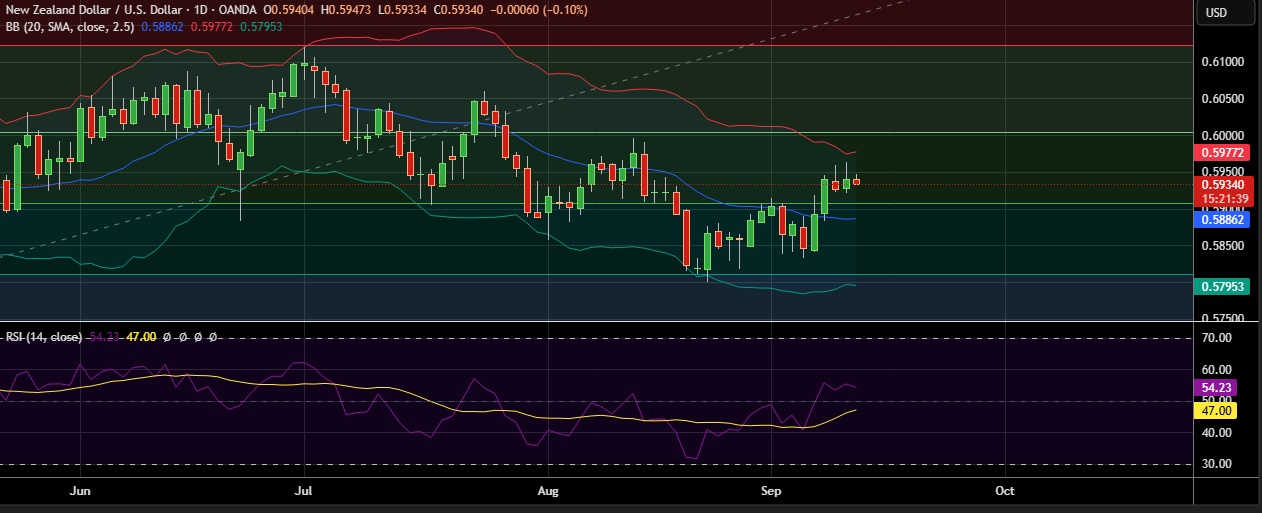
• Immediate resistance is located at 0.5975(Higher BB), any close above will push the pair towards 0.6008(38.2%fib).
• Support is seen at 0.5905(50%fib)and break below could take the pair towards 0.5886(SMA20).
Recommendation: Good to buy around 0.5900 with stop loss of 0.5850 and target price of 0.6000