


 Hegseth Praises USS Abraham Lincoln Crew After Record Iran War Deployment
  Houthis Warn Saudi Airports After Deadly Riyadh Attack
  EU Rejects Italy, Greece Calls for Fiscal Rule Flexibility
  US, EU Push for Action Against Asia’s Excess Factory Capacity
  Italy Approves Electoral Reform Ahead of 2027 Election
  Marco Rubio Warns Russia-Ukraine War Could Spark Wider Conflict
  Pentagon Orders Iran Strike Preparations as Trump Weighs Military Action
  Trump Rallies in Texas as Republicans Face Tight Midterm Races
  JD Vance Questions Pentagon Plan to Livestream Fort Hood Shooter’s Execution
  Zelenskiy Slams US-Russia Diesel Deal as Funding War
  Venezuela’s Machado Calls for Elections by July 2027
  Trump Sanctions International Criminal Court, Sparking EU Backlash
  Trump Buys Up to $25M in Meta Stock, Invests in SpaceX Debt
  Flavio Bolsonaro Leads Lula 49%-45% in Brazil Runoff Poll
  Trump Calls for Zelenskyy Replacement Amid Russian Diesel Deal
  US Charges Maduro and Wife With Torture Conspiracy


 Add as a preferred source on Google
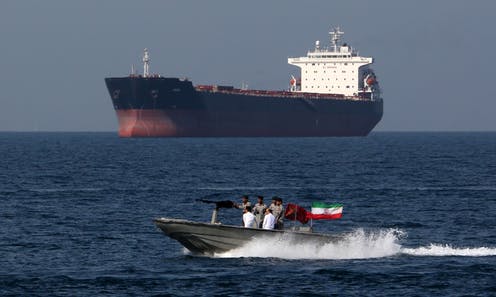
Iran warned on Thursday that the Strait of Hormuz remains an inviolable “red line,” vowing to retaliate against infrastructure across the Gulf region if U.S. President Donald Trump follows through on threats to attack Iranian power plants, bridges, and other key facilities.
The warning comes as the United States carried out a fifth consecutive night of military strikes and reinstated a naval blockade on Iranian ports. Washington says the campaign is intended to reopen the Strait of Hormuz, which Iran closed last Saturday after a fragile ceasefire collapsed. Before the conflict, the strategic waterway handled nearly one-fifth of global oil and gas shipments, making it one of the world’s most critical energy routes.
Iranian army spokesman Brigadier General Mohammad Akraminia said Tehran maintains full control over the Strait of Hormuz and can defend it from any point within its territory. He rejected suggestions that recent U.S. strikes on coastal military sites had weakened Iran’s ability to control the waterway.
The escalation follows remarks by Iranian official Mohammad Baqer Qalibaf, who described the conflict as an “essential and existential war” with the United States. According to Reuters, U.S. officials said the strikes are also targeting Iranian military assets that could interfere with future operations in the region.
President Trump warned earlier this week that the United States could expand attacks on Iran’s infrastructure unless Tehran returns to negotiations. In response, Akraminia said any such action would trigger strikes on “all remaining infrastructure” across the Gulf, with retaliation that would be broader and more destructive than previous attacks.
Iran also claimed responsibility for attacks on U.S. military facilities in Kuwait and Jordan, warning neighboring countries against allowing American forces to launch operations from their territory. Bahrain activated its air defense systems after reporting Iranian aerial threats, while Kuwait said it was responding to hostile drones. Iran further claimed it struck the Al Azraq Air Base in Jordan and damaged military infrastructure at Kuwait’s Ali Al Salem Air Base.
The latest confrontation has heightened fears of a wider regional war. Analysts warn Iran could also rely on its Houthi allies in Yemen to disrupt shipping through the Bab el-Mandeb Strait, potentially threatening another vital global energy corridor. The ongoing conflict has already killed thousands and displaced millions across Iran and Lebanon.







