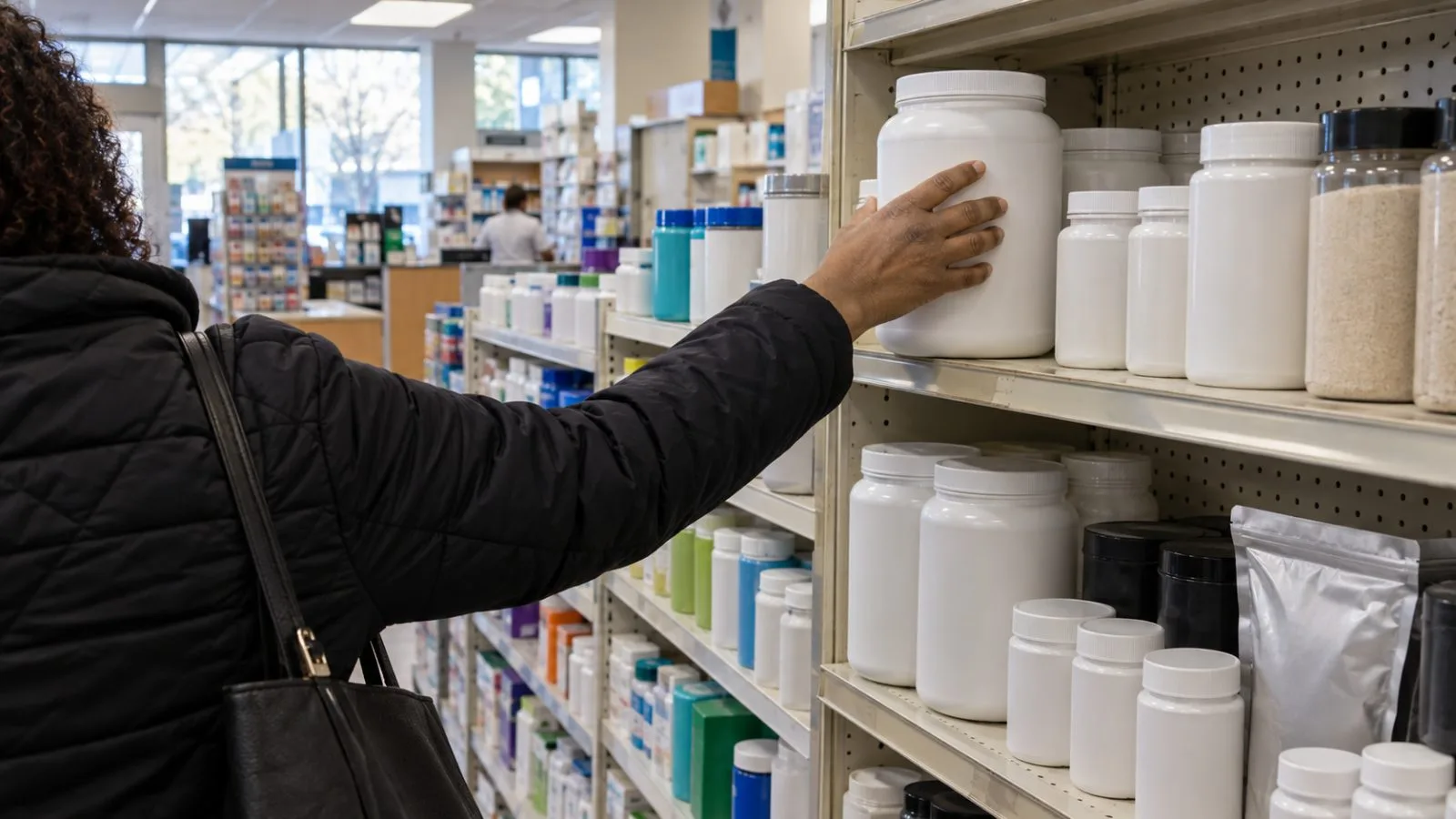
Surveys show supplement use among some former users of glucagon-like peptide-1 (GLP-1) weight-loss drugs and planned spending among active users, giving sellers a market signal as medical groups urge nutrition care during treatment.
Nutrition Business Journal reported that 35% of respondents who had stopped GLP-1 treatment used supplements to support continued weight loss. In a separate survey, 21% of people trying to lose more than 10 pounds said they used supplements for weight-loss support. The surveys covered different groups and do not establish whether the products helped users lose weight.
Boston Consulting Group surveyed more than 1,500 GLP-1 users across nine markets. Among active users, respondents planned to spend about 20% more on protein and fiber supplements and collagen. Those were spending intentions, not completed purchases.
The reported interest falls within a U.S. supplement market that Nutrition Business Journal describes as nearing $75 billion, after 7.1% growth in 2025. The journal estimates TikTok Shop accounted for $1.01 billion in supplement sales in 2025, or 5.4% of its estimated e-commerce supplement market. These figures cover the wider supplement market, not purchases by GLP-1 users specifically.
A May 2025 joint advisory from four medical and nutrition organizations recommends assessing patients’ nutritional needs, managing gastrointestinal effects, maintaining adequate protein intake and doing strength training during GLP-1 treatment. The FDA-approved Wegovy label lists nausea, diarrhea, vomiting and constipation among common adverse reactions. The advisory links reduced appetite and gastrointestinal effects to the need for closer attention to nutrition; it does not show that supplements relieve those effects.
The U.S. Food and Drug Administration (FDA) does not approve dietary supplements for safety and effectiveness before sale. Companies are responsible for meeting safety requirements, while the Federal Trade Commission (FTC) says health claims in advertising, including influencer promotions, must be supported by evidence. The framework dates to the 1994 Dietary Supplement Health and Education Act.
On Oct. 19, the FDA issued final guidance on identity and safety information for notifications involving certain new dietary ingredients. The law requires those notices at least 75 days before marketing; the guidance does not create preapproval for supplements as a whole.
Separately, an FDA proposal would require notices for certain uses of human and animal food substances claimed to be “generally recognized as safe.” It excludes dietary ingredients in or intended for use in supplements. The FDA estimates the proposal would cost affected submitters and the agency $89.6 million in present value over 10 years. Comments are due Dec. 9, 2026, at 11:59 p.m. ET.