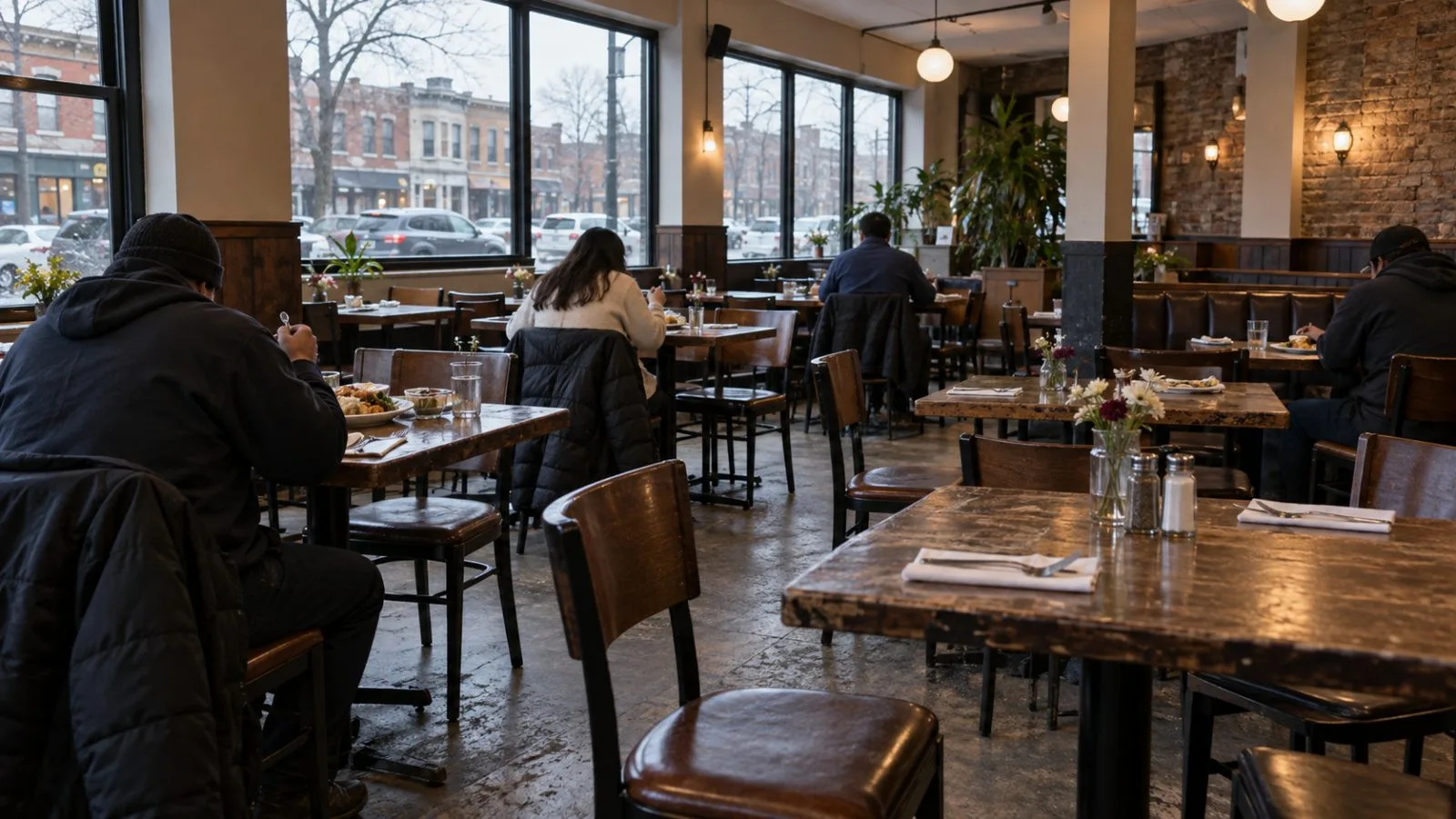
The share of U.S. adults eating at restaurants weekly fell to 39% in July, a shift Gallup said poses a challenge for restaurants as infrequent visits increase.
Weekly restaurant dining stood at 53% in 2019, then 47% in 2022, before falling to 39% in July. One-fifth said they ate out just a few times annually or less, double the 2019 share of 10%. Gallup put that group at 18% in 2021. Four percent said they never ate out, compared with 7% in 2021.
The survey covered U.S. adults from July 1-19, 2026. By income, weekly diners made up 48% of upper-income adults, 38% of middle-income adults and 32% of lower-income adults. Gallup said weekly dining recently fell among middle- and upper-income adults, while the lower-income share was unchanged.
Gallup said rising prices over the past four years may have contributed to less frequent restaurant visits. It added that other factors may also be involved. The survey coincided with a major cyclospora outbreak, and produce served at some restaurants had been identified as a potential source. Gallup did not establish that the outbreak affected how often people ate out.
The weekly takeout share was 39% in 2021 and 31% in 2026, matching the 2018 figure. Gallup tracks restaurant meals and takeout orders separately, so the figures reflect different behaviors. Gallup said weekly takeout orders did not make up for the decline in restaurant dining. These figures describe how often people used each option, rather than total restaurant spending.