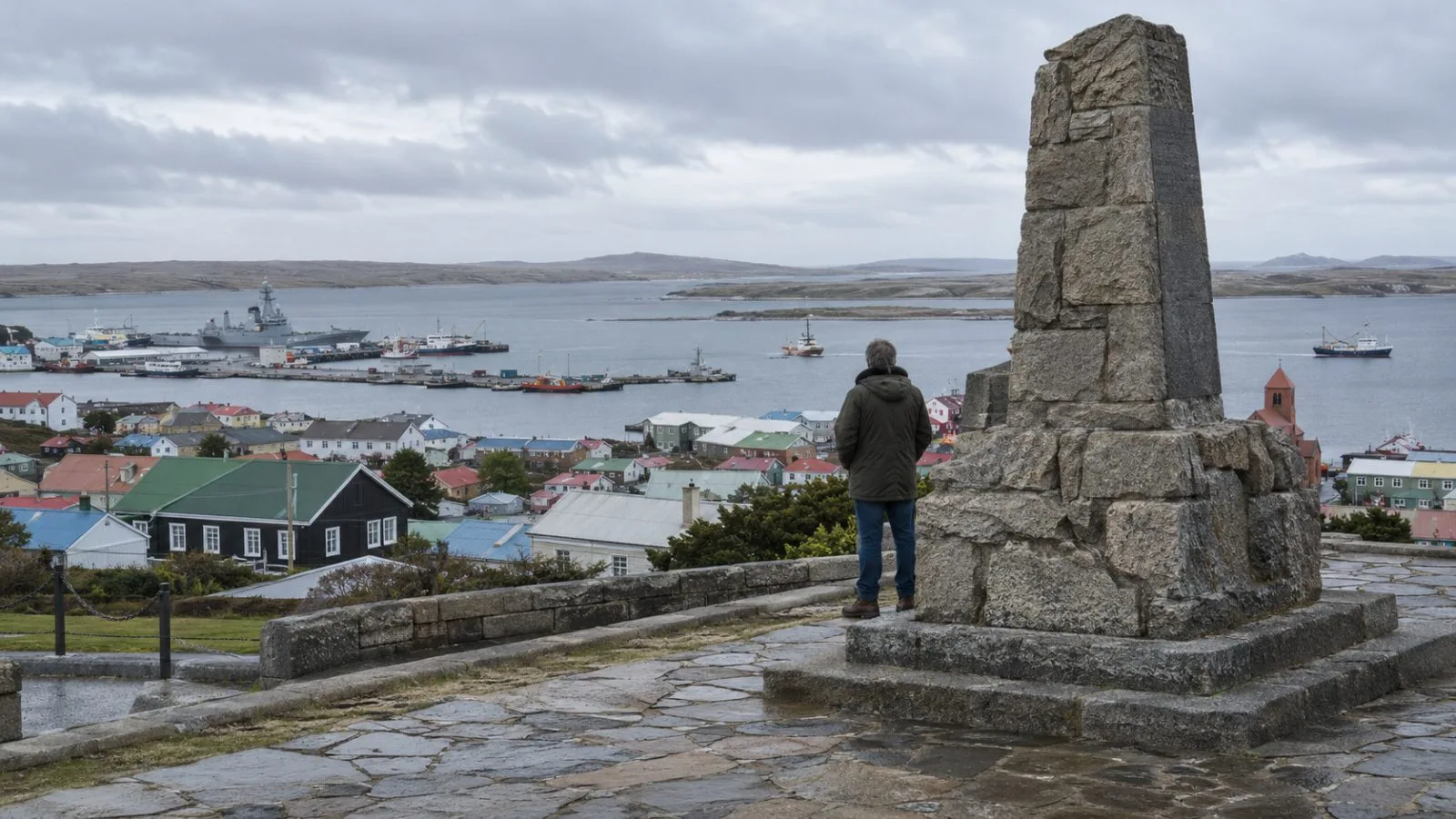
Nile Gardiner, director of The Heritage Foundation’s Margaret Thatcher Center for Freedom, urged President Donald Trump to support British sovereignty over the Falkland Islands, arguing that the position serves U.S. interests.
Gardiner is also the Bernard and Barbara Lomas Fellow. He made the case in an opinion piece that originally appeared in The Telegraph, portraying support for Britain as consistent with Trump’s focus on U.S. interests and with principles he said Americans value.
Gardiner said Trump told British media last month that Washington would reconsider its neutral position on the islands. He connected that account to Argentine President Javier Milei’s response: tougher sanctions on foreign companies planning oil drilling near the Falklands, alongside a renewed drive to end British sovereignty.
Gardiner argued that the case for continuity extends beyond the islands. He cited intelligence cooperation between the CIA and MI6, the U.S.-UK base at Diego Garcia, RAF Fairford’s strategic role, and trade and investment between the countries. He also pointed to King Charles III’s April visit to the United States, describing it as a diplomatic success and noting its warm reception in Congress.
Gardiner acknowledged serious disagreements between Trump’s administration and Britain’s Labour government, including over Iran, Israel, net-zero policy, migration, free speech and defense spending. He said he had worked with U.S. officials in opposition to Labour’s Chagos agreement, which was the subject of an earlier report on the treaty’s stalled status. Gardiner described the relationship as the tensest he had seen in nearly 25 years in Washington policy circles. He said Labour’s slow response to calls for faster military outlays added to Washington’s frustration after NATO leaders set spending commitments at their Hague meeting in 2025.
Even so, Gardiner said he did not expect these disputes to alter U.S. policy on the Falklands. He said recent conversations with U.S. officials gave him no indication that they favored a change. In his account, officials recognized the issue’s importance to people in Britain and praised Margaret Thatcher’s handling of the 1982 conflict after Argentina’s invasion.