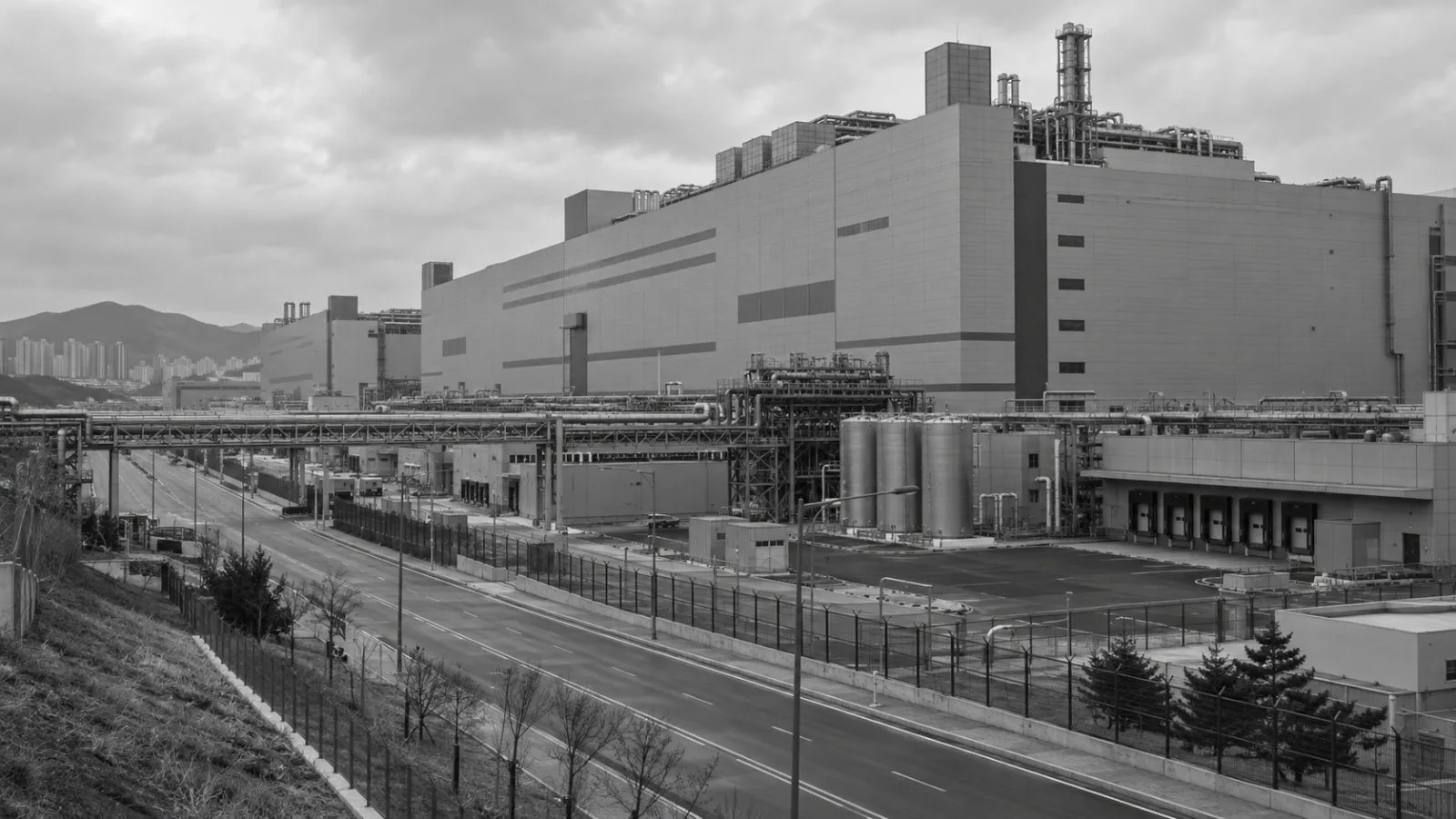
Gartner’s preliminary 2025 ranking put South Korea’s SK hynix third in semiconductor revenue, ahead of Intel, as AI demand lifted memory sales and concentrated a larger share of industry revenue among top suppliers.
Gartner estimated SK hynix’s semiconductor revenue at $60.640 billion and Intel’s at $47.883 billion. The preliminary table covers chip revenue; company filings report total company revenue, so the figures are not directly comparable.
SK hynix reported 2025 revenue of 97.1467 trillion won, up 47%, and said revenue from high-bandwidth memory (HBM) more than doubled. Intel reported consolidated revenue of $52.9 billion, down from $53.1 billion in 2024. These totals cannot be read as direct matches for Gartner’s chip-only estimates.
Omdia said the semiconductor market exceeded $830 billion in 2025, with industry revenue growing about 53% over the prior two years. Between 2023 and 2025, revenue among the 10 largest companies rose 90%, while revenue among other suppliers increased 8%. NVIDIA, Samsung Electronics, SK hynix and Micron together increased their combined market share from 24% in 2023 to 42% in 2025, Omdia said.
Memory contributed much of the change: Omdia put dynamic random-access memory (DRAM) sales above $150 billion in 2025, compared with slightly more than $50 billion in 2023. Suppliers shifted wafer allocation toward HBM and high-density server DRAM as AI servers used HBM and DDR5 system memory, Omdia said. Omdia senior principal analyst Lino Jeng said AI servers need “significantly more system memory, particularly DDR5.”
Omdia said 2025 marked the first time since its market tracking began in 2001 that the industry had two consecutive years of revenue growth above 20%.
Omdia reported that semiconductor revenue topped $425 billion in the second quarter of 2026, up 31.4% from the previous quarter. Omdia said memory integrated circuits made up more than half of the quarterly total and put first-half revenue at $752 billion. The firm forecast third-quarter revenue above $500 billion.