Gaza’s Ministry of Health recorded 250 breast cancer diagnoses in 2024 and about 260 in 2025, below its prewar annual level, but says disrupted screening leaves the true scale uncertain.
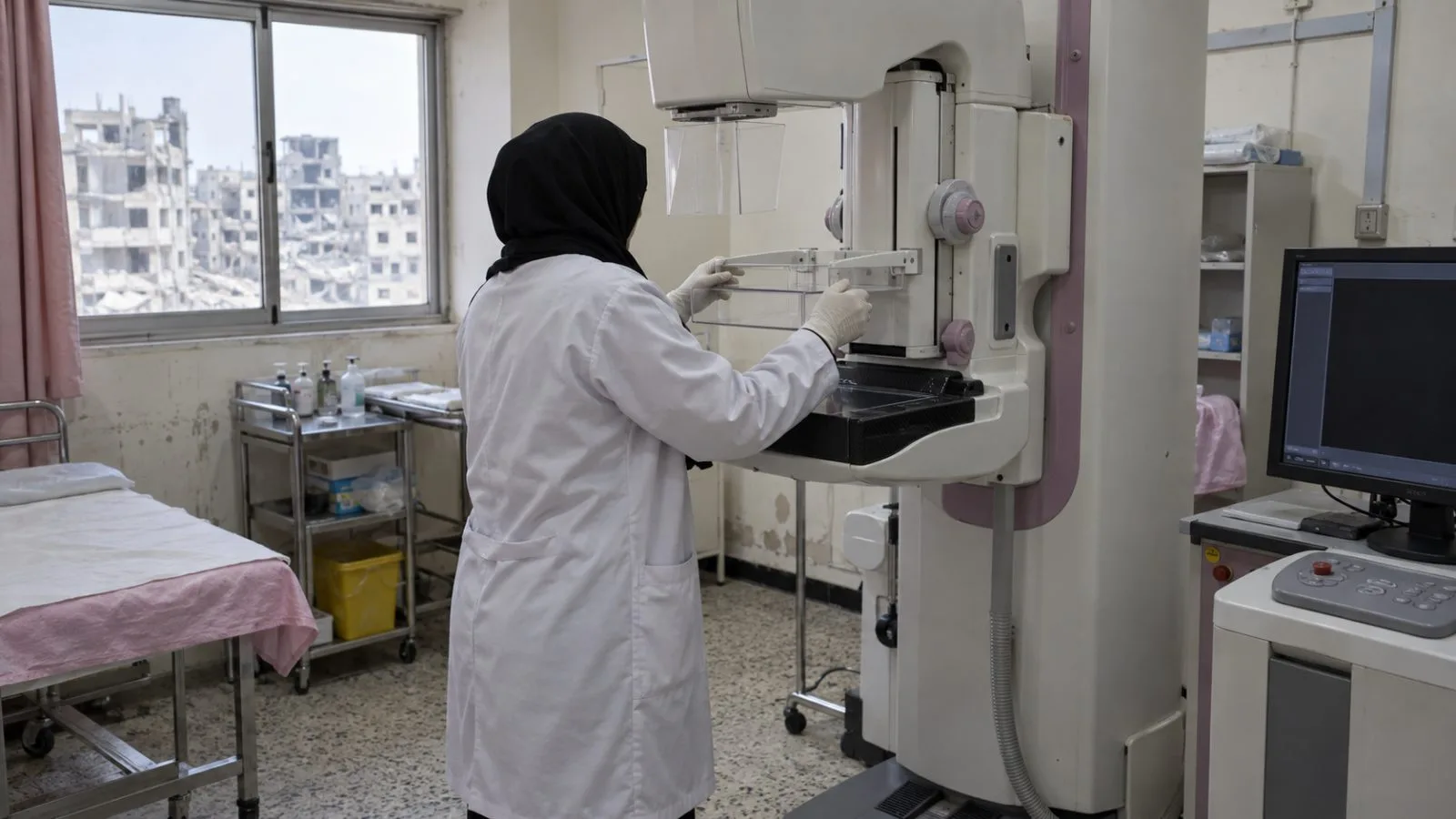
The ministry said Gaza recorded roughly 360 new cases a year before the war. At that rate, it said, more than 1,000 new cases would have been expected over roughly three years. The ministry cautioned that screening and early diagnosis had largely stopped, and cited repeated mammography-machine failures and shortages of laboratory supplies.
The ministry also said chemotherapy, hormonal and targeted treatments were unavailable, radiotherapy was not operating in Gaza, and operations for advanced tumors had stopped because specialized capacity was lacking.
In a Sept. 25 report, the United Nations Office for the Coordination of Humanitarian Affairs (OCHA) relayed the Health Cluster’s account of cancer-treatment supply gaps, which it linked to underfunding and barriers to bringing available medicines into Gaza. The cluster also tied interruptions to diagnostic services to shortages of generator engine oil, spare parts and other consumables. Mammography and CT services had stopped at Al-Ahli Hospital, while Al Quds Palestinian Red Crescent retained limited mammography capacity, the cluster reported.
The Ministry of Health said its laboratories conducted 38% of their prewar average number of tests in the first half of 2026, according to a report by the Palestinian Centre for Human Rights.
Al Jazeera reported that Hiba Musbah, 36, had gone three months without a CT scan because public hospitals lacked equipment. She told the outlet a private scan cost about 150 shekels ($48), which she could not afford. Al Jazeera also reported that fighting near Nasser Hospital delayed her surgery by two months and that her chemotherapy initially faced a seven-month delay because medicine was unavailable.
Musbah told Al Jazeera she had a referral for treatment abroad and had waited about two years to travel. “I have been waiting for two years. And I still haven’t travelled,” she said.
The World Health Organization said local health authorities coordinated medical evacuations in 2025 with its support, including movement approvals through Israel’s Coordination of Government Activities in the Territories and arrangements with receiving countries. The agency reported 2,714 patient evacuations in 2025 and estimated that 18,500 patients still needed urgent evacuation as of Dec. 31. Those totals cover all medical conditions.