Generative Bionics plans a 5,000-square-meter Italian center where humanoid robots would generate model-training examples through industrial jobs, the first site in a three-location network intended to support industrial deployment.
The company presented the proposal at CES Unveiled Milan on Oct. 21. It calls for another European site and a third facility aimed at global markets; the announcement gives an operating target only for the Italian hub.
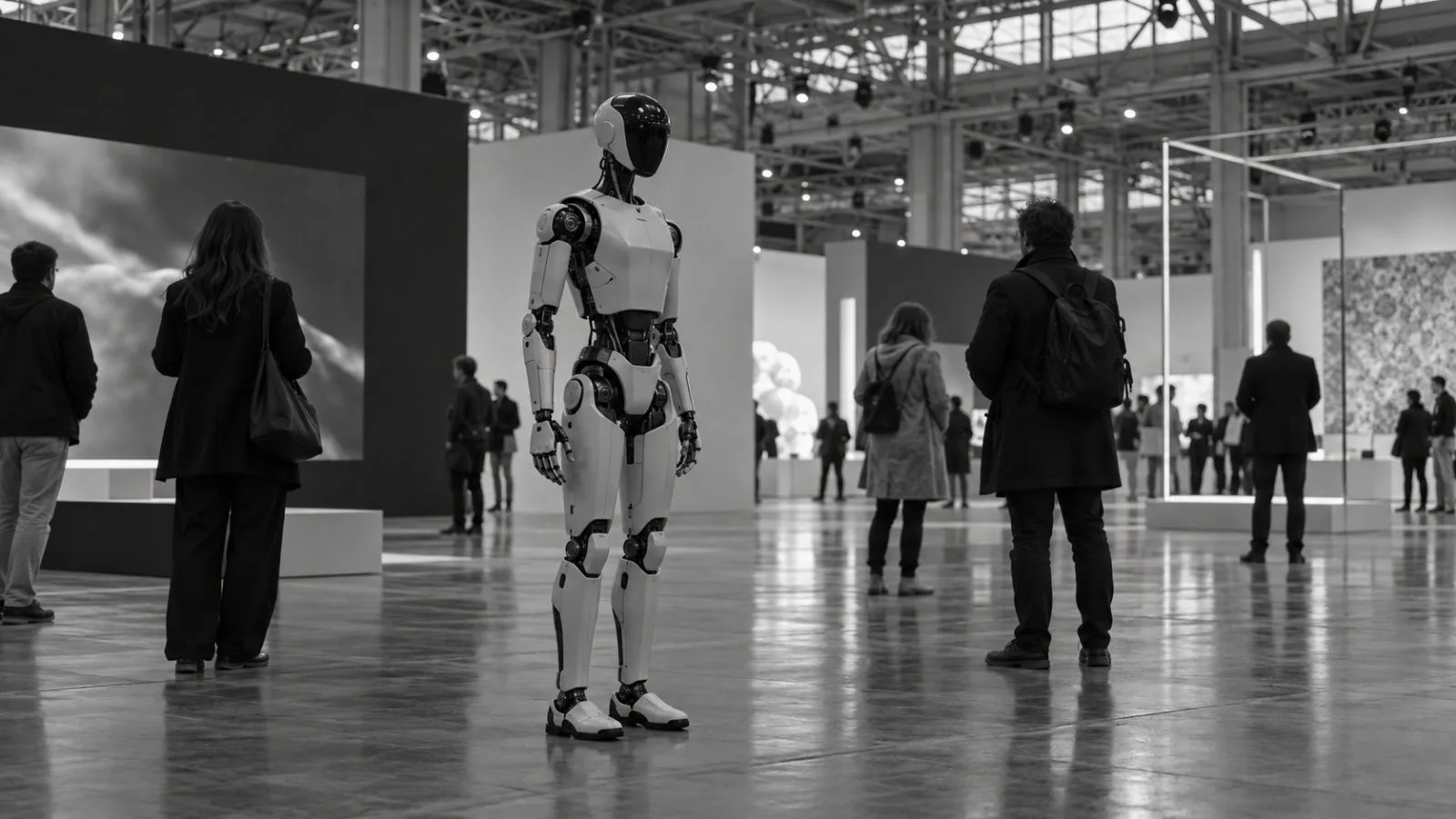
At the Italian facility, GENE.01 humanoid robots are planned to carry out industrial jobs in recreated work settings. Generative Bionics expects to collect information on movement, vision, contact, force, proximity, temperature, task limits and human interaction. It plans to create digital twins of the jobs and simulate thousands of variations, followed by physical tests of the trained models.
The company says humanoids need more examples of how to act in the physical world. Its proposed cycle would use robots to produce initial experience, simulations to broaden the training set and physical robot tests to check resulting models before customers receive them. Generative Bionics expects the process to support industrial use. Data collected in operation would also inform later training cycles.
The company intends to use AMD Helios computing for data processing, model training and simulation. It says the network would support robot-data development and model validation in Europe.
Generative Bionics describes the proposed hub as Europe’s largest Physical AI training facility for humanoid robots. In March 2026, NEURA Robotics and the Technical University of Munich (TUM) described their TUM RoboGym as Europe’s largest scientific Physical AI training center. The descriptions cover different scopes: TUM’s project was announced with a 2,300-square-meter starting facility and plans to expand.
Generative Bionics said on Dec. 9, 2025, that it had closed a €70 million funding round led by CDP Venture Capital. AMD Ventures and four other investors also took part. The company targets the Italian site to begin operating in the fourth quarter of 2027.