A study of 1,050 people across Polynesia found a close genetic relationship between Native Hawaiians and people from Rapa Nui, shedding light on Pacific settlement and inherited variants relevant to health research.
The Hawaiian and Rapa Nui samples showed the strongest genetic affinity among the remote island populations compared. Published Oct. 8 in Science, the study points to likely shared voyaging ancestry with deeper roots in Mangareva, in French Polynesia.
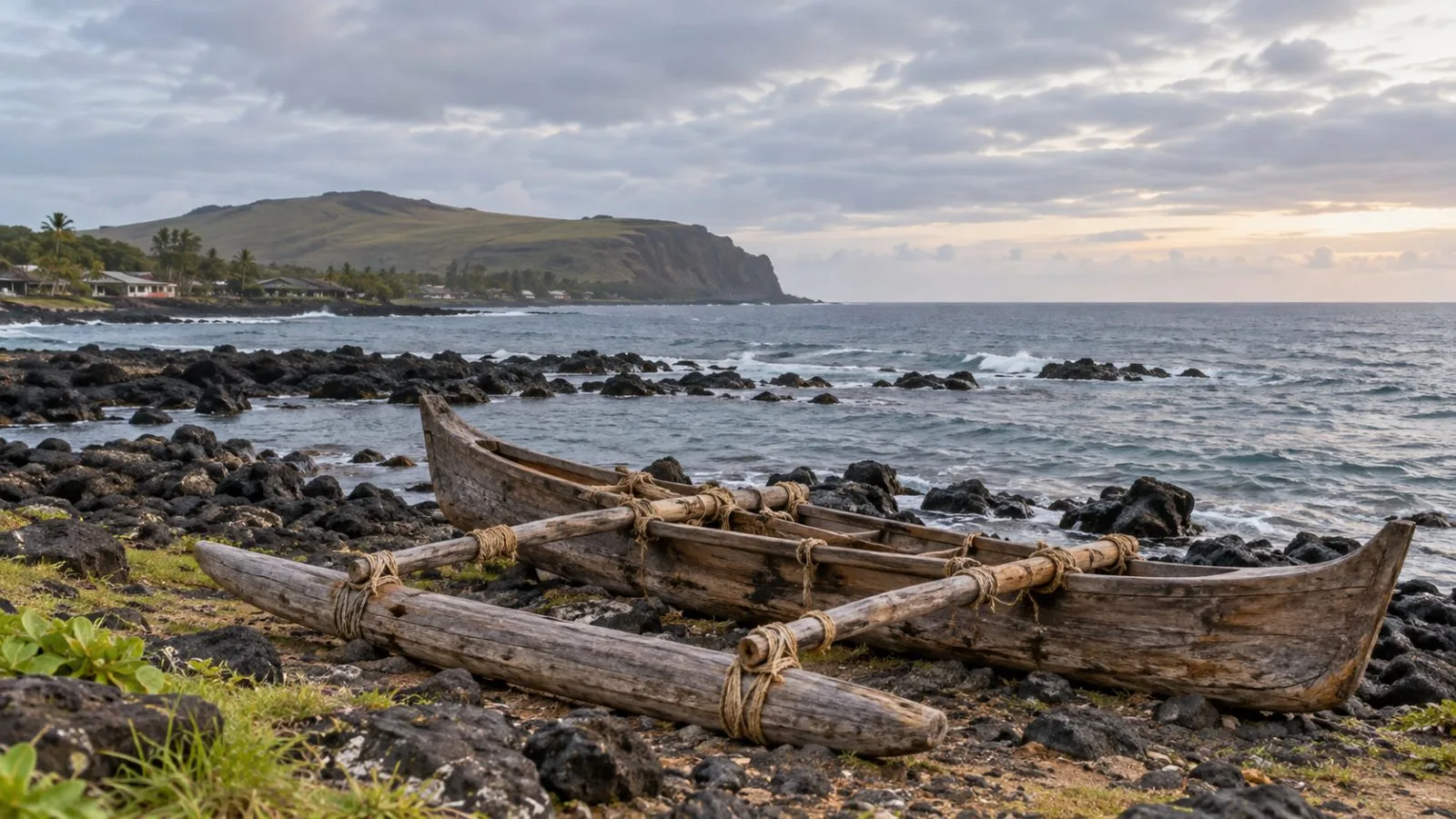
The islands are about 7,000 kilometers apart. Each is also more than 3,000 kilometers from the nearest inhabited Polynesian island. Researchers use Holomoana Nui, meaning “great ocean voyaging,” for the long-distance travel tradition they propose.
The genetic evidence cannot establish which route settlers took. University of Chile professor and study co-author Mauricio Moraga said DNA can show how populations are related, but it cannot identify a particular crossing or prove that the same travelers reached both islands.
The study also found signs of repeated founder effects. An island’s first settlers passed on a limited set of genetic variants, and later migrations filtered that set again. Hawaiʻi and Rapa Nui were among the populations showing the strongest signs of this process.
The findings have a potential use beyond reconstructing settlement. A variant in the FAN1 gene associated with a rare kidney disorder appeared in more than 11% of the study’s French Polynesian cohort, the University of California, San Diego said. The paper reports a separate frequency of more than 1% in Eastern Polynesia.
The variant was absent from gnomAD, a genomic database containing information from more than 800,000 people. The researchers said limited representation of Polynesian populations in such databases can make it harder to investigate conditions affecting their communities.
The results may help shape future research into screening and diagnosis. The study does not establish a treatment or a change in clinical guidance.