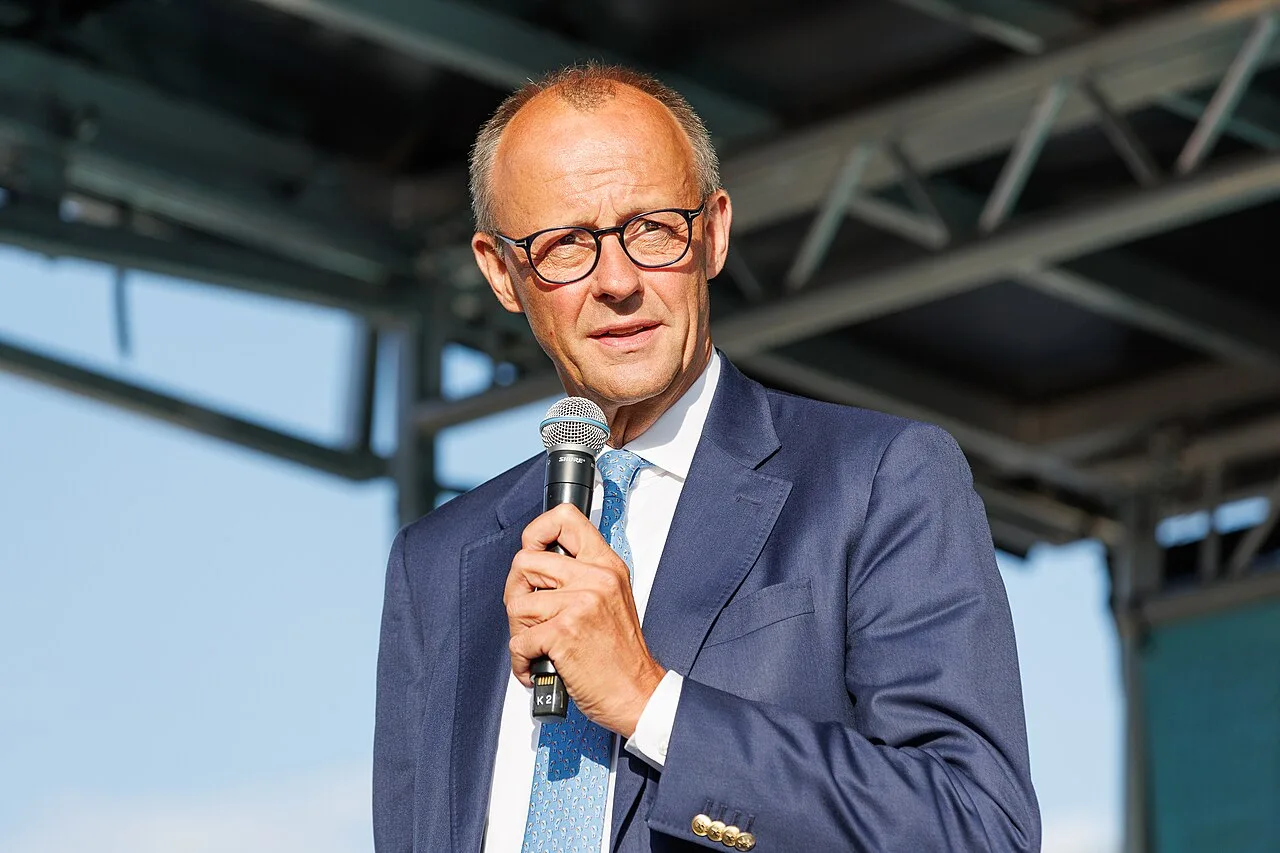
German Chancellor Friedrich Merz has insisted that billions of euros in frozen Russian assets must remain under European control, rejecting the possibility of transferring oversight to the United States as Washington reportedly explores new ways to revive peace negotiations over Ukraine.
Speaking in Brussels on Thursday ahead of a European Union summit, Merz emphasized that decisions concerning Russian sovereign assets immobilized in Europe should remain the responsibility of European governments.
"Those are assets that are frozen in Europe and they should remain frozen in Europe. This is our business and we are deciding over it," Merz told reporters.
His remarks followed a Financial Times report on Wednesday suggesting that the United States had proposed transferring some frozen Russian assets into a financial mechanism supervised by Washington. The initiative was reportedly intended to help restart diplomatic discussions aimed at ending the Russia-Ukraine war.
According to the report, US special envoy Steve Witkoff and Jared Kushner, President Donald Trump's son-in-law, presented the proposal to European representatives. However, European delegates reportedly rejected the idea, signaling resistance to allowing Washington greater authority over Russian funds held within the bloc.
Reuters said it could not independently confirm the Financial Times report.
Meanwhile, the Kremlin indicated that Moscow had received no official information regarding the alleged American proposal.
Kremlin spokesperson Dmitry Peskov told journalists that Russia was aware only of media accounts describing possible discussions between US and European officials. He questioned whether the reports accurately reflected ongoing diplomatic negotiations.
Following Russia's full-scale invasion of Ukraine in February 2022, European Union governments froze approximately €210 billion ($235.73 billion) in Russian central bank reserves as part of broader economic sanctions against Moscow.
Of that amount, roughly €185 billion is held by Euroclear, the Brussels-based securities depository responsible for safeguarding a substantial portion of the immobilized funds.
Several European governments have advocated using frozen Russian assets to support Ukraine, although disagreements persist over how the money should be managed and distributed.
Merz's position highlights Europe's determination to maintain control over Russian financial reserves as diplomatic efforts continue and discussions intensify over potential funding mechanisms for Ukraine.
The dispute also underscores differing approaches between Washington and European capitals regarding the management of sanctioned Russian assets and their possible role in future peace negotiations.