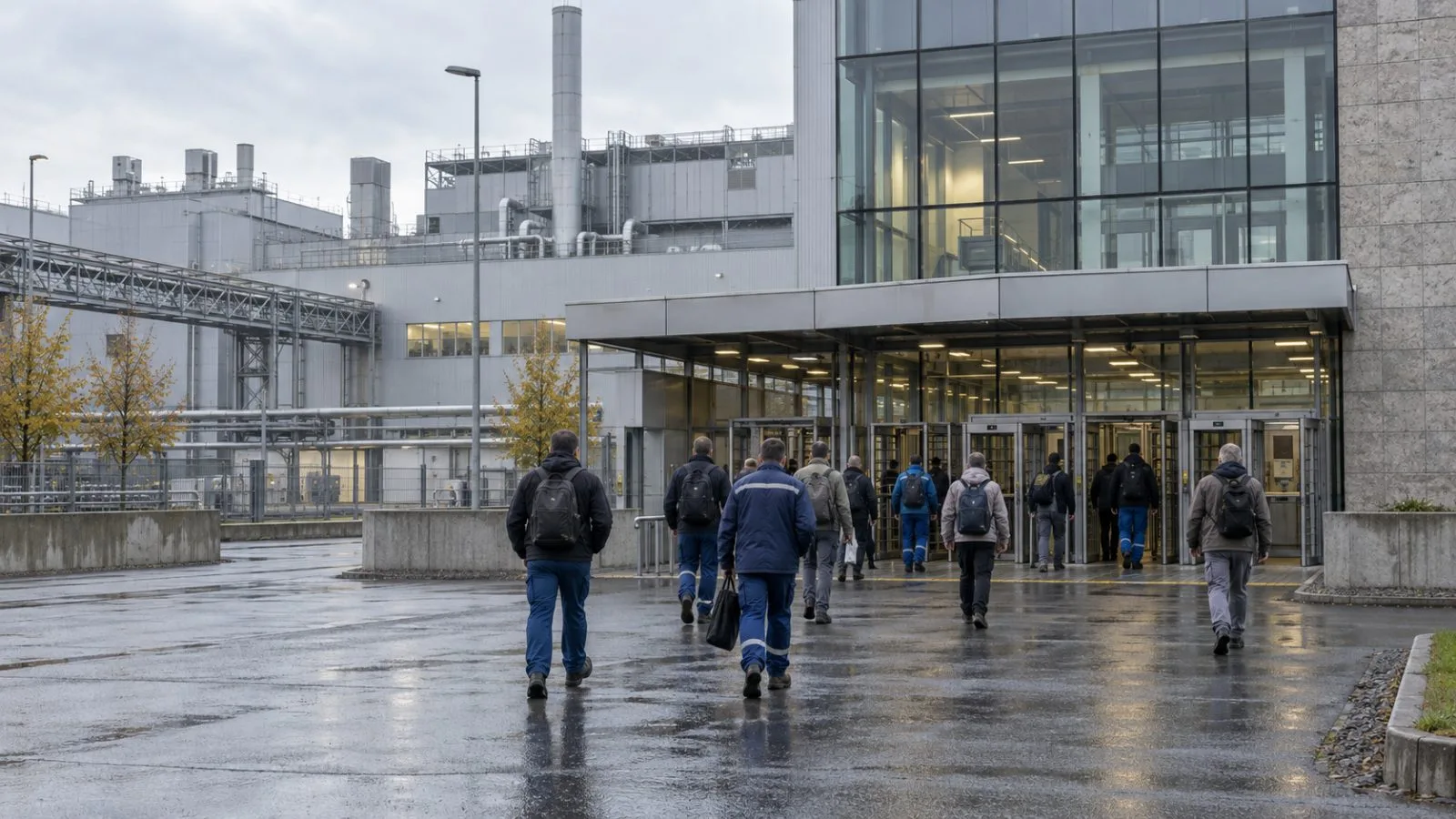
Germany's industrial sector had 496,000 fewer employees covered by social security contributions at the end of 2025 than seven years earlier, while services added more than 2.2 million covered jobs, according to ifo Institute data.
The comparison runs from Dec. 31, 2018, to Dec. 31, 2025. The industrial decline amounted to 7.1%, ifo said in an Oct. 19 press release about a study. Its figures draw on Federal Employment Agency records of jobs subject to social security contributions.
The measure excludes self-employed people, civil servants and workers in mini-jobs, so it does not represent every worker in Germany. The service-sector gains and industrial losses reflect changes in covered employment over the period.
Vehicle makers and suppliers lost 123,500 covered positions, a 13% decline. Metal-products manufacturers recorded 115,600 fewer employees, while mechanical engineering had 64,500 fewer. Together, the three areas made up about three-fifths of the industrial drop.
Employment rose in several service fields. Health care added 391,000 covered employees, social services gained 357,000 and public administration added 329,000, according to ifo.
Joachim Ragnitz, managing director of ifo Dresden, linked growth in health and social services chiefly to an aging population. He said weaker competitiveness, particularly compared with China, likely contributed to the industrial losses.
A separate ifo survey pointed to continued pressure on industrial staffing plans. In September, most manufacturers said they expected to operate with fewer employees, the institute reported; the survey measured plans rather than completed job changes.