


 What’s so special about Ukraine’s minerals? A geologist explains
  Rise of the Zombie Bugs takes readers on a jaw-dropping tour of the parasite world
  Rice feeds billions of people – but its role in fueling climate change is growing
  Rapidus Seeks Chip Customers as Japan Pushes 2nm Semiconductor Revival
  Parasites are ecological dark matter – and they need protecting
  Samsung Q3 Profit Hits Record High on AI Memory Demand
  Zcash NU7 Testnet Cuts Block Time to 25 Seconds
  Huawei, Qualcomm Sign Multi-Year AI and 5G Patent Deal
  AI Agents Could Disrupt Financial Services, Bernstein Says
  Firmus Grid IPO Draws Strong Demand, Nvidia and Blackstone Could Raise Stakes
  Lake beds are rich environmental records — studying them reveals much about a place’s history
  The world’s biggest trees could hold the secret to coping with drought
  Marvell Stock Surges on $90 Billion AI Revenue Outlook
  An unexpected anomaly was found in the Pacific Ocean – and it could be a global time marker
  How to create a thriving forest, not box-checking ‘tree cover’
  As the Black Summer megafires neared, people rallied to save wildlife and domestic animals. But it came at a real cost


 Add as a preferred source on Google
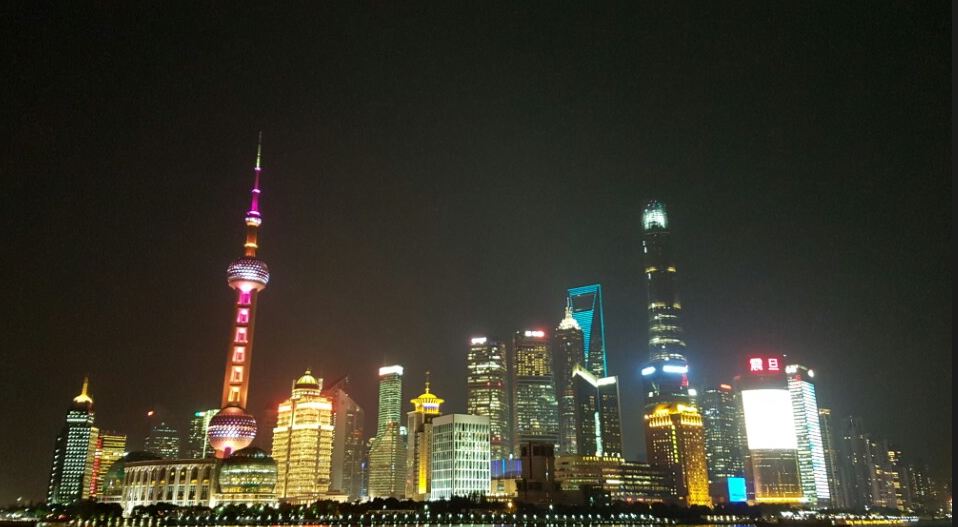



Ideas to enhance the liveability and sustainability of our cities have attracted a lot of interest recently. Examples include establishing or enhancing “urban forests”, or “bringing back nature” into cities to support animals and ecosystems displaced by human activity.
While these projects focus on creating space for nature and enhancing biodiversity within cities, they rarely consider the impact on nature of the artificial lighting used across the urban landscape.
Public lighting is often thought to be essential for improving safety and preventing crime. Most commercial and public structures are lit up at night, although often for purely aesthetic reasons.
A network of street lighting links these “islands of illumination”. The effects of this can, in some large cities, result in “sky glow” that interferes with star visibility at distances of more than 300 kilometres.
A cascade of harmful impacts
While modern life makes some artificial lighting essential, when it’s overused or poorly designed it creates light pollution. It is not widely appreciated that this can have significant adverse effects, which go beyond interference with stargazing. These include serious impacts on humans, plants and animals.
Effects on humans reportedly include (but are not limited to) an increased risk of breast cancer, sleep disruptions and possible links to metabolic disorders, including diabetes and obesity. Furthermore, artificial lighting uses large amounts of energy associated with CO2 emissions.
Adverse effects on animals include interference with reproduction, predator and prey interactions, and orientation and migration. These effects are potentially damaging for entire ecosystems, as well as particular species.
Ecosystems involve a complex balance of interactions between species. Disrupting this can trigger a cascade of harmful effects.
The attraction of moths to lights offers an illustration of this. In becoming disoriented and infinitely attracted to the artificial light, the local moths of a given species become an easy meal for bats and other predators, and the moth population declines. Other species that depend on the moths for their survival are now themselves at risk.
If this particular species of moth pollinates plants, then local pollination may be reduced. And if this moth is the only pollinator of a plant species, then that species’ rate of reproduction will fall. This can be devastating for insect and animal communities that rely on these plants for habitat and food.
A whole ecosystem can be harmed by something as apparently harmless as public lighting.
A need to rethink lighting standards
Despite awareness of adverse effects, the collective ecological impact of artificial light is not well recognised beyond the sphere of ecological research.
Planning regulations and practices tend not to consider artificial lighting as a source of pollution. Rather, the focus is on minimum lighting standards, reflecting perceptions of safety and community expectations.
Questions of unwanted light are more often considered in terms of nuisance or energy wastage. The focus of light reduction tends to be on cost savings, or even CO2 savings, and not wider environmental effects. Ironically, the introduction of energy-saving lighting, such as LED, may lead to even greater impacts on some species.
Being diurnal creatures, we humans tend to have little awareness of night-time ecosystems. Given that light emissions disappear once the source is turned off, it is unsurprising that artificial light has not been identified as an important pollutant.
Global concerns about climate change and energy consumption, and the resulting trend towards greater efficiency and sustainability, create an opportunity to challenge the underlying assumptions about public lighting. For example, the notion that more lighting equates to greater safety and discourages crime may be questionable.
Reconsidering our association of artificial lighting with progress and modernity allows us to reframe the “minimum lighting standards” model to one that seeks to minimise harm in all respects. The key question then is what lighting is needed for human safety while minimising unwanted or harmful light as well as energy consumption?
Possible solutions go beyond a debate of more versus less lighting. We could, for instance, use lights with wavelengths that cause less disruption to key species, as well as “adaptive street lighting” that responds to pedestrian movement. There are doubtless many possible innovations that balance human and ecological needs.
Urban greening programs could play a leading role here in developing smarter lighting solutions that benefit both humans and ecosystems. Such initiatives would be natural inclusions in the emerging protocols to guide biodiversity-sensitive urban design.
 Alex Kusmanoff receives funding from the Australian Research Council and through the National Environment Science Programme's Threatened Species and Clean Air and Urban Landscapes Hubs.
Georgia Garrard receives funding from the National Environmental Science Programme's Threatened Species Recovery Hub.
Luis Mata receives funding from the National Environmental Science Programme - Clean Air and Urban Landscapes Hub.
Sarah Bekessy receives funding from the Australian Research Council and through the National Environment Science Programme's, Threatened Species and Clean Air and Urban Landscapes Hubs.
This article was originally published on The Conversation. Read the original article.







