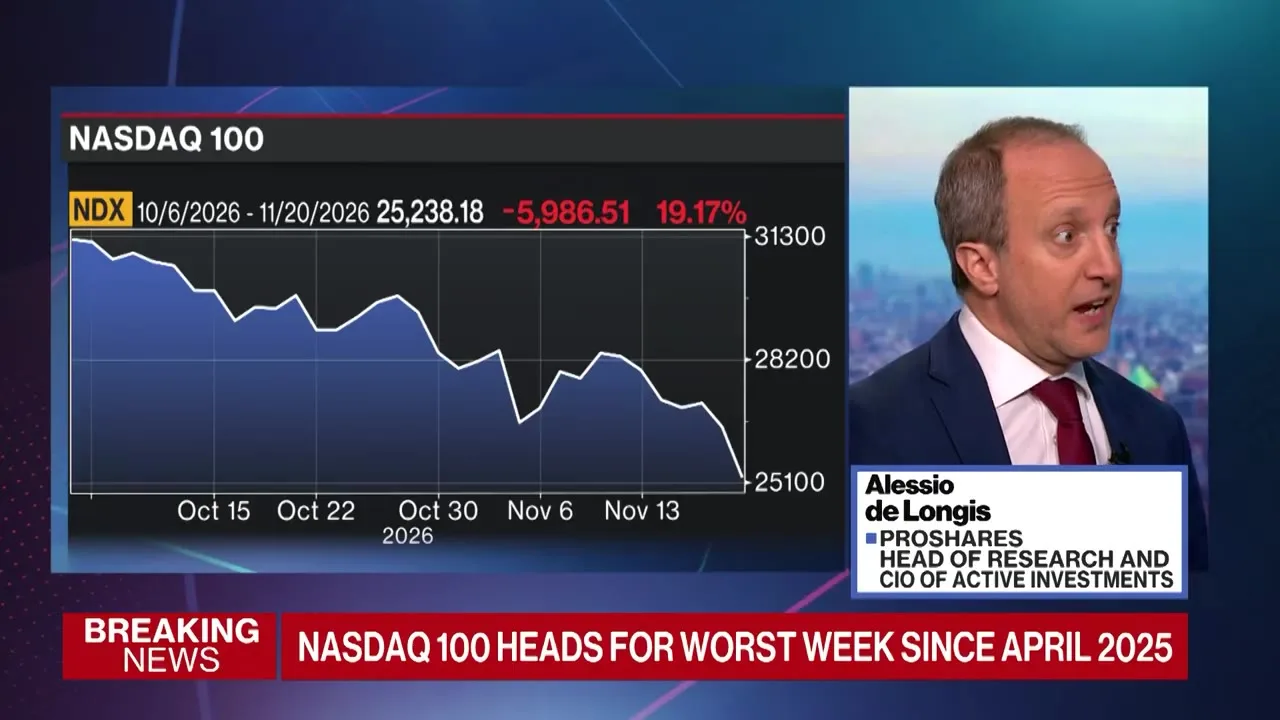
U.S. equity indexes fell into correction territory on Nov. 20, with about 900 of the largest 1,000 stocks set to post losses as a broad selloff followed Anthropic’s record initial public offering, Bloomberg Television reported.
The Nasdaq 100 was down about 5% and the S&P 500 about 3% during the session. Intel fell 10%, Meta dropped 12% and Nvidia lost 17%, while the company formerly known as Strategy declined 27%.
Anthropic opened 34% above its $83 offer price before giving back almost all of that gain. The move put a public valuation on one of the two large language-model companies at the centre of the artificial-intelligence boom, but it did not settle investor concerns.
Bitcoin was heading for a seventh straight weekly decline, while the dollar was set for a fourth consecutive weekly gain. Treasury prices rose, pushing the 10-year yield below 5%, but gold fell for a fifth straight day.
Copper fell 8% this week to its lowest level since March. The move was described as a sign of pressure on global demand as investors raised cash and reduced risk across markets.
The head of research and chief investment officer for active investments at ProShares said the decline remained within the range of a normal correction. The executive said economic and corporate fundamentals were too strong to create a broader contagion. Manufacturing and services surveys showed the strongest economic momentum in five years, while unemployment was falling.
“This is one of those classic buy-the-dip opportunities,” the ProShares executive said. The executive said investors could favour utilities, health care, consumer staples and low-volatility stocks rather than the high-growth technology shares that had led the market.
The executive said earnings growth remained positive across sectors and that higher-quality companies faced less risk from debt-driven selling. The Federal Reserve remained a catalyst because rate expectations had risen as inflation fell slowly, while inflation expectations had returned to about 2% and real rates were moving higher.
Chris Kane of Bloomberg Intelligence said the market was about 10% below its record high, with seven percentage points of that decline occurring in the previous five trading days. He compared the move with the spring selloff and said it was less severe than the COVID-19 crisis or the 2025 tariff shock.
Kane said investors had rotated away from momentum and expensive stocks toward value, low-volatility shares and other defensive areas. He said an analysis of the 25 largest initial public offerings found that shares bought at the deal price generally outperformed the S&P 500 for periods from five days to one year. Buyers entering after the first day underperformed.
The program also featured the chief executive of a quantum-computing company, who said an expanded partnership with AMD would combine quantum computing and artificial intelligence for drug research and other applications. The executive said the company was targeting a scaled machine by 2030 and was developing optical connections to replace copper links between processors.