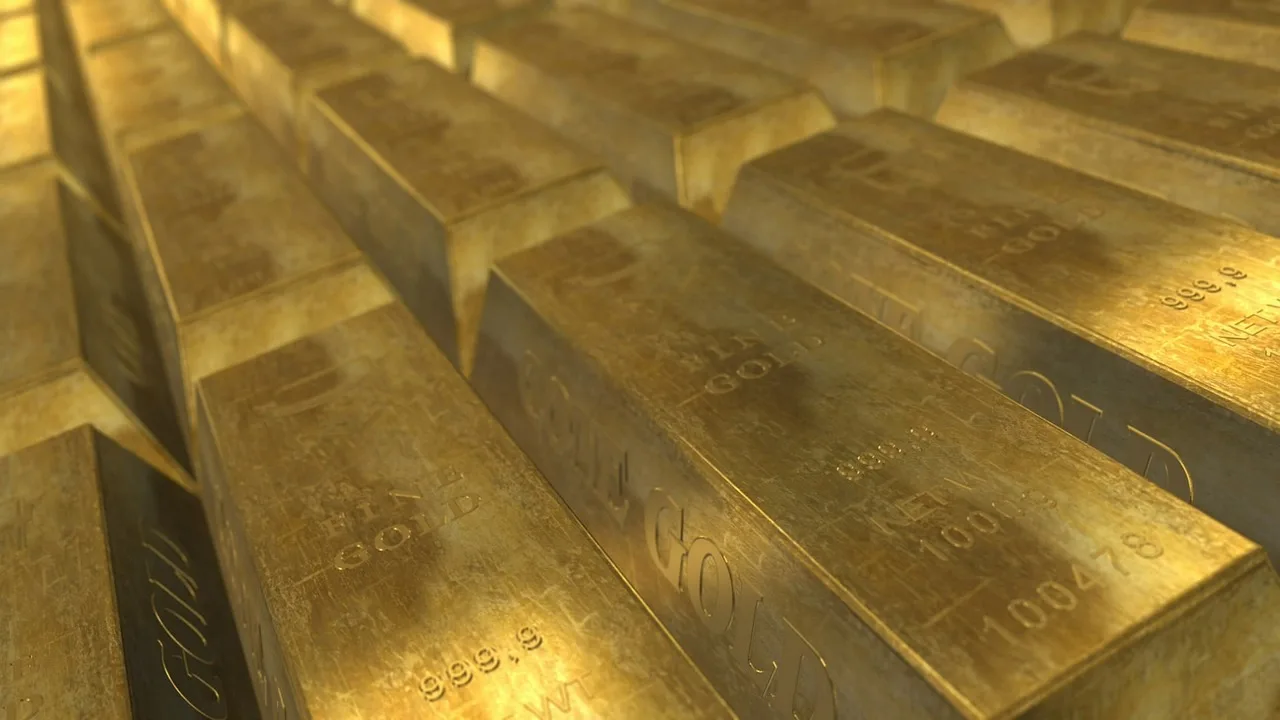
Gold prices declined on Monday as a stronger U.S. dollar, rising Treasury yields, and renewed geopolitical tensions weighed on investor sentiment. Spot gold fell 0.6% to $4,140.52 per ounce, while U.S. gold futures dropped 0.5% to settle at $4,160.30.
The decline followed a widespread bond market sell-off triggered by escalating political and economic unrest in France. Violent protests over rising living costs and inadequate public services intensified concerns about the country's fiscal stability, putting additional pressure on President Emmanuel Macron.
French government bond yields surged, sending shockwaves through European and U.S. debt markets. The benchmark U.S. 10-year Treasury yield climbed 4.3 basis points to 5.143%, while the two-year yield increased 4.2 basis points to 4.778%.
Higher bond yields typically reduce gold's appeal because the precious metal offers no interest income. Meanwhile, a stronger dollar makes gold more expensive for international buyers.
Gold prices had already faced pressure following stronger-than-expected U.S. inflation data, which fueled speculation about potential Federal Reserve interest rate hikes. However, Fed Chair Kevin Warsh avoided providing clear monetary policy guidance on Friday, easing some expectations of tighter policy.
Despite recent weakness, gold has remained above the crucial $4,000 support level since August, supported by safe-haven demand and growing concerns about global debt sustainability.
ANZ analysts believe persistent fiscal uncertainty, Chinese investment demand, and central bank gold purchases could support prices over the longer term. The bank expects limited near-term gains but forecasts gold prices exceeding $5,000 per ounce in 2027.
Meanwhile, oil prices recovered some earlier losses as Middle East tensions raised fresh concerns about global energy supplies.
Brent crude futures slipped 0.1% to $109.16 per barrel after initially declining following President Donald Trump's decision to suspend several sanctions on Russia and waive proposed tariffs on countries purchasing Russian oil.
However, geopolitical risks intensified after Iran-backed Houthi forces claimed attacks on Saudi Arabian energy infrastructure and airports. Reported targets included Saudi Aramco facilities in Yanbu, the Shaybah oil field, and major international airports.
With inflation risks, rising bond yields, and geopolitical uncertainty continuing to influence financial markets, investors remain focused on Federal Reserve policy signals and global energy prices for gold's next major move.