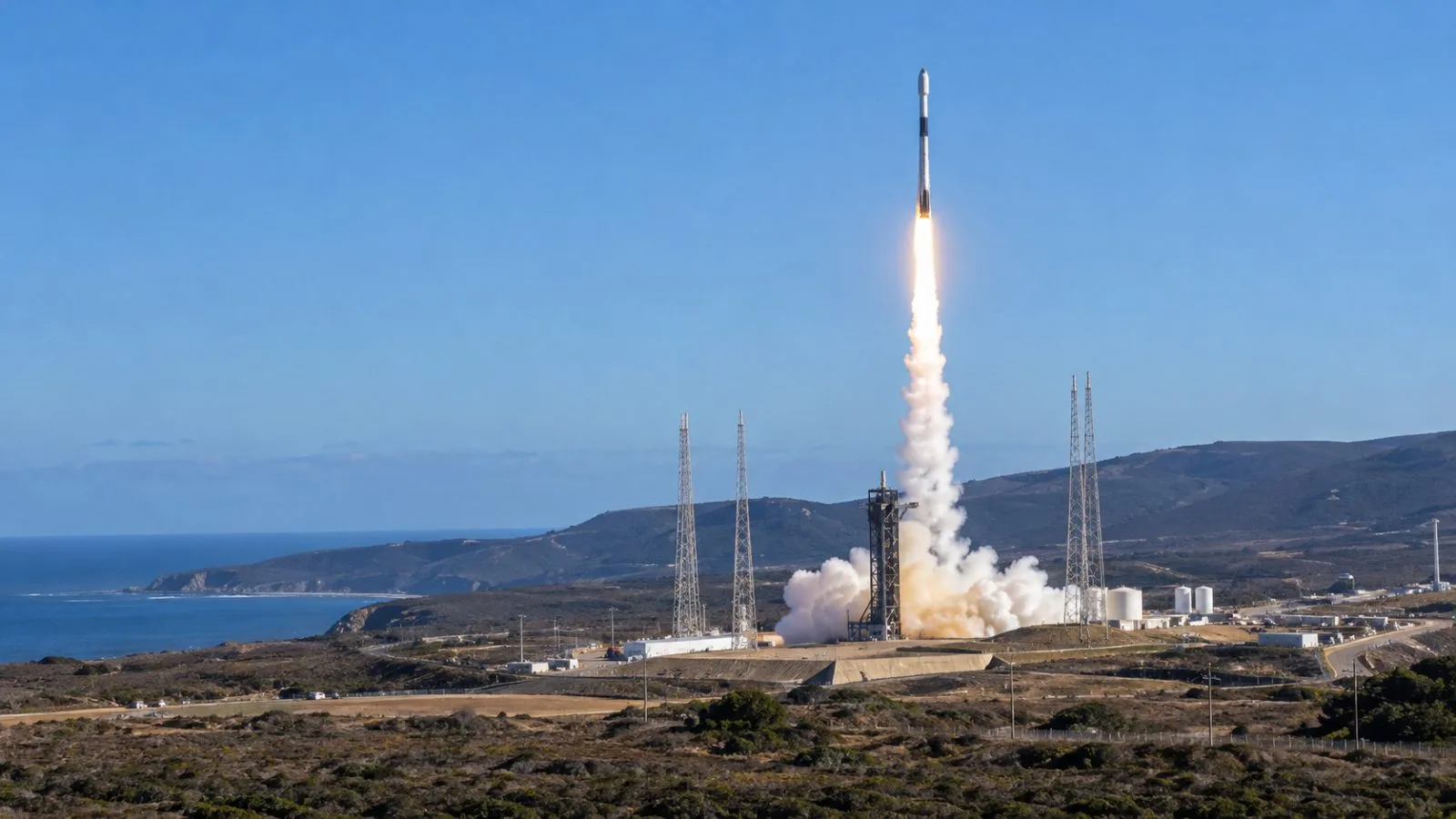
Google received a haiku generated by its Project Suncatcher prototype while the satellite passed over Svalbard, Norway, in a test of whether machine-learning workloads can operate in orbit.
Project Suncatcher is Google’s effort to examine the technical feasibility of operating machine-learning infrastructure in orbit. The prototype satellite launched Oct. 1. In the weeks after launch, it completed initial commissioning, including powering up its host systems and Tensor Processing Unit (TPU) trays and running early machine-learning tests, Google said in a blog post.
After those checks, the team sent a prompt to Gemma 4, Google’s open model, during a satellite contact with a ground station. The model was asked to compose a haiku about space. Google said the satellite returned the response while traveling above Svalbard, Norway. The company later tried space-related limerick prompts and asked the model to report technical information about the satellite’s systems.
Google CEO Sundar Pichai called the result a “hello world” milestone in a post on X. He said the team sent an instruction to the spacecraft, started its TPU and received the model’s answer on the ground.
The demonstration is part of a longer research effort into whether space can support scalable machine-learning infrastructure. Google has described linked satellites as a possible way to handle larger AI workloads. It also points to a potential energy advantage: satellites in low Earth orbit may receive near-constant sunlight, and the company estimates solar panels there could generate up to eight times as much solar power as on Earth.
Google’s next step is to gather performance data with the TPUs exposed to orbital temperature conditions and radiation. The company says the tests will assess whether the chips can sustain computing workloads in space. Results could inform its next milestone, a two-satellite mission planned for 2027.