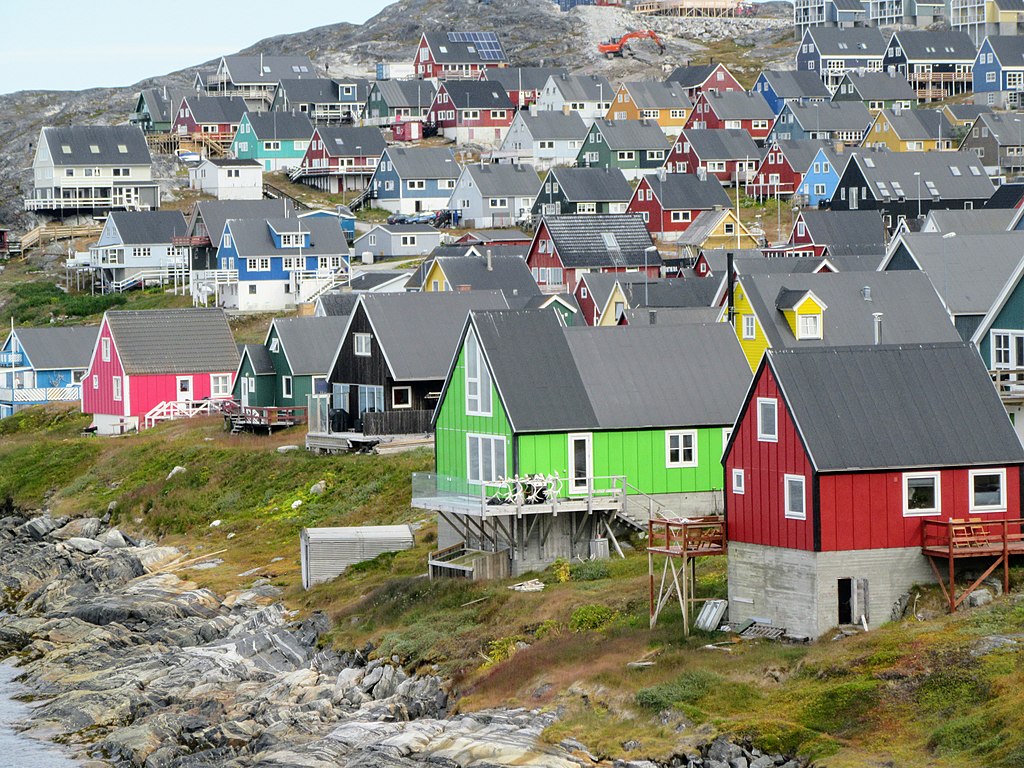
Hundreds of demonstrators gathered in Greenland’s capital, Nuuk, on Thursday as the United States officially opened a larger diplomatic consulate, highlighting growing local opposition to President Donald Trump’s renewed interest in expanding U.S. influence over the Arctic island.
The upgraded U.S. consulate, relocated from a small wooden facility on Nuuk’s outskirts to a larger downtown office, has become a symbol of Washington’s increasing focus on Greenland’s geopolitical importance. Protesters waved Greenland’s red-and-white flags and carried signs reading “USA, stop it” while chanting “Greenland belongs to the Greenlanders” and “No means no.”
Greenland Prime Minister Jens-Frederik Nielsen and several senior government officials declined invitations to attend the opening ceremony, signaling political caution over the United States’ intentions in the region. Nielsen told local media that he chose not to participate despite ongoing diplomatic discussions.
The U.S. State Department described the new diplomatic hub as a stronger platform for American engagement in Greenland. U.S. Ambassador to Denmark Kenneth Howery emphasized cooperation during the ceremony, stating that the United States would continue supporting Greenland regardless of the island’s future political decisions.
Tensions surrounding U.S.-Greenland relations intensified earlier this year after the White House revealed that Trump was considering ways to acquire Greenland, including possible military options. The remarks alarmed several NATO allies and sparked backlash across Europe and Greenland. Discussions have since shifted toward diplomatic negotiations.
Greenland’s government recently reiterated that the island is not for sale and belongs solely to its people. Despite the controversy, the Arctic territory remains strategically important due to its location between North America and Europe and its role in monitoring Russian and Chinese activity in the Arctic region.
The United States currently maintains one active military base in Greenland, significantly fewer than the roughly 17 military installations it operated there during World War II.