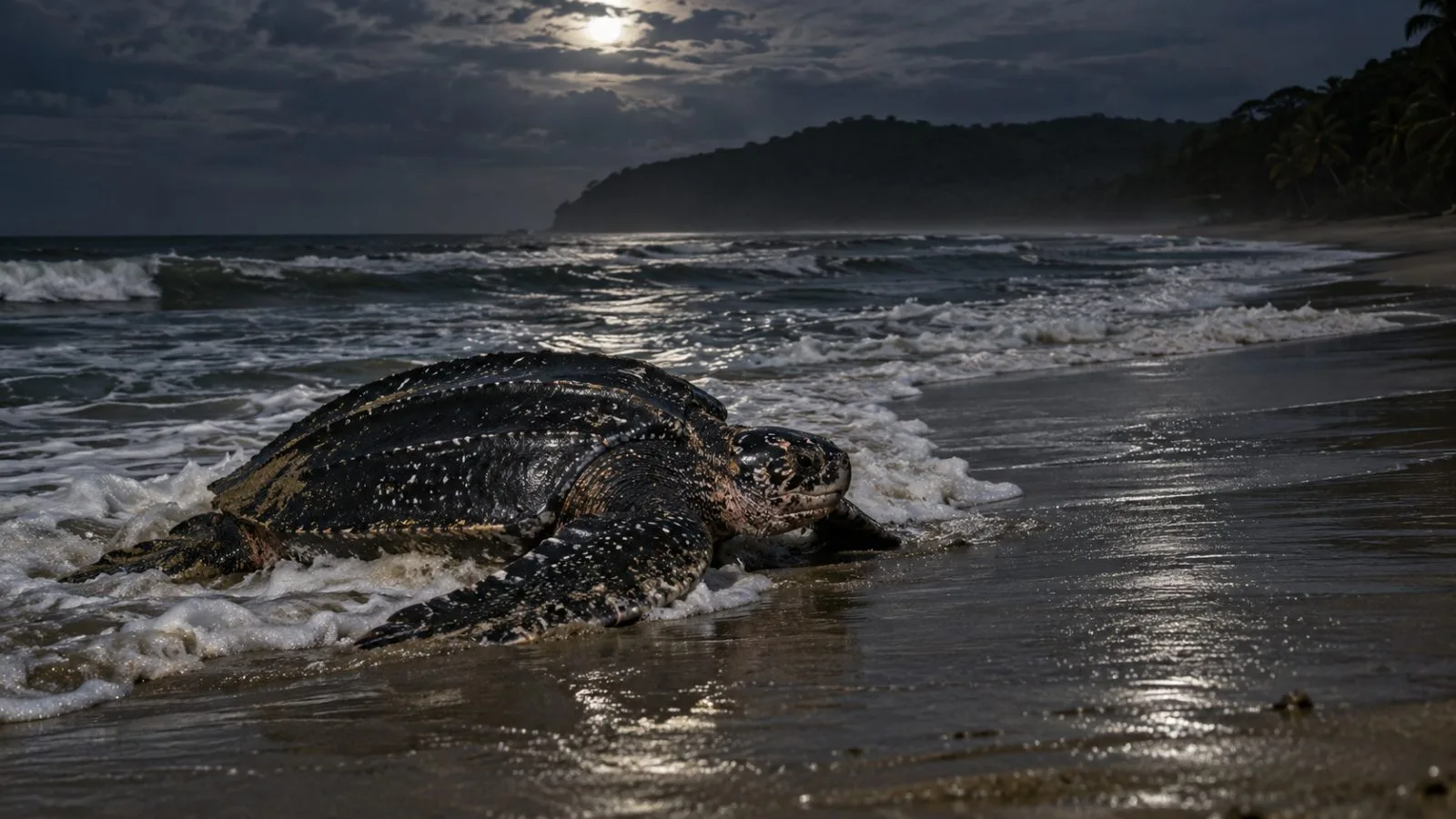
Greenpeace International has proposed 17 Atlantic high-seas sanctuaries for leatherback turtles, estimating the network could cover more than one-third of modeled bycatch-risk areas where fishing overlaps with their habitat.
The proposed network would cover more than 31% of the Atlantic high seas. It combines existing marine protected areas that Greenpeace says need stronger rules, five locations already being considered for protection and 11 newly identified sites. The report’s analysis compares modeled leatherback habitat suitability with pelagic longline fishing intensity and estimates the network could include more than 36% of high-seas areas with moderate-to-high bycatch risk.
Greenpeace estimates that 80.7% of the risk areas it mapped are outside current protection zones and places being considered for protection. It says no area of the Atlantic high seas is fully or highly protected. The proposed sites are not designated sanctuaries; their conservation effect depends on protections being adopted and enforced.
The report estimates that fishing vessels spent 1.6 million hours fishing in the Atlantic high seas during 2025, equivalent to more than 180 years of continuous activity. Greenpeace used Global Fishing Watch data based on automatic identification system (AIS) signals, which the report says can miss fishing activity or misclassify apparent activity.
Greenpeace’s proposed sanctuary standard would bar industrial fishing and calls for shipping safeguards such as rerouting lanes or setting speed limits. The group says the plan could benefit leatherbacks and other migratory species, but the report does not quantify potential costs for fishing or shipping operators. Lukas Meus, an ocean campaigner at Greenpeace International, said the protections were “the only way to allow them to travel, eat and breed safely.”
Leatherback population trends vary by region. The International Union for Conservation of Nature’s latest global Red List assessment, conducted in 2013 and marked as needing an update, classified the species as Vulnerable with a decreasing trend. A 2025 review found sea turtle populations generally rebounding, while leatherbacks in the Pacific Ocean and Caribbean Sea continued to decline dramatically.
Greenpeace separately estimates that 3.5% of the global ocean is fully or highly protected. At the growth rate it calculates since 1992, about 0.1% per year, reaching 30% on that measure would take 265 years. The figure is not a forecast for the Convention on Biological Diversity’s Target 3, which calls for 30% of marine and coastal areas to be effectively conserved and managed by 2030 and allows sustainable use consistent with conservation outcomes.
The Biodiversity Beyond National Jurisdiction Agreement, which provides for area-based measures including marine protected areas beyond national jurisdiction, entered into force Jan. 17, 2026. The U.N. Convention on Biological Diversity’s COP17 is scheduled for Oct. 19-30 in Yerevan, Armenia, for the first global review of progress under the biodiversity framework. The BBNJ Agreement’s first Conference of the Parties is scheduled for Jan. 11-22, 2027, in New York.