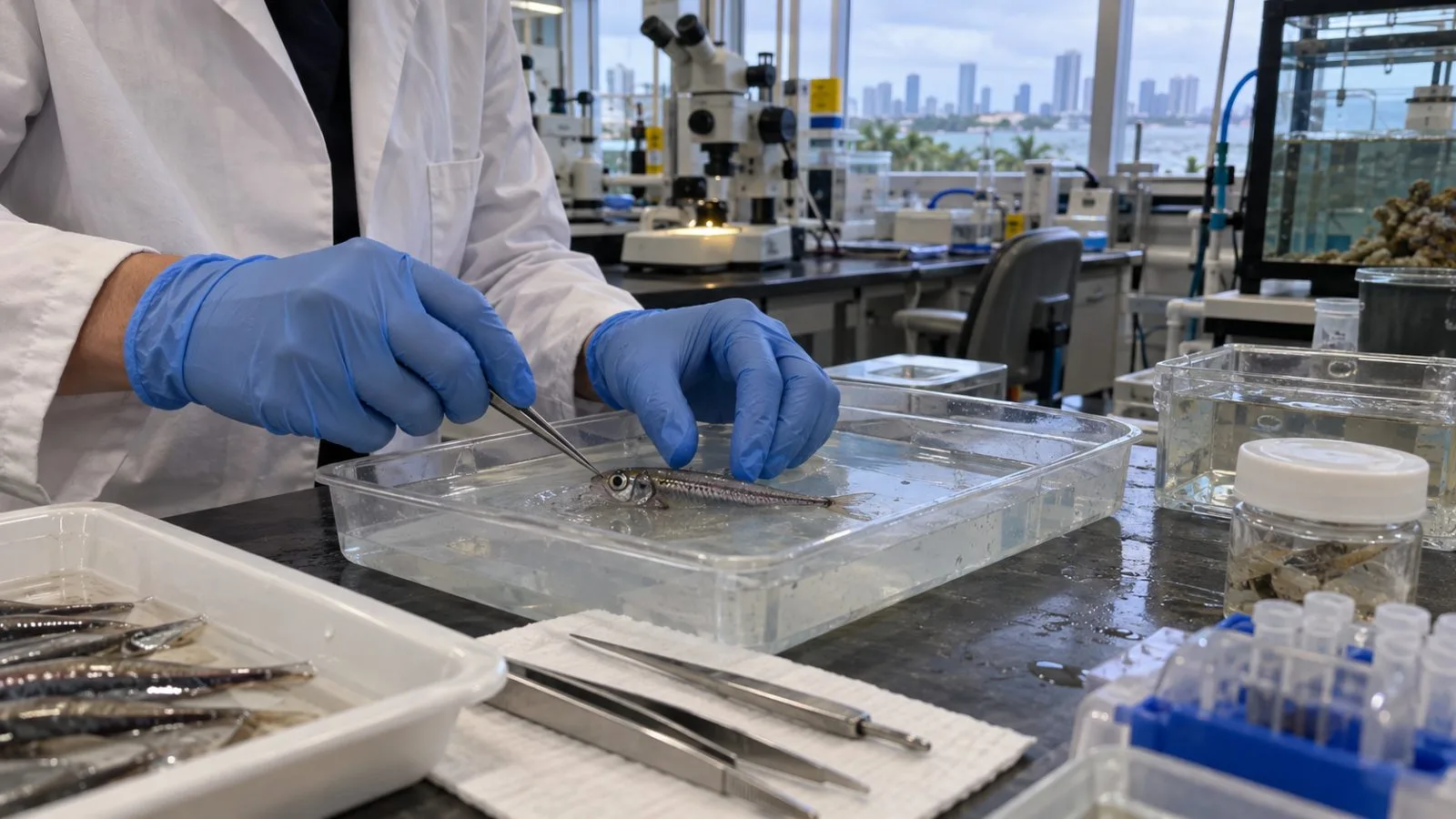
Genomic tests of Gulf of Mexico lanternfish found signs of declining diversity in two species, adding a genetic dimension to a study of depleted animals that feed larger marine predators.
Published Oct. 19 in the Proceedings of the National Academy of Sciences, the study compared a 2011 sampling campaign with surveys conducted from 2015 through 2023. Fish were 63.5% less abundant in the later survey period, large crustaceans 62.0% less abundant and small cephalopods 59.7% less abundant.
The genetic analysis covered three lanternfish species. Heather Bracken-Grissom, a Florida International University marine scientist and study co-author, described genetic diversity as “nature’s insurance policy” in a university announcement.
Using nets and acoustic measurements, the researchers sampled northern and eastern Gulf waters from the surface down to 1,500 meters. Their 2011 comparison point came after the 2010 Deepwater Horizon spill. The reported percentages therefore do not measure a change from conditions before the disaster.
Changes in temperature, oxygen and available food did not account for the lower counts, the authors said. They consider the spill and actions taken during the response the most plausible explanation, but the study does not establish that either caused the losses.
The well released oil for 87 days before it was capped on July 15, 2010. During the response, 770,000 gallons of dispersant were injected near the wellhead, according to the study. BP spokesperson Paul Takahashi told The Associated Press that the company had made changes intended to prevent a similar accident.
The surveyed animals provide food for larger marine species. Their movement between depths also helps carry carbon from surface waters into the deep ocean. The authors said the change in fish abundance over 3.5 years exceeded any reported across 60 years in a comparable California Current record. They found no return to 2011 abundance by the last Gulf survey in 2023 and gave no recovery timetable.